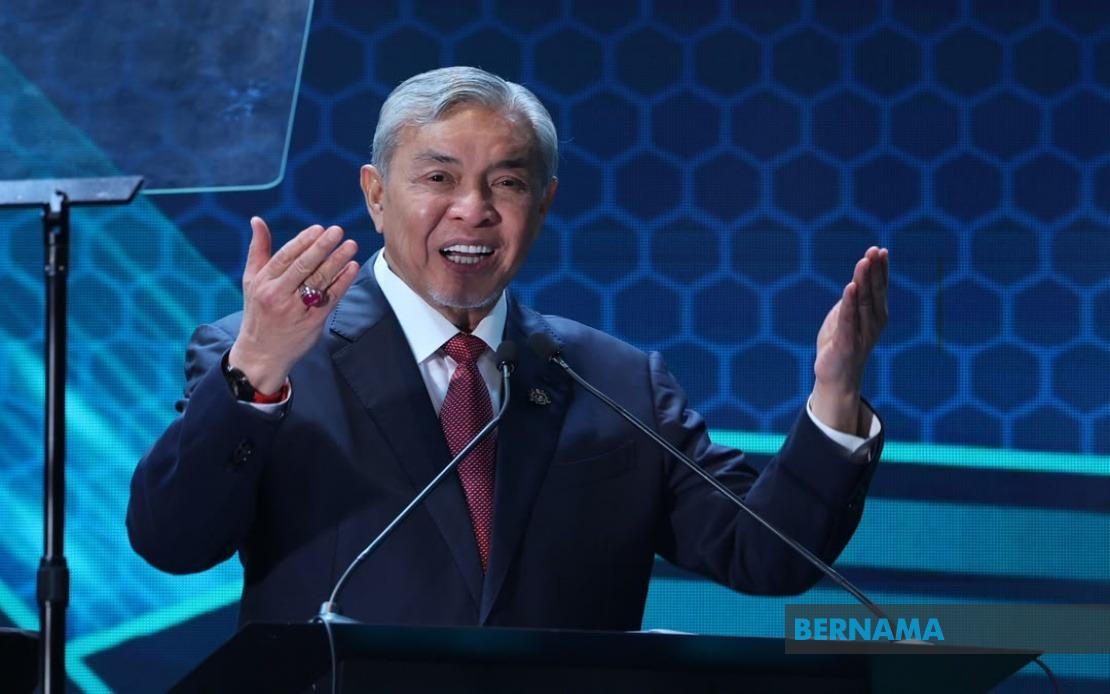
Deputy Prime Minister Datuk Seri Dr Ahmad Zahid Hamidi has called for a fundamental reimagining of Malaysia's Immigration Department, urging it to transcend its conventional gatekeeping function and emerge as a strategic driver of national economic prosperity and security infrastructure. Speaking at the 2026 Immigration Day celebration in Cyberjaya on July 21, Ahmad Zahid articulated a comprehensive transformation roadmap anchored by four interconnected priorities that he termed a "strategic compass" for the department's future direction and operational philosophy.
The envisioned shift represents a substantial departure from traditional immigration administration paradigms. Rather than treating border management as a discrete technical function, Ahmad Zahid argued that the Immigration Department must actively integrate its regulatory framework with broader national development objectives. He emphasised that unnecessary procedural delays, convoluted administrative processes and excessive bureaucratic friction collectively undermine Malaysia's international competitiveness in attracting investment and skilled workforce talent. This perspective reflects growing recognition across Southeast Asia that efficient immigration systems function as competitive advantages in the globalised economy.
The Deputy Prime Minister cited the United Arab Emirates as a compelling regional benchmark, highlighting how the UAE has successfully aligned its immigration architecture with strategic objectives to capture foreign investment flows. The UAE's Golden Visa programme, offering residency periods extending to a decade, exemplifies how nations now leverage immigration policy as an investment recruitment instrument. Ahmad Zahid noted that this integrated approach has yielded tangible results, with the UAE achieving record foreign direct investment of RM196.6 billion in 2025 and securing its position as the ninth-ranked global destination for international capital for four consecutive years. For Malaysian policymakers, such comparisons underscore the opportunity costs of maintaining restrictive immigration frameworks that fail to harness economic potential.
Beyond economic imperatives, Ahmad Zahid stressed that contemporary security threats demand categorical reassessment of enforcement methodologies. The traditional reactive posture—responding to security incidents after they materialize—has become insufficient in an environment where transnational criminal enterprises operate with sophistication and speed that transcend conventional border paradigms. He highlighted that migrant smuggling networks have evolved into highly organised syndicates operating across multiple jurisdictions, whilst human trafficking has become exponentially more complex in its operational structures and concealment methods. These developments necessitate fundamentally different institutional approaches grounded in intelligence gathering, data analytics and technological integration.
The Deputy Prime Minister articulated a vision whereby the Immigration Department leverages advanced technological infrastructure to strengthen proactive security postures. Big data analytics, artificial intelligence applications, predictive analytics systems, sophisticated biometric technologies and intelligent border management platforms represent the cornerstone of this modernised security architecture. These tools enable the department to process information with greater velocity whilst enhancing accuracy in threat detection and response protocols. Ahmad Zahid emphasised that technological deployment must serve a dual purpose—not merely accelerating operational tempo but fundamentally enhancing analytical capability and decision-making precision, thereby delivering enhanced service quality to legitimate travellers and investors whilst strengthening security perimeters.
The transformation mandate Ahmad Zahid outlined comprises four substantive pillars that must function as an integrated ecosystem rather than separate administrative initiatives. The first pillar positions immigration administration as a positive economic facilitator, actively removing procedural impediments that discourage investment inflows or talent recruitment. The second pillar emphasises security and sovereignty protection through intelligence-driven enforcement mechanisms implemented via enhanced cooperation between national enforcement agencies. The third pillar targets acceleration of digital transformation and service innovation across departmental operations. The fourth pillar underscores the necessity of institutional integrity, professional standards and humanitarian value systems, acknowledging that public trust represents an essential foundation for effective governance.
Ahmad Zahid stressed that genuine institutional transformation cannot proceed through fragmented, ad-hoc initiatives or temporary modifications to operational procedures. Rather, comprehensive transformation demands establishment of clear strategic direction, adoption of coherent philosophical frameworks and systematic embedding of transformation principles throughout all departmental policies, systems and daily actions. The Deputy Prime Minister articulated this as the "Four-Point Mandate, One Direction for Immigration Transformation," suggesting that unified vision and consistent implementation constitute prerequisites for meaningful institutional change. This emphasis on systemic coherence reflects recognition that isolated reform efforts frequently fail to produce sustainable outcomes without overarching strategic alignment.
The personnel dimension of this transformation agenda merits particular attention within Malaysia's broader public sector modernisation context. Ahmad Zahid appealed to Immigration Department staff to demonstrate unwavering adherence to established procedures whilst exercising sound professional judgement in decision-making processes. Critically, he encouraged officers to demonstrate moral courage in executing actions aligned with institutional values even when facing pressure or competing interests. This framing acknowledges that technological modernisation and policy reform cannot succeed without concurrent development of professional capability and ethical institutional culture. For Malaysian public servants broadly, such messaging reinforces expectations that modernisation encompasses both technical systems and human capability development.
The anticipated outcome of comprehensive implementation involves fundamental institutional repositioning from a traditional regulatory agency toward what Ahmad Zahid characterised as a "strategic institution" serving multiple national purposes simultaneously. The Immigration Department would function as a security bulwark protecting national sovereignty, an economic catalyst enhancing international competitiveness and a symbol of public institutional trustworthiness. This multifaceted institutional identity aligns with contemporary governance expectations across Southeast Asia, where ministries and departments increasingly operate across traditional sectoral boundaries to address interconnected policy challenges. Such institutional evolution requires substantial cultural shifts within departments historically organised around narrow functional specialisations.
The presentation of this transformation mandate occurred amid broader Malaysian efforts to enhance institutional performance and public sector efficiency. Notable attendees included Chief Secretary to the Government Tan Sri Shamsul Azri Abu Bakar, Public Service Department director-general Tan Sri Wan Ahmad Dahlan Abdul Aziz and Immigration director-general Datuk Zakaria Shaaban, reflecting high-level governmental commitment to the Immigration Department's institutional development. The gathering reinforced that immigration administration constitutes a priority area within the broader modernisation agenda. For Malaysian readers and regional observers, this positioning signals governmental recognition that effective immigration systems represent essential infrastructure supporting economic competitiveness, security protection and institutional legitimacy simultaneously.

