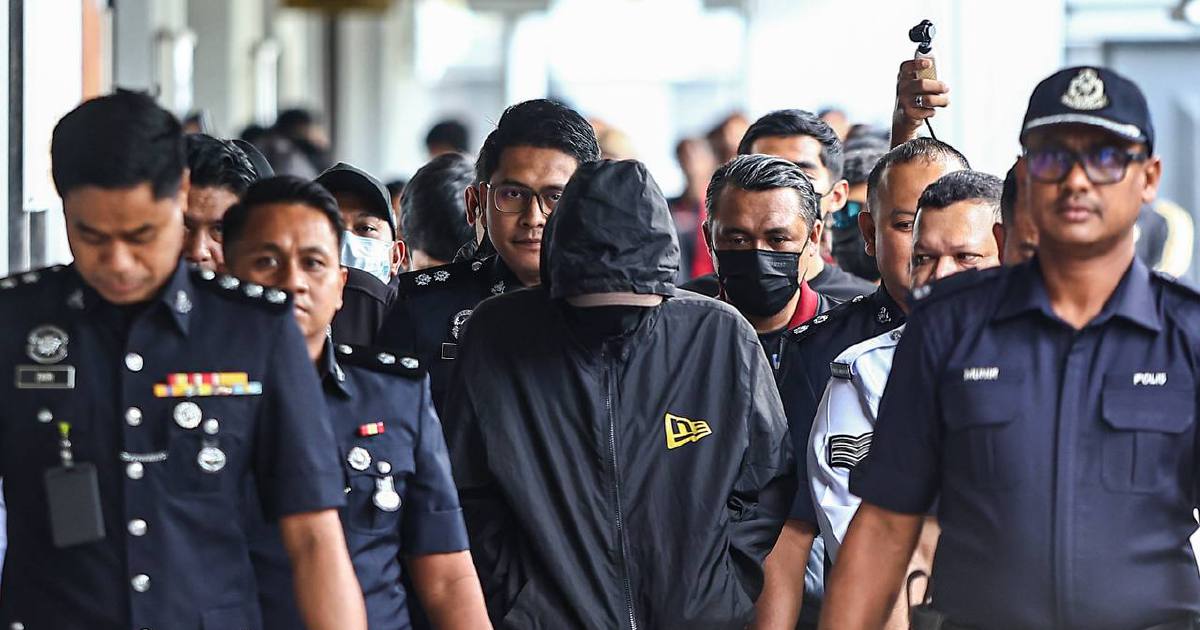
A lorry driver employed by Malaysia's Immigration Department appeared before the Kuala Lumpur magistrates' court yesterday to answer charges arising from a fatal traffic collision that claimed the lives of three family members at the Maju Junction intersection on Jalan Sultan Ismail. The defendant entered a plea of not guilty to five charges laid against him, with three of those counts specifically alleging that his reckless or dangerous operation of the vehicle directly resulted in the deaths of the victims.
The incident, which unfolded at one of Kuala Lumpur's busier commercial intersections, has reignited public concern about road safety in the capital's congested downtown area. Jalan Sultan Ismail, a major arterial route serving numerous government offices and commercial establishments, regularly accommodates heavy vehicular traffic throughout the day. The collision at Maju Junction, a complex multi-directional intersection requiring careful navigation, adds to the growing tally of serious accidents at busy urban junctions that have prompted ongoing discussions about intersection safety protocols.
The charges of causing death through reckless or dangerous driving represent some of the most serious offences under Malaysian traffic law, carrying significant potential penalties for conviction. The gravity of these charges reflects the magnitude of the tragedy, with three individuals from the same family losing their lives in what authorities are treating as a serious traffic violation. Such cases draw heightened scrutiny from road safety advocates and the public, particularly when they involve government vehicles and employees.
The circumstances surrounding the collision remain under investigation by traffic authorities, who will need to determine the precise sequence of events leading to the crash and establish whether mechanical failure, driver error, or other contributing factors played a role. The involvement of a government department vehicle adds an institutional dimension to the case, as the Immigration Department will likely face questions about driver training standards, vehicle maintenance protocols, and whether appropriate safety measures were in place.
Fatalities involving large vehicles such as lorries in urban settings continue to represent a persistent challenge for Malaysian road safety officials. The weight and momentum of such vehicles, combined with potential visibility limitations faced by drivers, create inherent risks in congested city environments where multiple road users compete for space. This incident underscores the ongoing tension between the necessity of commercial vehicle operations in urban areas and the vulnerability of other road users, particularly in family vehicles sharing the same intersection space.
The three-member family whose deaths resulted from this collision represents a particularly poignant dimension to the tragedy, illustrating how a single traffic incident can devastate multiple households and leave extended family networks grieving. Such concentrated loss within a single family unit tends to galvanise community attention and increases pressure on authorities to demonstrate rigorous investigation and accountability in the criminal justice process.
From a legal perspective, the case will proceed through the magistrate's court system, where the prosecution must establish beyond reasonable doubt that the defendant's conduct constituted reckless or dangerous driving and that this conduct directly caused the deaths in question. The defence will have opportunity to present arguments regarding the circumstances of the incident and challenge any evidence presented by the Crown. The court's eventual determination will carry implications not only for the defendant but also potentially for broader discussions about vehicle operation standards and penalties for fatal traffic violations in Malaysia.
The incident occurs within a broader context of road safety challenges affecting Malaysia's urban centres, where rapid motorisation, dense traffic patterns, and ageing infrastructure sometimes combine to create dangerous conditions. The Klang Valley region, encompassing Kuala Lumpur and surrounding areas, experiences some of the country's highest traffic accident rates, reflecting the concentration of vehicles and complexity of the road network. Government vehicles, despite carrying the responsibility of representing public institutions, are not exempt from involvement in serious accidents.
Questions may emerge regarding the driver's employment history, training records, and any previous traffic violations that might be relevant to understanding how the incident occurred. The Immigration Department will likely conduct its own internal review of the circumstances, examining whether existing protocols and training programmes adequately prepare drivers for operating large vehicles in congested urban environments. Such internal reviews, while distinct from criminal proceedings, often inform institutional reforms aimed at preventing similar incidents in the future.
The magistrate's court will determine whether the matter proceeds to trial or whether other outcomes emerge during the preliminary stage of proceedings. Given the seriousness of the charges and the loss of life involved, the prosecution will likely pursue the case vigorously, while the defendant's legal representation will examine all available defences and challenges to the Crown's case. The outcome of this proceeding will be closely monitored by road safety advocates, the broader public, and government departments concerned with vehicle safety and driver conduct standards.
As the case progresses through the court system, it will inevitably reignite discussions about urban road safety, the regulation of heavy vehicles in congested areas, and the measures necessary to prevent similar tragedies. For the families affected by this incident and the broader community, the legal proceedings will represent an attempt to establish accountability and perhaps contribute to systemic improvements that might prevent comparable incidents from occurring in future.

