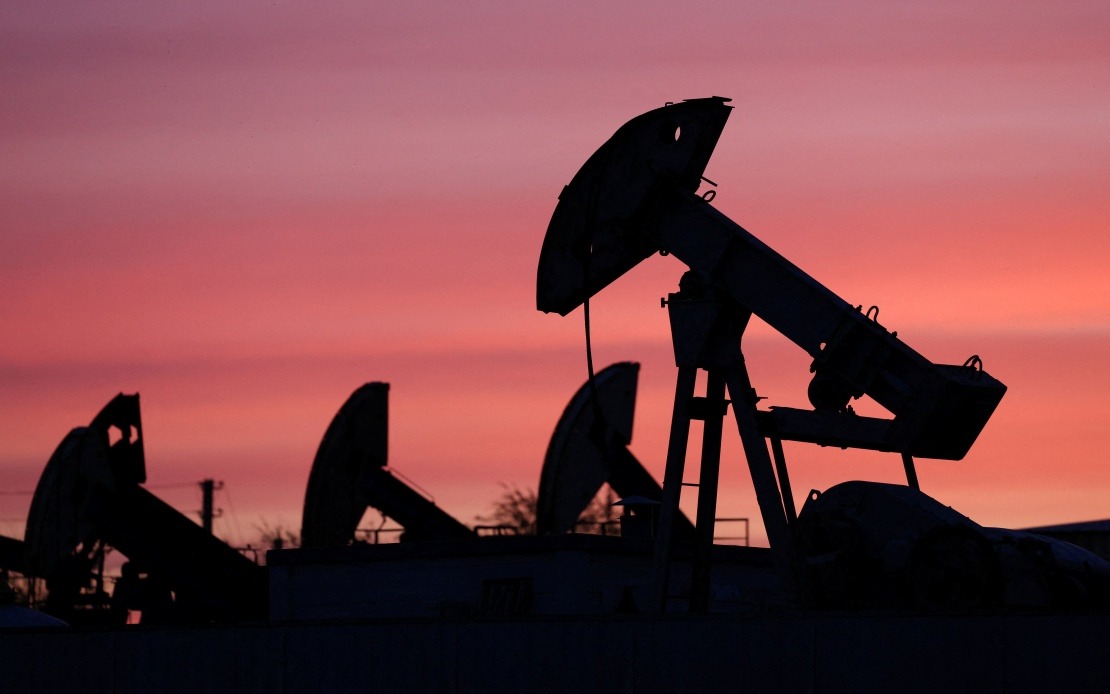
The International Energy Agency has revised upward its expectations for global oil consumption and production in 2026, marking a shift in how analysts view the trajectory of energy markets over the coming years. In its latest assessment released Friday, the Paris-based organisation adjusted demand forecasts upward by 171,000 barrels per day compared to its previous estimate from a month earlier, now projecting that worldwide oil consumption will total 103.463 million barrels per day by 2026.
The IEA's refinement of near-term demand expectations reflects evolving economic assumptions and consumption patterns across major markets. The agency simultaneously lowered its estimate for how sharply demand will decline this year, reducing the anticipated contraction from 1.118 million barrels per day to 1.047 million barrels per day. This 71,000 barrels per day reduction in the projected year-on-year decline suggests that global energy consumption has proven more resilient to economic headwinds than previously anticipated, a significant indicator for policymakers in energy-dependent nations across Southeast Asia.
For Southeast Asian economies like Malaysia, which maintains substantial interests in oil production and refining, such recalibrations carry meaningful implications. The region's energy infrastructure investments and fiscal planning often hinge on accurate medium-term demand forecasts. An upward revision in global consumption expectations can support stronger export demand and pricing environments, benefiting oil-producing nations in the bloc. Conversely, demand forecasts inform strategic decisions regarding refinery capacity utilisation and petrochemical production scheduling across the region.
The IEA's simultaneous upgrade to its 2026 production outlook proved even more significant than the demand adjustment. The agency lifted its forecast for additional global oil output by 220,000 barrels per day, now expecting total production to reach 102.6 million barrels per day in 2026. This represents a substantial revision from the previous projection of 102.37 million barrels per day. The improvement reflects expectations of expanded supply capacity from existing and developing fields, particularly in regions where investment cycles are bearing fruit.
This production upgrade appears to account for expected contributions from major projects coming online in the coming years. The oil industry has maintained a pipeline of significant developments across the Gulf, North America, and Africa that should incrementally expand global crude availability. For markets in Southeast Asia dependent on oil imports, the prospect of modestly expanded global supply could moderate price pressures, though geopolitical risks and production disruptions remain perpetual concerns that could overturn such optimistic outlooks.
The IEA's revisions reflect a complex balancing act in energy forecasting. Demand projections must account for economic growth assumptions, electrification trends, transport sector dynamics, and emerging markets' consumption patterns. Production forecasts similarly grapple with multiple variables including capital expenditure decisions by oil majors, geopolitical stability in major producing regions, technology advancement in extraction and processing, and the transition trajectory toward renewable energy sources. The fact that both projections moved upward suggests the agency believes global energy markets have found a steadier equilibrium than anticipated.
The broader context of these adjustments matters considerably for regional energy security discussions. Southeast Asia collectively imports substantial quantities of crude oil and refined products, making global supply-demand balance critical to economic stability. Malaysia itself exports significant crude production while also refining imported oil, positioning the nation at the intersection of regional and global energy flows. Any meaningful shift in IEA forecasts potentially affects regional energy diplomacy, investment priorities, and the competitiveness of regional oil companies in global markets.
The relatively modest scale of these revisions—measured in hundreds of thousands rather than millions of barrels per day—underscores that fundamental uncertainties persist in energy markets. Demand growth continues moderating as renewable energy deployment accelerates and efficiency improvements reduce per-unit consumption. Meanwhile, supply projections remain vulnerable to disruption from political instability, climate impacts on offshore operations, and unexpected technological shifts in petroleum extraction. These forecasts should be interpreted as central scenarios within broader ranges of possibility.
Energy analysts and policymakers tracking these IEA reports must recognise that quarterly revisions like these represent incremental adjustments within complex forecasting frameworks. The upgrades to both demand and production suggest confidence that global oil markets will remain functional and balanced through 2026, avoiding either severe shortage scenarios or catastrophic oversupply. For Malaysia and neighbouring economies, such moderate forecasts support planning assumptions that energy supplies will remain available at manageable prices, though structural transitions toward cleaner energy sources continue reshaping long-term trajectories across the region.

