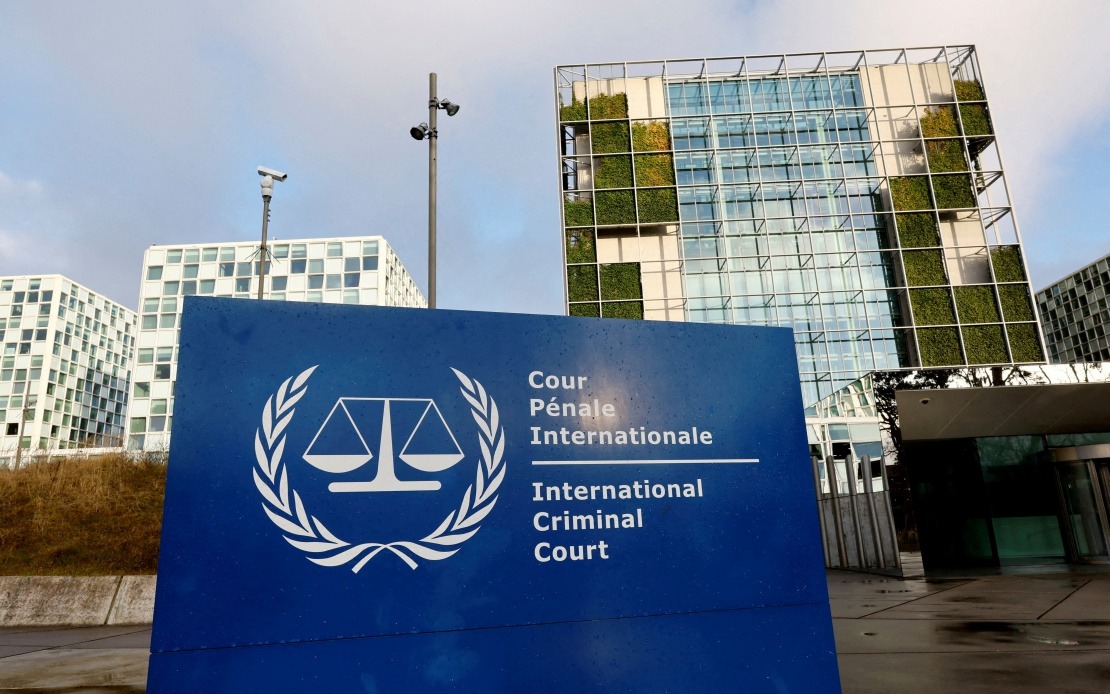
The International Criminal Court issued a sharp rebuke on Wednesday after the United States imposed additional sanctions targeting the court's leadership and senior judicial personnel. The new measures, which single out ICC President Tomoko Akane of Japan and Abdoulaye Seye of Senegal, a prominent trial lawyer in the Prosecutor's Office, represent an escalation in American pressure against the Hague-based institution.
The sanctions mark a significant expansion of Washington's campaign against the ICC. The court now has nine of its 18 judges under American financial restrictions, alongside both deputy prosecutors, a former prosecutor, and one staff member. This widening scope underscores the depth of US opposition to certain ICC investigations and prosecutions, particularly those affecting American interests or allies.
The ICC's formal response was uncompromising. In a statement released from its headquarters, the institution characterised the sanctions as a frontal assault on the independence that must underpin any credible international judicial body. The court emphasised that its mandate derives from the Rome Statute and the collective authority of its member states across all global regions, not from the approval of any single power. This framing positions the dispute as one between the ICC's international legal foundation and unilateral American economic coercion.
For Southeast Asian observers, this confrontation carries particular significance. Malaysia, along with most ASEAN nations, recognises the importance of strengthening multilateral institutions and international law as equalising mechanisms in a world of unequal state power. When major powers circumvent or undermine institutions like the ICC through sanctions, they weaken the very frameworks that smaller nations depend upon for protection and justice. The sanctions regime demonstrates how geopolitical rivalries can corrode the neutrality essential to international courts.
The ICC's statement articulated a core concern: that intimidating judges and prosecutors discourages them from impartially investigating and prosecuting cases, thereby denying victims of mass atrocities their chance at justice. This argument resonates deeply in the Asia-Pacific region, where numerous communities have suffered from conflict and where many rely on international mechanisms when domestic systems prove inadequate or compromised. When sanction threats hang over judicial decision-making, the entire edifice of accountability becomes questionable.
The court also highlighted a less visible but equally damaging consequence of sanctions targeting its personnel. Victims who have exhausted domestic remedies and turned to the ICC as a last resort face diminished prospects when their case handlers labour under American financial pressure. The psychological and practical impact of sanctions can discourage thorough investigation and prosecution, effectively silencing voices that the international system was designed to amplify.
Washington's escalating sanctions appear rooted in specific ICC investigations, most notably those examining alleged war crimes in Palestine and potential crimes by American allies. Rather than engaging through diplomatic channels or accepting the court's independence, the US has opted for financial punishment aimed at individual judges and prosecutors. This approach treats the ICC as if it were a national agency subject to American control rather than an autonomous institution accountable to its member states.
The ICC's invocation of support from member states, civil society organisations, and international justice advocates suggests growing recognition that the court's legitimacy faces genuine threat. Over 120 countries are party to the Rome Statute, representing diverse geopolitical interests and legal traditions. Many of these states perceive value in an independent international criminal jurisdiction precisely because they lack the military or economic power to pursue justice unilaterally. Undermining the ICC through coercive measures effectively redistributes power away from the international community toward major powers.
For Malaysia and other developing nations, the practical implications are sobering. If major powers can prevent the ICC from functioning through targeted sanctions, then the institution cannot serve its intended purpose of providing equitable access to justice across borders and wealth classes. This transforms the international legal order into an extension of great-power politics rather than a neutral arena where law supersedes might. The stakes extend beyond Palestine or Ukraine to encompass every potential investigation touching powerful interests.
The court's continued assertion that it will discharge its mandate with independence and impartiality represents both commitment and defiance. The institution faces pressure to demonstrate that sanctions cannot bend its judicial functions, yet such pressure itself compromises the freedom necessary for genuine impartiality. This paradox—that proving independence requires continuing to operate while under coercion—reveals the fundamental vulnerability of international institutions lacking enforcement mechanisms of their own.
Moving forward, the confrontation between the ICC and the United States raises urgent questions about the viability of multilateral justice in an era of renewed great-power competition. Southeast Asian states, despite their varying alignments, share an interest in whether international institutions can survive great-power pressure. The outcome of this dispute may determine whether the ICC remains a functional court or becomes merely a symbolic reminder of the world's difficulty in constraining power through law.

