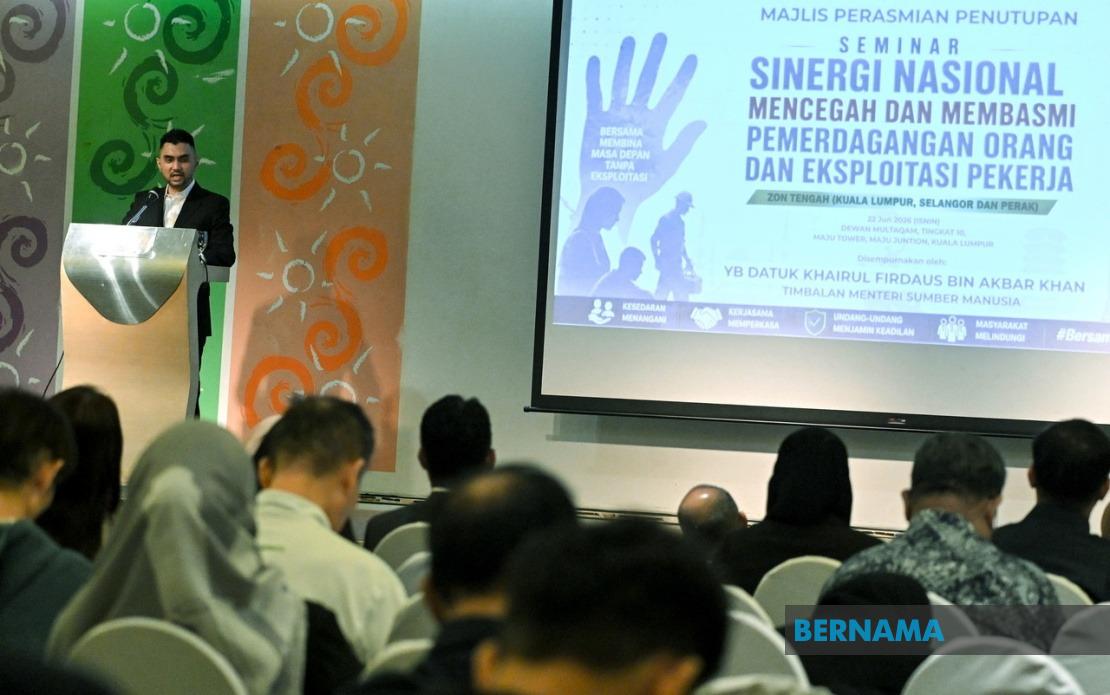
A significant drop in identified human trafficking and labour exploitation cases across Malaysia since 2023 has prompted cautious optimism among government officials, even as they acknowledge that the visible figures may represent only a fraction of the problem. Deputy Human Resources Minister Datuk Khairul Firdaus Akbar Khan attributed the declining rescue numbers to sustained enforcement and prevention initiatives rolled out by authorities, pointing to data from the Peninsular Malaysia Manpower Department showing a steep descent from 70 victims rescued in 2023 through to just four cases by May 2025.
The trajectory of reported cases presents a complex picture that warrants closer examination. After reaching 70 rescues in 2023, the figures contracted dramatically to 10 victims in 2024, before ticking upward slightly to 17 in 2025, only to fall again to four through May of the current year. This volatility suggests that while enforcement operations may be yielding results, the underlying dynamics of human trafficking in the region remain unstable and potentially underestimated. Officials have been careful not to celebrate these numbers as a comprehensive victory, recognising that a reduction in reported cases does not necessarily translate to a reduction in actual trafficking incidents.
Khairul Firdaus explicitly cautioned against complacency during remarks made at the closing of the National Synergy Seminar on Preventing and Eradicating Human Trafficking and Labour Exploitation in the Central Zone, held in Kuala Lumpur. His warning that "there may be things that we do not see (not reported)" reflects a sobering reality facing anti-trafficking authorities across Southeast Asia: victims often remain invisible to official statistics due to fear, cultural barriers, lack of awareness, or deliberate concealment by traffickers. This gap between reported and actual victims remains one of the most pressing challenges in regional efforts to combat modern slavery.
To address these systemic issues, Malaysian authorities have intensified their operational footprint. Between January and May 2025, enforcement operations related to labour practices nationwide reached 386, with 311 investigation papers subsequently filed. These figures demonstrate a substantial allocation of resources toward identifying and prosecuting exploitation, yet the relatively low victim rescue numbers suggest that many operations may be uncovering infrastructure and networks rather than immediately liberating people. This investigative-heavy approach may ultimately prove more effective for disrupting trafficking organisations, though the immediate human impact remains modest.
The government's commitment to combat forced labour aligns with international standards established through protocols ratified under the International Labour Organisation, positioning Malaysia within a global framework addressing exploitative practices. This alignment signals an intention to move beyond domestic enforcement toward harmonised regional approaches that can track trafficking patterns across porous borders and coordinate responses among Southeast Asian nations. Such international cooperation becomes increasingly vital as traffickers exploit jurisdictional gaps and adapt their methods to evade authorities.
The National Synergy Seminar series itself represents a strategic pivot toward prevention and awareness rather than reactive enforcement alone. The Central Zone programme, held in Kuala Lumpur, followed similar initiatives in the North Zone conducted in Sungai Petani, Kedah on May 18 and the South Zone event in Kluang, Johor on June 8. Nearly 1,000 participants across these three seminars engaged in discussions aimed at building capacity among frontline workers, community leaders, and officials to identify and prevent trafficking before exploitation occurs. This grassroots education component addresses the information asymmetries that allow traffickers to operate with relative impunity.
For Malaysian businesses and employers, the escalating enforcement activity carries implications beyond compliance obligations. The 311 investigation papers filed during the five-month enforcement drive signal that authorities are targeting not only individual perpetrators but also systemic enablers within supply chains and labour-intensive sectors. Companies importing goods or employing migrant workers face heightened scrutiny, making transparency in recruitment practices and working conditions increasingly non-negotiable. This regulatory tightening could reshape labour practices across construction, agriculture, domestic service, and manufacturing industries that historically have relied on vulnerable migrant populations.
The regional context amplifies the significance of Malaysia's anti-trafficking efforts. As a transit, destination, and origin country for trafficking victims, Malaysia occupies a critical position within Southeast Asian migration corridors. Victims typically originate from neighbouring countries including Myanmar, Cambodia, and Indonesia, making Malaysian enforcement decisions relevant to broader regional stability and human security. The declining rescue figures might reflect improved prevention in Malaysia specifically, or they might indicate that trafficking routes are shifting elsewhere, dispersing the problem rather than solving it.
Migrant worker communities within Malaysia face particular vulnerability given their dependence on employers for visa sponsorship and the isolation many experience in unfamiliar environments. The data suggesting fewer rescues could alternatively suggest that vulnerable migrants are increasingly wary of approaching authorities due to fear of deportation, legal consequences for immigration violations, or distrust of systems perceived as hostile to their interests. Addressing this trust deficit requires not only enforcement but also victim-centred policies that decouple immigration status from access to protection and support services.
Looking ahead, Malaysia's approach will likely hinge on balancing immediate enforcement success with longer-term structural reforms. The declining rescue numbers offer a modest success metric, yet officials rightly emphasise the need for continued vigilance and expanded prevention infrastructure. The seminar series signals recognition that sustainable progress requires building awareness among the general public, frontline service providers, and potential victims themselves. Without these foundational elements, even aggressive enforcement may simply disrupt trafficking operations temporarily rather than eliminating the underlying conditions—poverty, discrimination, and information gaps—that enable traffickers to exploit vulnerable populations.