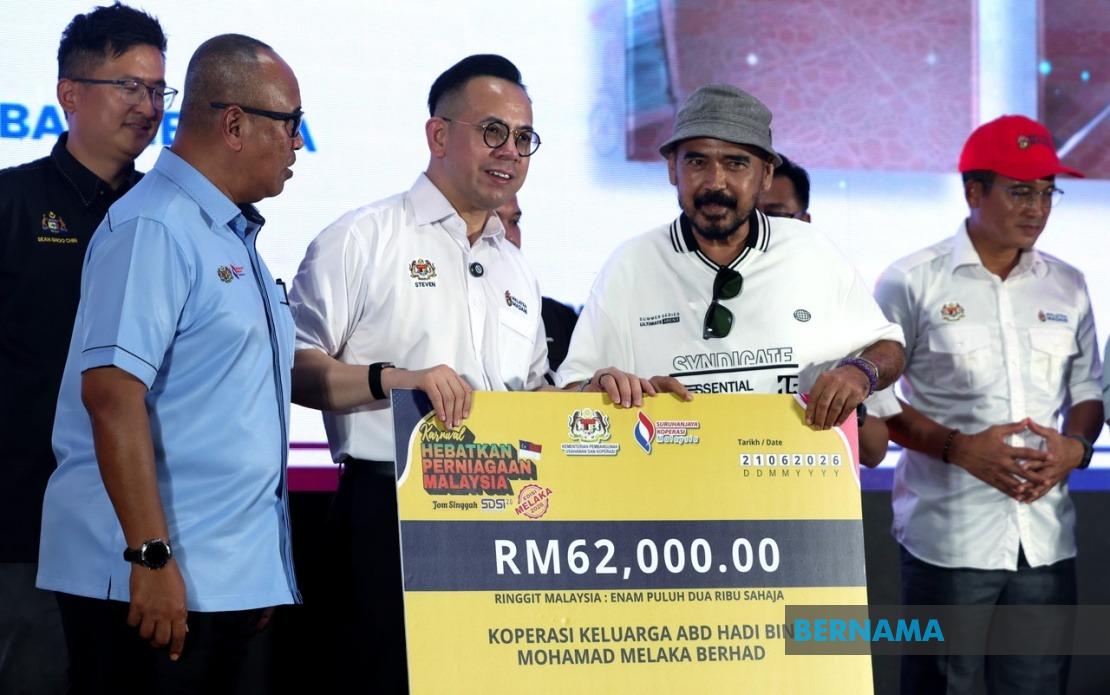
The Empowering Malaysian Businesses Carnival 2026 (HPM 2026) has concluded its Melaka leg with substantial results, generating RM8.45 million in combined business matching value and financing potential across a three-day event held from June 19 to 21. The Ministry of Entrepreneur Development and Cooperatives (KUSKOP) reports that the carnival successfully delivered on its mandate to create tangible networking and growth opportunities for Malaysia's entrepreneur ecosystem, marking another milestone in the government's push to strengthen local enterprise development.
Attendance at the Melaka carnival demonstrated strong interest from the business community, with 70,000 visitors walking through the event venue during the three-day period. This footfall translated into immediate commercial activity, with direct product sales from participating entrepreneurs totalling RM532,802.77. The high visitor numbers underline growing awareness of such platforms among Malaysian business owners and aspiring entrepreneurs seeking to expand their reach and explore new market opportunities in an increasingly competitive environment.
The centerpiece of the carnival's impact came through dedicated business matching sessions, which facilitated direct introductions and negotiations between entrepreneurs and potential business partners. Organisers conducted 72 business matching sessions involving 25 potential entrepreneurs, resulting in RM6.4 million in identified business collaboration opportunities. These sessions are designed to help entrepreneurs identify synergies, forge strategic partnerships, and unlock new revenue streams by connecting businesses operating in complementary sectors or supply chains.
Financial accessibility remains a critical pain point for many Malaysian MSMEs, and the carnival addressed this through interactive engagement with financial institutions. The event attracted 55 micro, small and medium enterprises to dedicated financing sessions where representatives from banks and non-banking financial institutions presented funding options tailored to enterprise needs. These interactions yielded RM2.05 million in identified financing potential, providing pathways for capital-constrained businesses to access working capital, equipment financing, or growth capital.
The HPM 2026 Carnival series is part of a broader strategic initiative launched by KUSKOP Minister Steven Sim Chee Keong under the Hebatkan Perniagaan Malaysia (Empowering Malaysian Businesses) agenda. This overarching programme operationalises the ABCD framework—Accelerating Productivity, Bureaucracy Reduction, Capital Accessibility and Developing Market Access—which represents the government's integrated approach to boosting competitiveness and scale among domestic enterprises. The carnival functions as a tangible expression of this policy framework, translating abstract strategic goals into concrete business development activities.
The platform created at HPM 2026 offers Malaysian SMEs and cooperatives several dimensions of value beyond simple networking. Participating businesses gain exposure to best practices, can benchmark operations against peers, access information about government support schemes, and encounter potential investors or strategic partners. For cooperatives in particular, the carnival provides visibility and credibility-building opportunities that can facilitate integration into larger commercial networks or government procurement channels.
For Malaysian readers following entrepreneur development policy, the carnival results carry significance beyond the immediate numbers. They demonstrate that structured, government-supported business-to-business platforms can generate measurable economic activity and create pathways for smaller enterprises to scale. The RM8.45 million in identified opportunities—while impressive—likely understates the longer-term value, as many business connections forged at such events develop into sustained commercial relationships over months or years following initial meetings.
The geographic strategy underpinning the HPM 2026 series reflects deliberate attempts to reach entrepreneurs beyond the Klang Valley. The Melaka carnival represents the third installment, following successful earlier events, with organisers already planning the next edition in Penang from July 17 to 19 at the Penang Waterfront Convention Centre (PWCC). This regional rotation approach ensures that entrepreneurs outside major commercial hubs have comparable access to business development resources, financing connections, and partnership opportunities available to their counterparts in Kuala Lumpur.
Penang's selection for the next carnival carries particular relevance given the state's established status as a manufacturing and technology hub. The Penang event is expected to attract industrial enterprises, electronics manufacturers, digital businesses, and service providers seeking growth capital and strategic partnerships. KUSKOP's roadmap suggests plans for additional carnivals in other states, indicating a commitment to make business development support a regular, accessible service rather than sporadic initiatives.
The financing component of these carnivals addresses a documented gap in Malaysia's MSME support ecosystem. While government funding schemes exist, many smaller enterprises struggle with awareness, application complexity, or stringent collateral requirements. By bringing financial institutions to entrepreneurs rather than requiring businesses to approach banks individually, the carnival format reduces barriers to capital access and increases the likelihood that viable businesses can secure needed funding. The RM2.05 million in identified financing potential from Melaka suggests considerable unmet demand among local MSMEs.
For business observers, the HPM carnival series illustrates how government agencies are shifting from passive policy implementation toward active market facilitation. Rather than simply publishing guidelines or opening application windows, KUSKOP is designing and executing events that create the conditions for business-to-business and business-to-finance connections. This hands-on approach recognises that information asymmetries and transaction costs often prevent beneficial market interactions, particularly for enterprises lacking extensive networks or institutional knowledge.
Looking forward, the success metrics from Melaka—high attendance, substantial direct sales, significant business matching value, and meaningful financing identification—will likely inform planning for the Penang carnival and subsequent regional events. The data also provides a baseline for evaluating whether these carnivals translate short-term opportunity identification into longer-term business growth and employment generation. Tracking follow-up outcomes from business matches and financing approvals could ultimately demonstrate whether the carnival format delivers sustainable enterprise development benefits beyond the event itself.
The HPM 2026 Carnival series, through its focus on accessible networking, financing connectivity, and strategic collaboration opportunities, reflects Malaysia's ongoing efforts to strengthen its foundation of locally-owned enterprises. As the next edition prepares to open in Penang, the Melaka results indicate that structured, regionally-distributed business development platforms can effectively mobilise capital and create growth opportunities for Malaysia's MSME sector, which remains crucial to employment, innovation, and inclusive economic development across the nation.