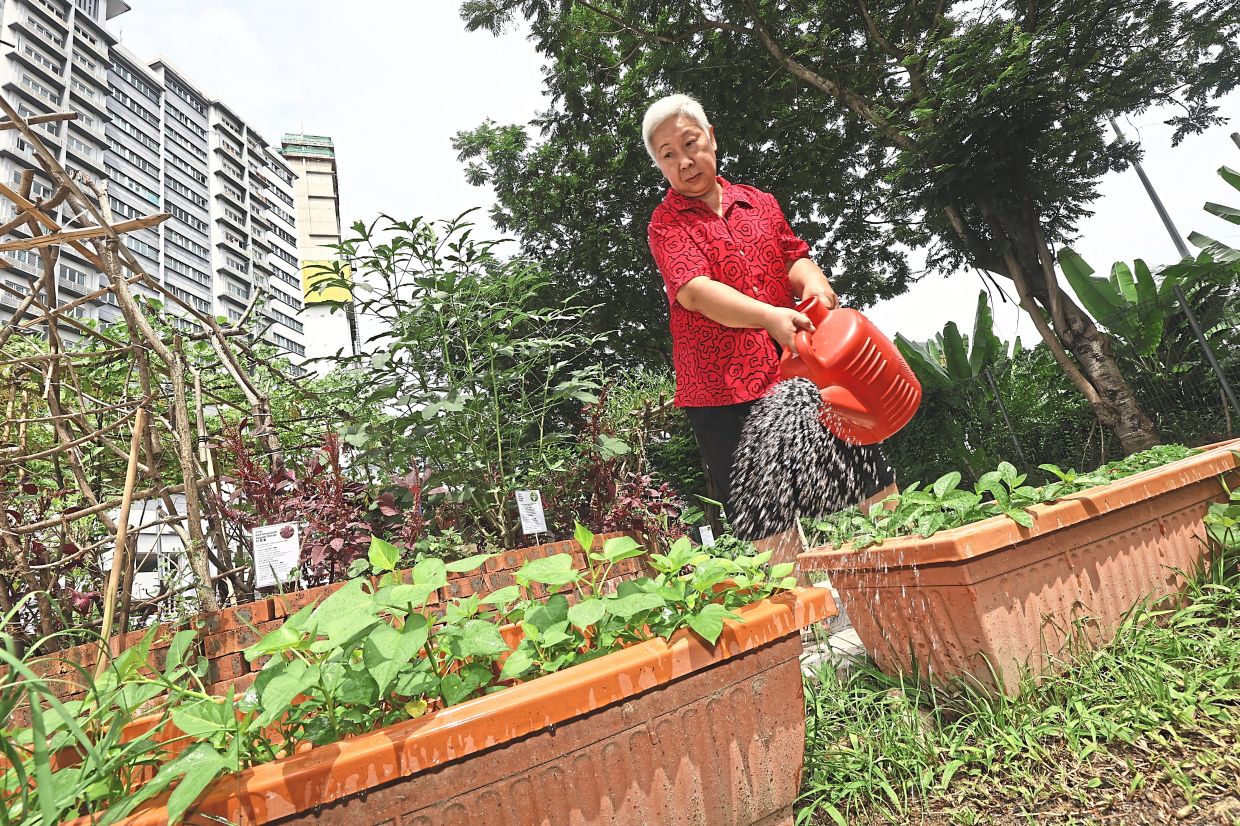
Behind 1Razak Mansion in central Kuala Lumpur, an abandoned patch of overgrown land has undergone a remarkable transformation into a flourishing food forest, marking a significant shift in how Malaysian urban communities are addressing the needs of ageing populations. What was once a neglected corner choked with weeds and decaying vegetation now displays orderly rows of herbs, vegetables, fruit-bearing plants and flowering shrubs. The project, which took six months to complete under the guidance of social enterprise PWD Smart FarmAbility with backing from the building's management corporation and resident volunteers, has become emblematic of a broader movement toward integrating green spaces and community-centred initiatives within high-density urban developments.
The timing of the food forest's official launch carries particular significance given the demographic composition of 1Razak Mansion, where approximately 80% of residents are senior citizens. This demographic reality prompted Minister Hannah Yeoh, who oversees Federal Territories in the Prime Minister's Department, to underscore the importance of programmes targeting both physical and mental wellbeing during the launch ceremony. While the residential community already offers established fitness programmes including tai chi classes, mental health support remains an often-overlooked dimension of elderly care in Malaysia's urban environments. The food forest addresses this gap by creating a purposeful space where older residents can engage in meaningful daily activities beyond structured exercise routines.
Resident Alice Fernandez, 64, articulates how the garden delivers tangible benefits across multiple dimensions of daily life for the community's elderly population. Beyond the obvious health advantages of physical activity and fresh air, the garden directly reduces household expenses by providing harvestable produce for residents' personal consumption. For many retirees living on fixed incomes, this aspect proves particularly valuable in the face of rising food costs that have affected Malaysian households across income levels. The psychological dimensions prove equally important—the space provides respite from the isolation that often accompanies retirement and urban living, transforming an overlooked corner into a destination that draws residents outdoors and fosters informal social connections. Fernandez's testimony reveals how the garden has become integrated into her personal wellness routine, now forming part of her daily schedule as she visits after morning jogging sessions.
The transformation from neglected space to community asset also reflects shifting attitudes toward environmental stewardship within urban residential settings. Fernandez emphasises how the garden's proximity to the refuse collection area initially rendered it invisible to residents, a forgotten zone that contributed to the overall sense of abandonment. The beautification initiative has reversed this perception entirely—the area now attracts foot traffic, particularly from elderly residents who may lack the stamina for longer outdoor excursions beyond the compound. This revitalisation demonstrates how strategic use of underutilised residential spaces can address multiple community challenges simultaneously, combining environmental improvement with enhanced quality of life for vulnerable populations.
Behind the scenes, the logistical coordination required to transform the vision into reality involved numerous contributors working in concert. Thieeben Sivabalasingam, 38, served as a key figure in the construction phase, managing materials delivery and site logistics alongside the project's founding team. His account of witnessing the space evolve from bare cleared land to a completed garden reflects the collaborative effort required for such initiatives. His observation that team members would deliver materials and return a week later to find the site dramatically transformed illustrates how the project mobilised multiple waves of volunteer labour and expert input. For Sivabalasingam, the completed garden represents validation of collective effort and a tangible demonstration of community capacity to execute meaningful improvements.
The broader significance of the food forest extends beyond immediate beneficiaries at 1Razak Mansion, carrying implications for how Malaysia's densely populated urban areas might better integrate sustainable food production and community wellbeing. The project resonates with neighbouring residential developments as well, as evidenced by visitors from adjacent Razak City Residences who attended the launch ceremony. Jenny Wong, 70, and her husband KC Wong, 76, recognised the model's potential applicability within their own community, viewing the initiative as a prototype for transformative activities that could engage their retirement years productively. KC Wong's explicit hope that similar programming might be replicated at his residential community suggests appetite within Malaysia's growing retiree population for purposeful engagement opportunities that combine environmental consciousness with practical utility.
Founder and social entrepreneur Dr Billy Tang Chee Seng, 60, conceived the food forest as an initial foundation for more expansive community development rather than an endpoint. Future iterations of the project incorporate educational dimensions specifically designed to build resident capacity while introducing younger community members to scientific inquiry and sustainable agricultural methods. Planned infrastructure additions include a kitchen hub housed in a purpose-built structure where residents can learn to prepare meals using harvested ingredients, thereby extending the garden's utility beyond simple produce provision. The incorporation of microscopes for soil and microorganism study represents an attempt to bridge generational divides within the community, creating educational opportunities that stimulate intellectual engagement across age groups and foster shared interest in environmental processes.
This expansion strategy reflects sophisticated understanding of how community projects achieve sustainability beyond initial implementation phases. By layering educational programming, skill development, and intergenerational engagement onto the basic agricultural foundation, the initiative creates multiple pathways for resident participation tailored to different capabilities and interests. Senior residents can engage through tending and harvesting activities that provide both physical exercise and cognitive satisfaction, while younger residents gain exposure to applied science and practical knowledge relevant to global sustainability challenges. The kitchen hub concept further enhances the project's utility by transforming raw harvests into prepared meals, adding a practical dimension that connects agricultural production to daily nourishment in comprehensible ways.
The 1Razak Mansion food forest ultimately exemplifies how Malaysian urban communities are beginning to recognise and act upon underutilised spaces and unmet needs among growing elderly populations. Rather than treating ageing primarily as a burden requiring passive care provision, the initiative frames later life as an opportunity for purposeful engagement, environmental stewardship, and continued contribution to community wellbeing. The project's success in transforming both a physical space and resident attitudes toward community participation suggests a model with potential application across Malaysia's numerous high-rise residential developments. As urbanisation continues to accelerate and retirement populations expand, such initiatives may prove increasingly valuable in addressing interconnected challenges of food security, mental health, social isolation, and sustainable urban living.

