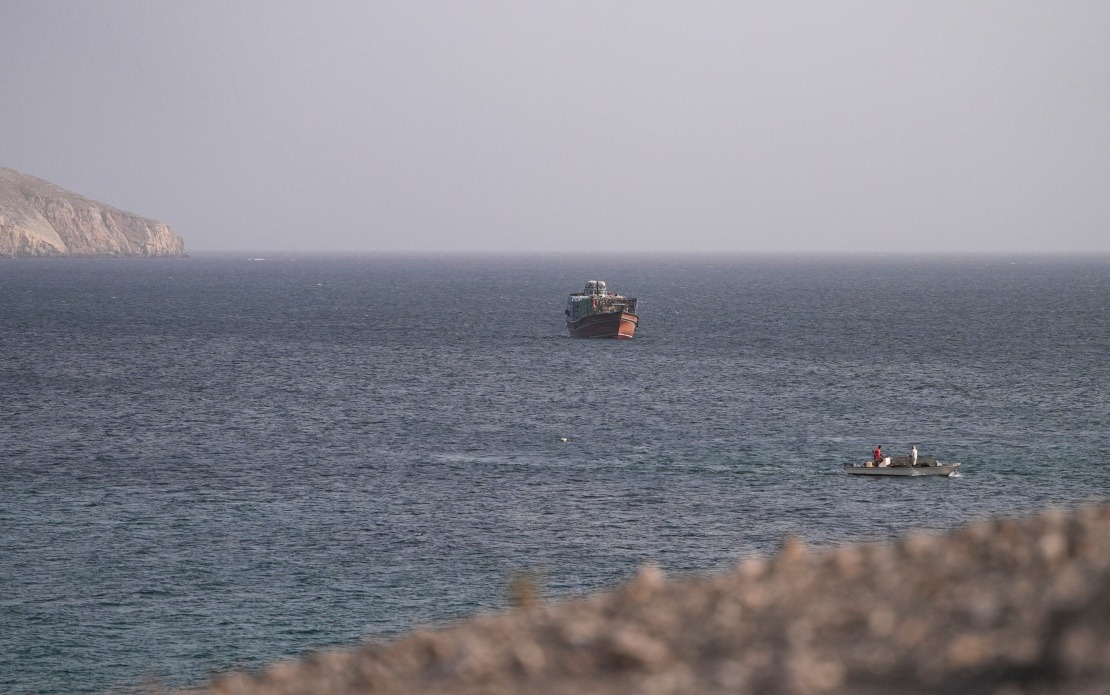
Iran's Foreign Ministry Spokesperson Esmaeil Baqaei has declared that the Strait of Hormuz will permanently depart from the configuration that preceded the recent conflict, rejecting any interpretation that an emerging agreement with Oman represents a simple reopening of the strategically vital waterway. Speaking during a televised interview on Sunday night, Baqaei underscored that prolonged discussions between Tehran and Muscat have focused on crafting a durable framework for ensuring secure maritime passage through one of the world's most consequential shipping channels. His remarks signal Iran's determination to fundamentally reshape the operational governance of the strait rather than restore previous arrangements, carrying significant implications for regional shipping, energy markets, and international commerce that flows through the 21-mile-wide passage separating Iran and Oman.
The Iranian diplomat emphasised that discussions addressing the strait's future commenced immediately following the ceasefire declared on April 8, with multiple rounds of diplomatic exchanges occurring between the two coastal nations. Baqaei revealed that Foreign Minister Abbas Araghchi prioritised Oman as the destination for his initial foreign visit after the conflict, reflecting Tehran's strategic focus on establishing bilateral consensus with its neighbour. These negotiations specifically addressed the strait's governance architecture and the creation of secure maritime corridors, demonstrating that Iran views the resolution not as a temporary arrangement but as a foundation for long-term strategic recalibration affecting one of the world's most critical energy transit points.
According to Baqaei, the memorandum of understanding terminating the conflict explicitly mandates that future management of the Strait of Hormuz must involve Iran acting in consultation with Oman and engaging in dialogue with other regional stakeholders. This framework reflects international recognition that unilateral control over such a vital passage cannot be sustained indefinitely. The Iranian official noted that during the initial 22 to 23 days of implementing the agreement, the northern route of the strait remained fully operational with maritime traffic flowing freely, suggesting the viability of maintaining accessibility while accommodating Iran's security interests. However, he attributed the subsequent disruption of the broader maritime restoration process to what he characterised as an act of aggression against Iran before the 30-day transition period concluded, indicating external factors complicated the implementation timeline.
Crucially, Baqaei indicated that the maritime route ultimately agreed between Iran and Oman would constitute neither the current northern nor southern corridor but rather an entirely new passage negotiated through bilateral consensus. This approach suggests Tehran seeks to establish maritime arrangements under its own strategic parameters rather than maintaining existing routes that may be perceived as advantageous to hostile powers or international competitors. The Iranian spokesman emphasised that talks with Muscat remain strictly bilateral in nature and do not involve third-party interests, attempting to insulate the negotiations from international scrutiny and potential interference. This positioning reflects Iran's broader strategy of consolidating regional control through direct state-to-state arrangements with immediate neighbours rather than operating within multilateral frameworks.
For Malaysian and Southeast Asian observers, Iran's recalibration of Hormuz operations carries profound implications for global energy security and maritime commerce. Approximately one-third of the world's traded crude oil transits the strait, and disruptions to its operations reverberate through Asian economies heavily dependent on Middle Eastern petroleum supplies. Malaysia's own energy security and that of neighbouring nations including Singapore, Thailand, and Vietnam remains vulnerable to prolonged instability in the strait's governance. The emergence of an Iran-Oman bilateral framework potentially offers greater predictability compared to periods of intense international contestation over the waterway, though it also concentrates decision-making authority within two parties whose geopolitical orientations may not align with regional consumer interests.
Baqaei stressed that securing the strait requires mechanisms that preserve Iran's sovereign rights while preventing the waterway's weaponisation by states Iran considers aggressive. This framing indicates Tehran's concern that previous arrangements facilitated activities contrary to its strategic interests, suggesting that any new configuration must include security provisions benefiting Iran specifically. The official asserted that Iran must ensure the strait cannot be exploited by parties it considers hostile, a veiled reference to the United States and allied powers whose naval presence in the Arabian Sea and Persian Gulf region Iran views as threatening. This demand for sovereignty protection within any maritime agreement complicates international efforts to establish neutral, universally accessible shipping corridors.
Addressing broader geopolitical tensions, Baqaei dismissed threats emanating from United States officials as ineffectual, comparing them unfavourably to the more tangible military actions Iran has previously endured. He characterised the United States as having conducted multiple high-intensity military operations against Iran throughout their hostile relationship, suggesting that mere rhetorical threats constitute a minimal concern for Iranian decision-making. The Foreign Ministry spokesperson insisted that Iran's policy calculations derive exclusively from national interest and security considerations rather than responding to intimidation or media campaigns. This defiant posture indicates Iran's leadership expects continued confrontation with the United States and is calibrating its Hormuz strategy accordingly, potentially viewing maritime control as leverage within a broader adversarial dynamic.
Baqaei specifically repudiated claims by United States President Donald Trump that Iran had sought to curtail attacks against American interests, characterising such statements as repeatedly disproven through factual developments. He described the dissemination of such claims through social media platforms as components of psychological and media warfare targeting Iran, suggesting Tehran views information operations as integral to American strategy. The Iranian official declared that historical experience demonstrates threats and media pressure cannot compel Iran to abandon its strategic positions, projecting an image of Iranian steadfastness and resolve. This rhetorical positioning serves multiple audiences simultaneously, reassuring domestic constituencies of governmental determination while signalling to regional adversaries that external pressure will not alter Iranian calculations.
The Iranian diplomat highlighted that Tehran had received diplomatic contacts from Bulgaria, the United Kingdom, and Ukraine within the preceding 24-hour period, suggesting active international engagement across multiple fronts. These communications underscore that despite elevated tensions with certain Western powers, Iran maintains diplomatic channels with various nations, potentially creating opportunities for mediation or negotiation. Baqaei articulated Iran's self-assigned responsibility to warn other countries regarding consequences of potential future military escalation or aggression against Iranian interests. His statement that countries cooperating in aggression against Iran or providing military infrastructure to aggressor states would face consequences foreshadows potential Iranian retaliation against regional allies of the United States, a warning likely directed toward Gulf Cooperation Council members and other regional partners of Washington.
Baqaei concluded by decoupling the Iran-Oman maritime agreement from the broader question of whether the Strait of Hormuz functions as fully open or partially restricted, instead linking the waterway's ultimate status to regional security developments and American actions. This formulation suggests Iran retains flexibility in implementing any agreement, potentially adapting its approach based on evolving geopolitical circumstances. For Malaysian policymakers and business interests, this ambiguity necessitates contingency planning regarding energy supplies and maritime insurance costs, which typically fluctuate according to Hormuz stability perceptions. The underlying message from Iran's Foreign Ministry indicates that long-term predictability regarding Hormuz operations remains elusive, contingent upon resolution of deeper conflicts between Iran and the United States that show no signs of imminent settlement. Regional economies must therefore maintain vigilance and diversification strategies to mitigate vulnerability to sudden shifts in Iran's maritime policy or broader Middle Eastern security conditions.

