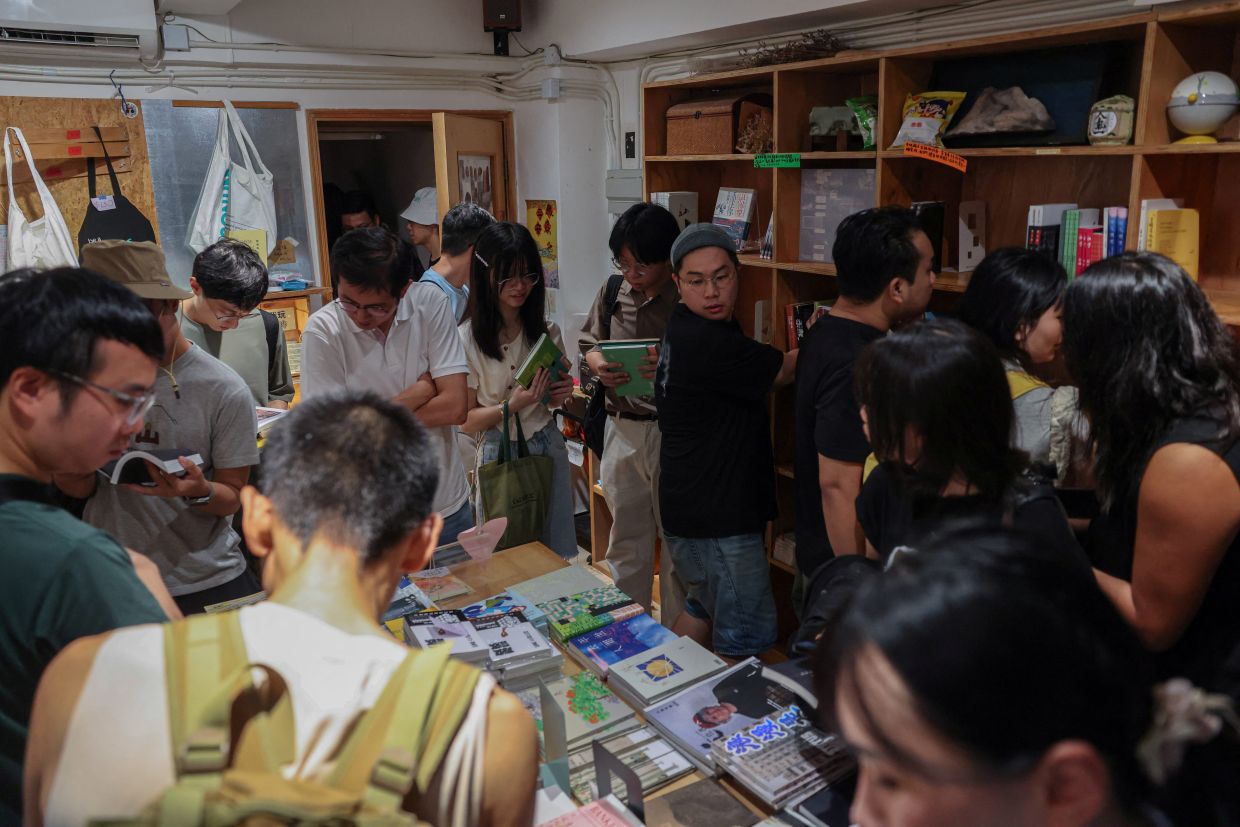
Fleming Cheng, a university student from mainland China, had accessed politically sensitive titles only through internet workarounds until stepping into Greenfield Book Store in Hong Kong. There, he encountered works offering perspectives starkly at odds with Beijing's official line—including critical accounts of China and histories of reform-minded leaders who supported the Tiananmen Square protesters. For Cheng and countless mainland readers, Hong Kong's scattered independent bookstores represented something rare: physical access to suppressed ideas and alternative viewpoints in a Chinese-speaking context.
For decades, these tucked-away shops served as crucial intellectual outlets for people across the border. Unlike mainland bookstores, which operate under strict Communist Party censorship, Hong Kong's independent retailers once embodied the territory's distinctive position as a publishing and information hub. They stocked works on sensitive political topics, offered diverse perspectives on Chinese history, and provided spaces where readers could encounter ideas fundamentally incompatible with state-approved narratives. The bookstores functioned as more than commercial enterprises; they were sanctuaries for intellectual curiosity and windows onto a world beyond state control.
Yet this precarious ecosystem now faces systematic dismantling. Since March, authorities have arrested booksellers associated with Book Punch, Hunter Bookstore, Greenfield Book Store, and Have A Nice Stay—four independent retailers targeted within four months on allegations of violating sedition provisions in Hong Kong's 2024 National Security Law. Although bail was granted in most cases, the message proved devastating: Greenfield announced closure at the end of its lease following police raids, while Have A Nice Stay shut down on August 30, citing ambiguous "elusive red lines" and financial difficulties even before its staff faced arrest charges.
The current crackdown represents an escalation of restrictions that intensified after Beijing imposed a separate National Security Law in 2020. That legislation prompted the disappearance of civil society groups, the arrest of prominent democracy activists, and systematic removal of politically sensitive titles from public libraries. At Hong Kong's annual book fair, smaller independent publishers were excluded from exhibiting, and pro-Beijing media condemned independent book events as "soft resistance." Yet many retailers persevered, continuing to stock controversial works and organise literary activities. The recent wave of sedition arrests has shattered that resilience, creating a chilling effect across the sector.
The legal framework driving these closures remains deliberately vague, which intensifies the uncertainty paralyzing independent booksellers. Authorities prohibit statements with "seditious intention" designed to incite hatred against or overthrow the governments of China and Hong Kong, yet have declined to publish a comprehensive list of banned titles. Secretary for Security Chris Tang compared booksellers' obligations to food vendors ensuring their products are not poisonous, implying that determining what constitutes seditious content should be straightforward. In practice, however, booksellers operate in legal fog, unable to discern which volumes might trigger prosecution. Anonymous retailers have described becoming progressively cautious about stocking works examining contemporary Chinese politics, while landlords increasingly refuse to rent premises to bookstores after experiencing government pressure.
The erosion of Hong Kong's publishing freedom carries profound implications for readers across the Chinese-speaking world. Iris Wang, a university student from neighbouring Guangdong, appreciated that independent bookstores like Hunter encouraged critical thinking rather than mere commercial transactions. Brian Leung, a Hong Kong resident, described losing something cherished about his city—spaces defined by distinct character and intellectual independence. These readers recognised that bookstores functioned not primarily as retail outlets but as repositories of values increasingly scarce in territories under tightening authoritarian control: freedom to encounter diverse perspectives, space for individual reflection, and resistance to enforced conformity.
Taiwan has emerged as a partial substitute, increasingly serving as the primary publisher of Chinese-language works addressing sensitive political topics. Between 2020 and 2024, Taiwan's publishers released six times as many books about Hong Kong as during the preceding five years, according to Tunghai University sociology professor Cheng Tsu-Bang. This dramatic increase reflects both intensifying interest in Hong Kong's pro-democracy movement and explicit efforts to document and preserve its history before further restrictions take effect. Publishing has transformed into a form of mutual support between Taiwan and Hong Kong, with independent presses functioning as archivists of suppressed narratives.
However, even this alternative channel faces obstruction. In July, Taiwan's broadcaster FTV reported that logistics firms began refusing orders to ship books from Taiwan to Hong Kong bookstores under investigation, while demanding complete inventory lists before delivering to other retailers. Such developments suggest that restrictions may extend beyond Hong Kong's borders, potentially constraining Taiwan's capacity to serve as an alternative publishing hub. Hong Kong authors and publishers who relocated to Taiwan, including one writer who requested anonymity for fear of government retaliation, now find themselves unable to freely distribute their work back to their homeland.
These authors have provided crucial perspective on what independent bookstores represented in Hong Kong's cultural ecosystem. One writer compared the collapse of civil society to a boulder rolling downhill, crushing cultural institutions in its path. Independent bookstores were characterised as small flower fields where people could breathe and attempt to preserve what remained of Hong Kong's distinctive identity. Such metaphors capture the emotional and political significance these retailers held—they transcended their commercial function to become symbols of resistance to authoritarian homogenisation.
The broader trajectory illuminates how Hong Kong is undergoing systematic alignment with mainland governance structures and values. Fleming Cheng's observation proved particularly prescient: if Hong Kong's government continues bringing every aspect of the territory into close alignment with the mainland until the two become indistinguishable, the loss extends far beyond Hong Kong itself. Mainland readers like Cheng recognised that bookstores represented a final refuge where alternative perspectives remained physically accessible, where one could encounter works offering divergent interpretations of history and contemporary politics. The closure of these spaces signals that such refuge is evaporating.
The security laws themselves theoretically protect freedoms of speech and publication, with government statements asserting that criticism of government policies remains permissible. Yet booksellers' lived experience contradicts such assurances—the combination of sedition arrests, ambiguous legal standards, landlord harassment, and logistics obstruction creates an environment where retailers cannot confidently determine what constitutes legally acceptable inventory. The practical effect, whether or not intentional, is self-censorship: retailers withdraw potentially controversial titles not because they have been explicitly banned but because the legal uncertainty makes stocking them untenable.
For readers across Southeast Asia and the broader Chinese diaspora, Hong Kong's contracting publishing ecosystem carries troubling implications. The territory once functioned as a crucial intermediary, receiving information and intellectual products from global networks and redistributing them throughout Chinese-speaking communities. The progressive restriction of this role represents not merely a local Hong Kong matter but a narrowing of information flows affecting millions. As independent bookstores close and their networks dissolve, the boundaries of permissible thought in Chinese-speaking contexts contract correspondingly.
Standing in bookstores has become an increasingly fraught experience for Hong Kong residents and visiting mainland readers alike. What was once an ordinary commercial activity—browsing shelves, selecting volumes, engaging with ideas—now carries implicit political meaning and potential legal risk. The independent bookstores that remain open do so under intensifying scrutiny and economic pressure, their survival increasingly uncertain. For many, the closure of these spaces represents not merely the disappearance of retail outlets but the erasure of Hong Kong's distinctive role as a sanctuary for intellectual freedom within the Chinese-speaking world.

