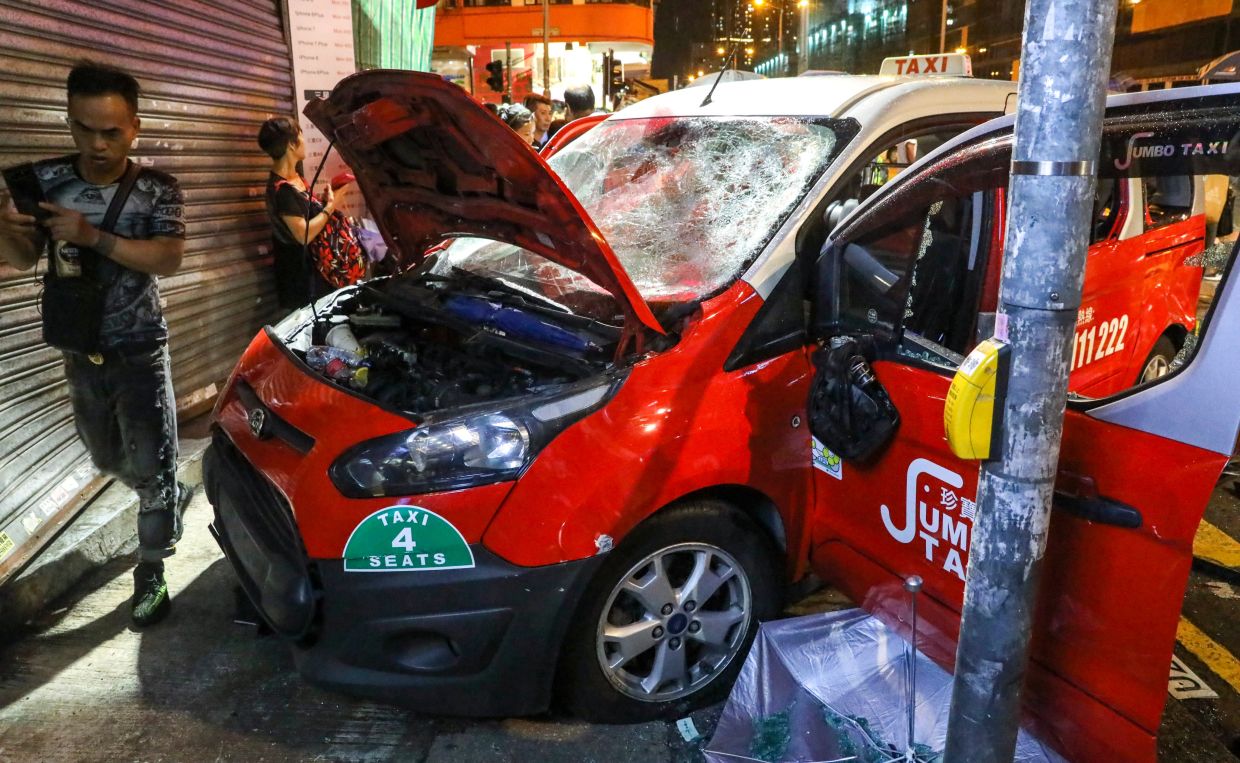
A Hong Kong woman whose life was upended when a taxi mounted a pavement and struck her during a 2019 protest demonstration has brought her personal injury case to court, seeking HK$8.4 million in damages from the driver. Park Hoi-lam, now working as a kindergarten clerk, was among crowds gathered in Sham Shui Po on October 6, 2019, when taxi driver Henry Cheng Kwok-chuen's vehicle veered onto the footpath on Yen Chow Street, leaving her with severe injuries that have required multiple surgeries and continue to constrain her daily life nearly five years later.
The case, being heard before Justice Simon Leung Chun-man, illustrates the lingering human cost of Hong Kong's 2019 protest period, when demonstrations that began over an extradition bill evolved into sustained and often violent clashes between protesters and authorities. Beyond the immediate political upheaval, thousands of ordinary citizens found themselves caught in situations that caused lasting physical and psychological harm. Park's lawsuit represents one thread of that broader social fabric, examining how civilians injured during those turbulent months seek recourse through the legal system.
Plaintiff's counsel Susanna Leong argued that Cheng's conduct demonstrated clear negligence and a failure to exercise reasonable care. She contended that the taxi driver provided no warning—neither honking his horn nor attempting to brake—before his vehicle struck Park and another woman. The absence of these basic precautions, she suggested, painted a picture of a driver either unable or unwilling to respond appropriately to the crowded street environment. This detail matters significantly because it shifts focus away from the chaos surrounding the protest and toward the individual actions of the driver in those crucial seconds before impact.
The defence strategy, however, has centered on reframing the driver himself as a victim of the broader violence that engulfed the area that day. Defence lawyers stressed that Cheng was attacked by protesters wielding metal rods and other weapons, positioning him as someone who suffered in his own right while going about his work. They argued that holding him liable for damages would effectively punish one victim of the violence to compensate another, which they contended does not serve justice. This framing raises uncomfortable questions about how courts should apportion responsibility when multiple people are harmed during chaotic public events.
Park's account of that afternoon reveals how quickly circumstances spiraled for an ordinary person going about routine activities. She and friends were attempting to reach Tsim Sha Tsui by bus when road closures forced them to disembark in Sham Shui Po. Upon discovering that railway services had also been suspended, they decided to walk toward Mong Kok. But separated from her companions, Park found herself in an increasingly tense environment. She described the gathering as initially peaceful before commotion erupted near Cheng's taxi. In the moments before impact, she attempted to flee, but the vehicle struck her at what she characterized as very high speed.
The physical consequences have been severe and enduring. Park underwent seven operations within three months of the collision and spent over a month hospitalized before discharge on January 18, 2020. Yet her recovery has plateaued. Medical professionals have informed her that further improvement is unlikely without additional surgical intervention—specifically knee replacement, which may become necessary in future years. In the present day, she experiences persistent knee pain that restricts her mobility; she cannot walk for longer than an hour without needing rest. These limitations shape every aspect of her work as a kindergarten clerk, preventing her from lifting objects or providing physical comfort to distressed children by carrying them.
The financial burden compounds her physical struggles. A cosmetic surgeon has recommended reconstructive surgery to address scarring on her legs, but Park lacks the funds for this procedure. This gap between recommended medical care and affordable access reflects a reality for many injured people navigating Hong Kong's healthcare landscape. The HK$8.4 million damages claim attempts to quantify not only her past medical expenses but also her diminished earning capacity and reduced quality of life going forward.
The defence attempted to undermine Park's testimony by presenting surveillance footage obtained through a private detective agency, arguing that video evidence showed her capable of leading a normal life and moving without significant difficulty. The footage captured Park shopping and dining after work—activities that defence counsel suggested contradicted claims of serious disability. But Park's response to this argument proved telling and humanizing. She questioned whether performing routine errands and eating meals—activities that most people undertake daily—could truly constitute evidence of leading a meaningful life. This exchange crystallized the gap between superficial normalcy and genuine functional capacity, a distinction that many chronic pain sufferers understand intuitively.
The case also illustrates a peculiar vulnerability that struck many Hong Kong residents during the 2019 period. Park was not a protester herself; the court heard that she had no involvement in the demonstration and denied harboring concerns about legal consequences. She was simply attempting to navigate home when violence erupted around her. Yet the defence's questioning about why she retained legal counsel when giving her police statement in March 2020 suggests lingering suspicion about her circumstances and motivations, even though her explanation—protecting her own interests—seems reasonable under the circumstances.
This litigation occurs within a changed political and legal landscape in Hong Kong. The National Security Law, enacted in 2020, fundamentally altered how protest-related cases are handled and discussed in the territory. Park's personal injury claim, while appearing straightforward, necessarily references the 2019 protests and the violence that surrounded them. Her case must navigate these sensitive waters while establishing liability based on the specific actions of the driver on that afternoon. The trial's expected six-day duration suggests the court will engage seriously with the competing narratives and evidence.
For Malaysian readers and Southeast Asian observers, Park's experience offers a cautionary reminder of how political upheaval can reach into the lives of uninvolved bystanders. Hong Kong's 2019 period produced not only immediate casualties and arrests but also a generation of people like Park, whose injuries continue to reverberate through their lives years later. The legal system's capacity—or failure—to provide adequate remedies for such victims reflects broader questions about state responsibility and accountability. Whether the Hong Kong court will hold Cheng liable, and if so at what level, may send signals about how jurisdictions in the region approach civil liability arising from protest-related incidents.
The case underscores how personal injury litigation can become intertwined with political narratives and memory. Park's injuries and limitations are medically documented and legally cognizable claims, yet they exist against the backdrop of a period that Hong Kong has moved to reframe through new legal frameworks. Her struggle to recover and rebuild her life continues even as the political moment that produced her injuries recedes into history.

