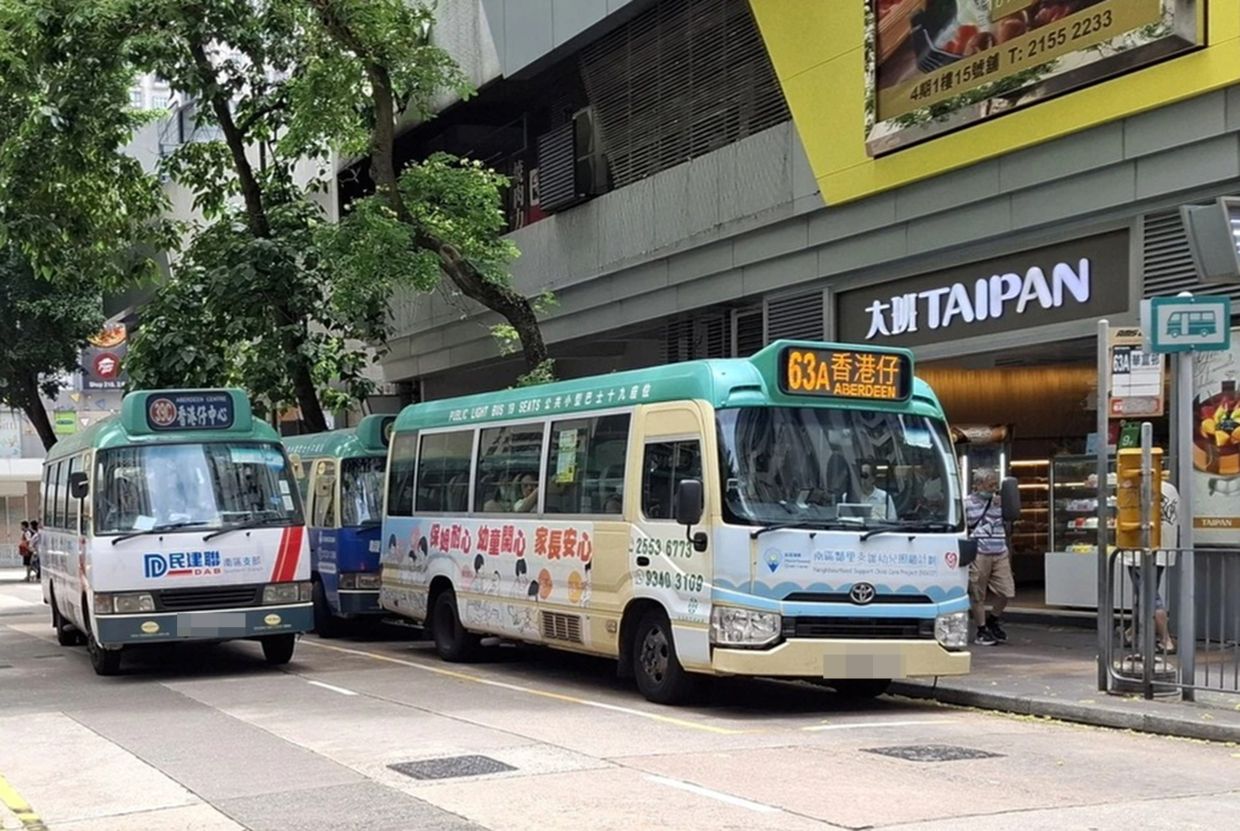
A Hong Kong woman has been charged with murder after a seemingly trivial disagreement with a fellow minibus passenger descended into violence that claimed a life. The incident, which unfolded on Tuesday evening in the Aberdeen district, began with an accidental foot-stepping and culminated in a fatal brawl outside a public housing estate. The case underscores how quickly casual friction in crowded public transport can spiral into tragedy, and raises questions about passenger safety and de-escalation in tense situations.
Police received an emergency call at 10.30pm on Tuesday reporting a fight between two women outside Wah Chui House at Wah Fu (II) Estate in Aberdeen. When officers arrived within minutes, the 53-year-old victim was already unconscious on the pavement. She was rushed to Queen Mary Hospital in Pok Fu Lam, where medical staff pronounced her dead at 11.22pm—just 52 minutes after the initial distress call. The rapidity of the woman's deterioration highlights the severity of the injuries sustained during the confrontation.
According to Senior Superintendent Hui Hong-kit, the assistant Western district commander for crime, the two women had no prior acquaintance. Their altercation originated on minibus route 63A, which operates between Aberdeen Centre and Wah Fu (II) Estate, when the victim accidentally stepped on the suspect's foot as both prepared to disembark. The initial misstep appeared inconsequential, but the suspect responded by stepping on the victim in turn, prompting mutual shoving and pushing while still aboard the vehicle. What might have ended with muttered complaints instead continued when the minibus reached its stop.
Witnesses suggest the confrontation intensified once the women exited the vehicle. The victim allegedly dragged the other woman out of the minibus door forcefully, and the 50-year-old suspect responded by attempting to kick her attacker. The altercation on the pavement quickly became physical and one-sided. According to Superintendent Hui's account, the suspect pressed the victim to the ground and then knelt on her abdomen while strangling her for two to three minutes. The victim sustained bruising around her neck, along with scratches on her hands and face—injuries consistent with a violent struggle against an assailant who held a significant advantage once the victim had been forced down.
The fight itself lasted several minutes and occurred in full public view. Multiple passengers from the minibus and pedestrians in the area witnessed the assault, yet none intervened to stop it or attempt to separate the combatants. A 25-year-old man eventually called emergency services when the victim lost consciousness. The failure of bystanders to take action—whether through fear, uncertainty, or simple passivity—reflects a documented phenomenon in urban societies where witnesses often hesitate to involve themselves in confrontations, even when lives may hang in the balance.
Police arrested the suspect at 10.42pm when she returned to the scene of the incident. She admitted to fighting with the victim, providing officers with a relatively straightforward initial investigation. The woman was subsequently charged with murder, a notably serious elevation from what might typically be classified as assault or fighting in a public place. This reclassification from the standard public fighting charge to murder reflects the fatal outcome and the severity of the violence employed during the struggle.
Background information about the victim emerged during the police inquiry. Hui noted that the deceased woman had a documented history of mental illness, though the precise nature of her condition and how it may have influenced the encounter remains unclear. This detail adds complexity to the incident, as individuals experiencing mental health challenges may sometimes exhibit behaviour that others perceive as provocative or threatening, even when no hostile intent exists. Whether the victim's condition played any role in initiating or escalating the dispute cannot be determined from the available evidence.
The 50-year-old suspect appeared before Eastern Court on Friday morning following her arrest. The murder charge carries potential imprisonment for life under Hong Kong law, representing an extraordinarily severe penalty for what originated as a trivial dispute over an accidental contact. The case will proceed through the courts, where the question of proportionality—whether the suspect's response was justifiable given the initial provocation—will likely feature in the legal arguments.
This tragedy carries significance for Malaysian and Southeast Asian urban communities, where minibuses, shared taxis, and crowded public transport remain integral to daily commuting. The incident illustrates how confined spaces, fatigue, and the stress of urban living can transform minor irritations into violent confrontations. Unlike more structured bus or train systems, minibuses often involve frequent stops and close quarters where passengers interact intimately. The absence of formal conflict resolution mechanisms aboard such vehicles leaves disputes to escalate without mediation.
The case also raises uncomfortable questions about urban anonymity and collective responsibility. The fact that numerous witnesses observed the assault yet took no action—until the victim's unconsciousness forced someone to call police—reflects a troubling pattern in contemporary cities. Whether bystanders lack confidence in their ability to intervene safely, fear legal liability, or simply experience the bystander effect that diffuses responsibility across multiple observers, the outcome remains the same: a woman died while others watched.
For public transport operators across the region, the incident presents a cautionary reminder about the importance of driver training in recognizing and de-escalating tense situations. While individual responsibility ultimately rests with those who choose violence, transport companies could potentially implement measures such as closer monitoring of boarding and alighting procedures, conflict awareness training for drivers, and systems for rapid assistance when confrontations emerge. Installing panic buttons or communication systems that allow drivers to request immediate police assistance might reduce response times in future emergencies.
The Western district crime squad will continue investigating the circumstances surrounding the death, gathering statements from witnesses and examining any available video footage from the minibus or nearby security cameras. As the case proceeds through Hong Kong's legal system, it will serve as a stark reminder of how personal dignity and respect for boundaries—particularly in crowded public spaces—remain essential safeguards against tragedy. The trial will eventually determine whether the suspect's actions constitute murder or whether reduced culpability applies, but for the victim's family and the community witnessing this case, the outcome cannot undo the loss.

