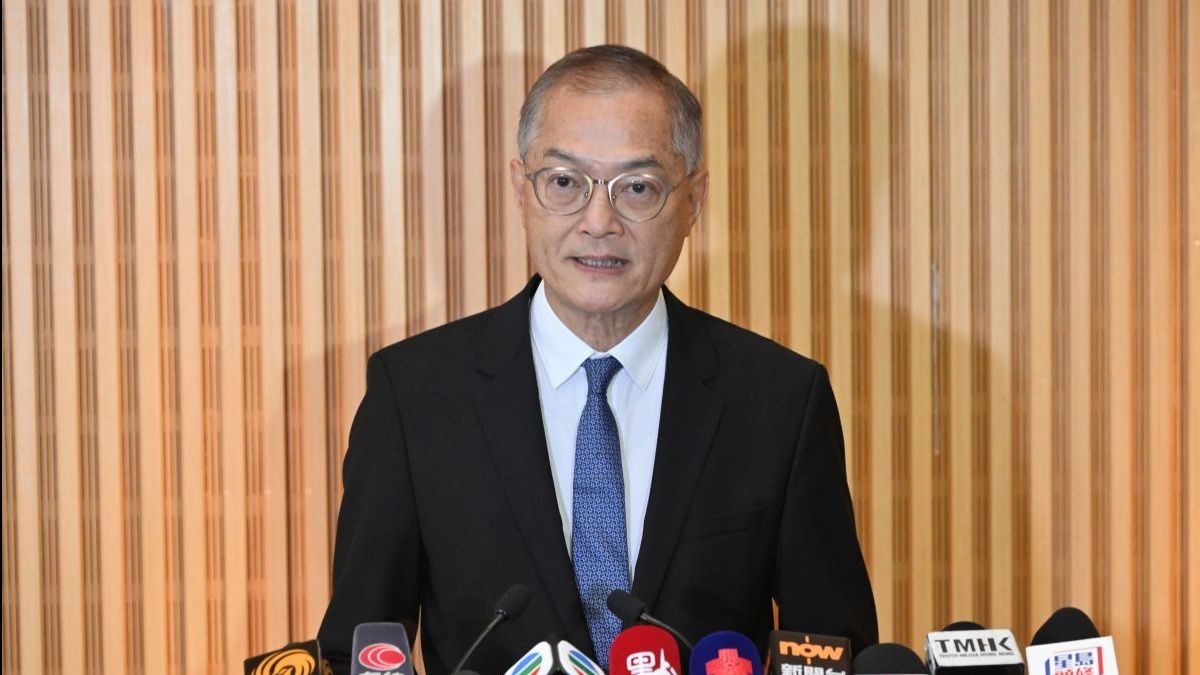
Hong Kong authorities are moving to strengthen regulatory oversight of the fertility industry after a local clinic's significant delay in reporting a serious incident involving mishandled embryo samples. Secretary for Health Lo Chung-mau announced the review on Wednesday following revelations that HEAL Fertility had discovered problems with patient specimens but failed to promptly notify the Department of Health or the Council on Human Reproductive Technology, which regulates in vitro fertilisation services.
The reproductive mishap came to light when laboratory staff at the Chinese University of Hong Kong's facility at Prince of Wales Hospital in Sha Tin detected inconsistencies during routine verification procedures. In one case, six of the seven embryo biopsy samples submitted by HEAL Fertility showed genetic profiles that did not correspond to the intended parents. A second case involved two specimens, both entirely unrelated to their respective patients. The discovery exposed a troubling gap between when the clinic first became aware of the problem and when it informed regulatory authorities.
Timeline discrepancies underscore the core issue at the heart of this incident. HEAL Fertility identified both mix-ups on May 26 and June 4 respectively, yet did not notify the Department of Health at any point. The clinic only reported the matter to the Council on Human Reproductive Technology on June 17, nearly three weeks after discovering the first problem. This extended silence angered regulators and prompted Lo to characterise the notification delay as "not very ideal"—a measured assessment of what amounts to a serious breach of disclosure obligations.
The Department of Health's Office for Regulation of Private Healthcare Facilities took swift action upon receiving the case referral on July 3. Officials determined that the incident—fundamentally an error in identifying patient specimens—qualified as a "serious untoward event" under the Code of Practice for Day Medical Centres, mandating notification within 24 hours. HEAL Fertility's failure to comply with this requirement constitutes a clear regulatory violation. Authorities have already issued a notice requiring the clinic to submit a comprehensive investigation report within four weeks explaining both the root causes of the incidents and the corrective measures it intends to implement.
The incident has broader implications for Hong Kong's regulatory framework governing fertility services. Lo acknowledged that the current system may lack sufficient teeth to compel timely reporting of such critical incidents. The Health Secretary indicated that authorities would undertake a comprehensive review of existing disclosure mechanisms to identify potential gaps and strengthen enforcement. This review reflects growing concern that the present regulatory architecture relies too heavily on voluntary compliance and may not provide adequate safeguards against the kind of communication failures demonstrated in this case.
Regulatory responses have extended beyond administrative censure. Police became involved after the Department of Health handed over the file on Monday, although a police spokesman confirmed that no arrests have been made thus far. The decision to involve law enforcement signals the seriousness with which authorities regard the clinic's conduct. Lo committed that the government would await separate reports from police investigators, the Council on Human Reproductive Technology, and HEAL Fertility itself before determining what procedural and legislative reforms are necessary to prevent similar incidents.
HEAL Fertility offered a formal apology to affected patients late Tuesday, characterising its response as proportionate and acknowledging the need for systematic improvements. The clinic has established an internal taskforce tasked with comprehensively reviewing operational procedures and implementing corrections where deficiencies exist. Additionally, the clinic informed patients concerned about specimen identity that they may request genetic testing to verify the actual parentage of their embryos. However, such testing offers cold comfort to those who have already endured the stress and uncertainty created by the clinic's mismanagement.
The regulatory response has been stringent. Authorities have suspended fourteen of HEAL Fertility's seventeen service offerings, permitting only three storage-related functions to continue. This action effectively dismantles the clinic's operational capacity while preserving essential functions that protect the viability of stored specimens. The scale of the suspension underscores regulators' determination to signal that breaches of this magnitude carry serious consequences.
For fertility patients across Hong Kong and the broader Asia-Pacific region, this incident raises important questions about quality assurance and oversight within the reproductive medicine sector. Many clinics operate with minimal transparency, and regulatory gaps in several jurisdictions remain substantial. Hong Kong's response, while constructive, highlights how dependent system integrity remains on individual clinic compliance. The delayed notification by HEAL Fertility demonstrates how institutional failures can persist before detection, potentially placing patient interests at risk. Industry observers expect Hong Kong's regulatory review to establish tighter timelines, more stringent verification protocols, and enhanced penalties for non-compliance.
The incident also reflects broader challenges in regulating specialised medical services where technical complexity can obscure accountability. Embryo specimen management demands exacting protocols, yet even leading private clinics may lack the institutional discipline necessary for perfect execution. The involvement of both the Chinese University of Hong Kong's laboratory and HEAL Fertility illustrates how quality control failures can emerge from multiple points in the clinical pathway. Future reforms will likely emphasise independent verification, clearer custody protocols, and unambiguous accountability structures.

