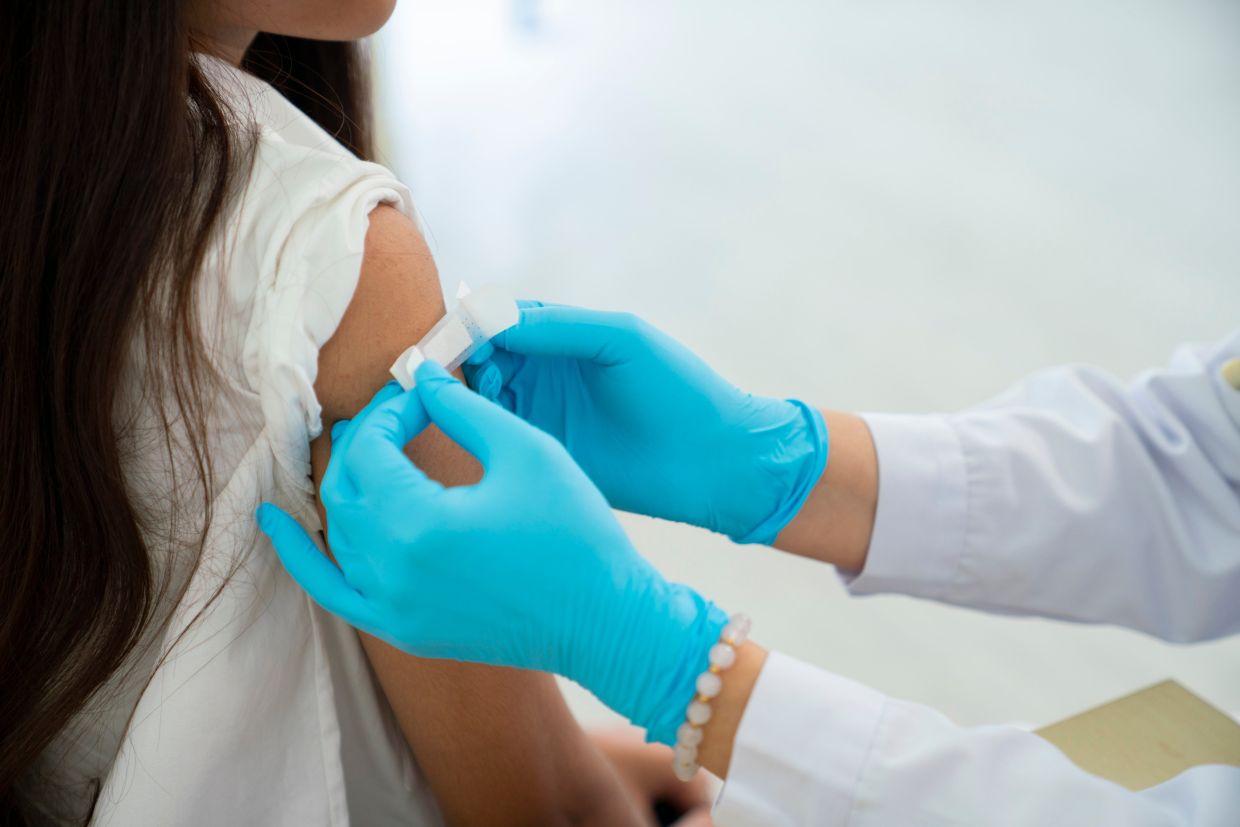
Hong Kong authorities have doubled down on their support for the city's comprehensive childhood vaccination programme, directly countering recent moves by the United States to restrict immunizations. The Centre for Health Protection issued a clear statement on Tuesday underscoring that all public health decisions must rest upon robust scientific evidence and peer-reviewed medical research, not political considerations or parental preference alone.
The Hong Kong Childhood Immunisation Programme represents one of the most ambitious and successful public health initiatives in the region, requiring children from infancy through Primary Six to receive vaccines protecting against eleven distinct diseases. These cover tuberculosis, poliomyelitis, hepatitis B, diphtheria, pertussis, tetanus, pneumococcal infection, chickenpox, measles, mumps, and rubella. Additionally, the programme offers human papillomavirus vaccination to eligible primary school girls as a preventive measure against cervical cancer. This multifaceted approach reflects decades of accumulated epidemiological data demonstrating the critical importance of early and timely immunization in preventing childhood mortality and serious morbidity.
The CHP's forceful reassertion of these principles comes in direct response to an executive order signed by US President Donald Trump on Monday that fundamentally reshapes America's vaccination landscape. Under the new directive, vaccines for respiratory syncytial virus monoclonal antibodies, hepatitis A, hepatitis B, meningococcal B, meningococcal ACWY, and dengue would henceforth be recommended only for what the administration terms "certain high-risk groups or populations" rather than as part of routine childhood immunization schedules. The order goes further still, instructing the federal government to challenge any state legislation that mandates school-entry vaccinations, framing such requirements as violations of parental authority, religious freedom, disability accommodation provisions, and equal protection guarantees.
For Hong Kong policymakers, the timing of the US retreat is particularly concerning given the territory's own experience with vaccine hesitancy. A custody case currently proceeding through Hong Kong's High Court illustrates the growing tension between parental autonomy and public health obligations. The parents of an infant named Danny, who was placed under Social Welfare Department guardianship, recently filed for a writ of habeas corpus seeking to overturn the authority's decision to vaccinate the child. They characterized the immunization as a "medical intervention" contrary to their wishes and expressed what the court documents describe as "fear and anger" at government arrangements. This case exemplifies how anti-vaccination sentiment, amplified by international policy shifts, risks undermining one of Asia's most effective disease prevention frameworks.
The CHP has articulated the core epidemiological argument against vaccination delays with clinical precision. Any postponement of scheduled immunizations reduces protective coverage against transmissible diseases during precisely the period when children face greatest vulnerability. The centre therefore urgently reminds parents to adhere to the HKCIP timeline to ensure comprehensive and timely protection. This guidance reflects international consensus among paediatric immunologists that vaccine schedules are products of careful study rather than arbitrary mandates. The spacing and sequencing of doses are calibrated to optimize immune response while minimizing adverse events, knowledge accumulated through millions of patient-years of clinical observation.
Hong Kong's success in maintaining extremely high immunisation coverage has yielded measurable public health dividends. Centre controller Dr Edwin Tsui Lok-kin emphasized that the government deeply values vaccination and credits the sustained trust of parents, schools, and healthcare professionals with enabling the territory to keep incidence rates of vaccine-preventable childhood diseases at exceptionally low levels. This accomplishment distinguishes Hong Kong from jurisdictions experiencing resurgences of diseases like measles following declines in vaccination uptake. The contrast between Hong Kong's epidemiological outcomes and those of regions pursuing less rigorous immunization policies provides powerful real-world evidence that systematic vaccination programmes deliver genuine protection.
A particular focus of government messaging has been defending combination vaccines, specifically those protecting against measles, mumps, rubella, and varicella. These formulations have been proven safe and effective through extensive post-market surveillance and provide sufficient immunological protection. The government notes that combination vaccines confer a significant practical advantage: they reduce the total number of injections required, thereby lowering the risk that children will miss scheduled doses due to logistical difficulties or parental anxiety about needle procedures. These products are now used widely across the developed world, from North America to Europe and throughout the Asia-Pacific region, reflecting global confidence in their safety profile and efficacy.
The divergence between Hong Kong's steadfast approach and America's recalibrated strategy reflects fundamentally different philosophies regarding the proper relationship between individual choice and collective welfare. Hong Kong prioritizes disease prevention at the population level, viewing vaccination schedules as non-negotiable public health infrastructure similar to water safety or food hygiene standards. The United States, by contrast, has moved toward a model emphasizing parental discretion and individual risk assessment. For Southeast Asian policymakers observing this debate, the stakes are substantial. A weakening of international vaccination norms could provide ideological cover for anti-vaccine movements in the region, potentially reversing decades of progress against diseases that remain endemic in parts of Asia.
The implications for Malaysia and other regional neighbours deserve careful consideration. Any significant US pivot away from vaccination recommendations risks legitimizing hesitancy movements that appeal to cultural narratives around medical autonomy and distrust of government institutions. These sentiments resonate across Southeast Asia, where varying degrees of vaccine hesitancy already exist. Were Hong Kong to follow the American model, it could trigger a cascade of policy changes throughout the region that collectively weaken immunization coverage below the threshold required for herd immunity. Such an outcome would be particularly dangerous for diseases like polio and measles, which can spread rapidly across borders in an interconnected region.
The CHP's statement ultimately rests on a proposition both scientifically sound and politically challenging in the current moment: that vaccination decisions should be made by medical professionals on the basis of evidence, not by politicians responding to populist pressure. This position requires sustained public education and professional resolve. Hong Kong authorities appear determined to maintain this stance, having recognized that the trajectory of disease control in coming years will be determined not by momentary political fashions but by whether vaccination coverage remains sufficiently high to prevent transmission of preventable diseases. The territory's experience with previous outbreaks of vaccine-preventable illnesses reinforces the urgency of protecting the gains already achieved.

