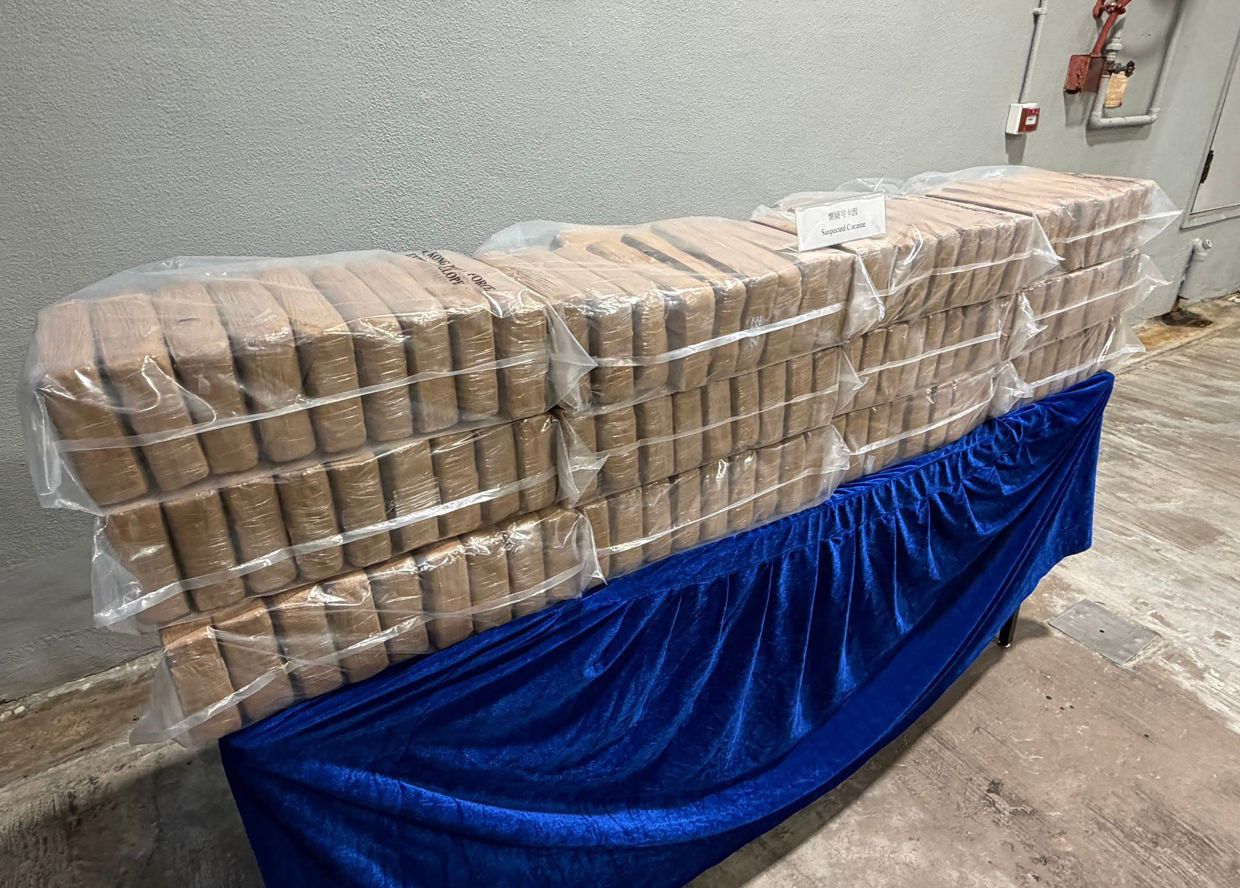
Hong Kong's narcotics enforcement division has dismantled what appears to be a sophisticated cocaine trafficking operation after discovering approximately 361 kilograms of the drug concealed aboard two vessels moored in Aberdeen Typhoon Shelter, making it the most significant seizure of its kind recorded over the past twelve months.
The operation unfolded across two separate raids. On Friday, police officers boarded a yacht and recovered roughly 241 kilograms of cocaine bricks, immediately triggering a broader investigation into trafficking networks operating through Hong Kong's crowded anchorages. The success of that initial operation bore fruit just three days later when narcotics bureau officers executed a follow-up search on Sunday at a nearby mooring point, discovering an additional 120 kilograms of cocaine hidden aboard a six-metre vessel.
The geographical proximity of the two boats and striking similarities in packaging and weight distribution have led investigators to conclude that both seizures represent portions of a single large shipment managed by an organised trafficking group. Rather than moving the entire consignment through a single vessel, the syndicate had apparently adopted a compartmentalised storage strategy, distributing the drugs across multiple yachts to reduce exposure and complicate enforcement efforts. This approach reflects the sophistication of modern maritime drug smuggling operations in Southeast Asian and East Asian waters, where criminal organisations frequently employ layered logistics systems to evade detection.
The combined haul carries an estimated street value of HK$270 million, according to police valuations. For context, this figure underscores the extraordinary profit margins inherent in international cocaine trafficking, where the drug commands premium prices in Asia-Pacific markets far removed from primary production and refining centres in South America. The valuation also highlights why Hong Kong's strategic position as a major international financial and transshipment hub makes it an attractive target for drug trafficking networks seeking to exploit its maritime infrastructure and regional connectivity.
The arrests so far have ensnared individuals at different suspected levels of the trafficking hierarchy. Following the first raid on Friday, police detained a suspected kingpin alongside two individuals identified as core operational members of the syndicate. All three initially claimed to law enforcement that they were either unemployed or earned livelihoods through fishing—a common cover story in Hong Kong's maritime communities where such professions provide plausible explanations for presence aboard vessels.
The investigation expanded on Monday when authorities arrested a 45-year-old local woman listed as the registered owner of the second yacht. Police have classified her as unemployed and placed her in custody pending further questioning. The timing of her arrest suggests investigators may be building a case against individuals higher in the supply chain, as they seek to uncover the financing, procurement, and distribution networks supporting the trafficking operation. Her cooperation or testimony could prove crucial in identifying upstream suppliers or downstream distribution networks within Hong Kong and potentially across the broader region.
This seizure arrives amid broader concerns about drug trafficking patterns in Asia. Hong Kong's position along major maritime routes connecting the Pacific, Indian Ocean, and South China Sea regions makes it particularly vulnerable to transshipment of narcotics destined for markets throughout East Asia, Southeast Asia, and potentially further afield. The concentration of large cocaine seizures in Hong Kong waters over recent years suggests that trafficking syndicates view the territory as an efficient logistics node for redistributing drugs to regional markets rather than merely as a final consumption point.
The scale and sophistication evident in this operation carry implications for regional law enforcement cooperation. Successfully dismantling such syndicates typically requires intelligence sharing and coordinated action across jurisdictions, as drugs rarely remain within single territories. The fact that Hong Kong police operated with sufficient information to locate two separate vessels within days of the initial discovery suggests either strong domestic intelligence gathering or potentially cooperation with international partners tracking the shipment's origins or intended destinations.
For Malaysia and other Southeast Asian nations, Hong Kong's experience underscores persistent vulnerabilities in maritime security and the evolution of trafficking methods. As traditional land and air smuggling routes face intensified scrutiny, criminal organisations increasingly exploit the region's thousands of islands, coastal anchorages, and busy shipping lanes. The compartmentalised storage strategy demonstrated here—splitting substantial shipments across multiple vessels—represents a methodology that could be replicated in Southeast Asian waters where enforcement resources remain stretched across vast maritime territories.
The investigation also highlights the importance of intelligence infrastructure and asset identification capabilities. The fact that authorities could locate and raid a second yacht within days suggests investment in maritime surveillance, vessel tracking systems, and informant networks. For regional law enforcement agencies working with limited budgets, such capabilities remain aspirational, creating enforcement gaps that international trafficking networks actively exploit. The Hong Kong operation therefore provides both a cautionary lesson about smuggling sophistication and a reminder that adequate investment in maritime security infrastructure yields measurable results in disrupting major trafficking operations before drugs reach street-level distribution networks.

