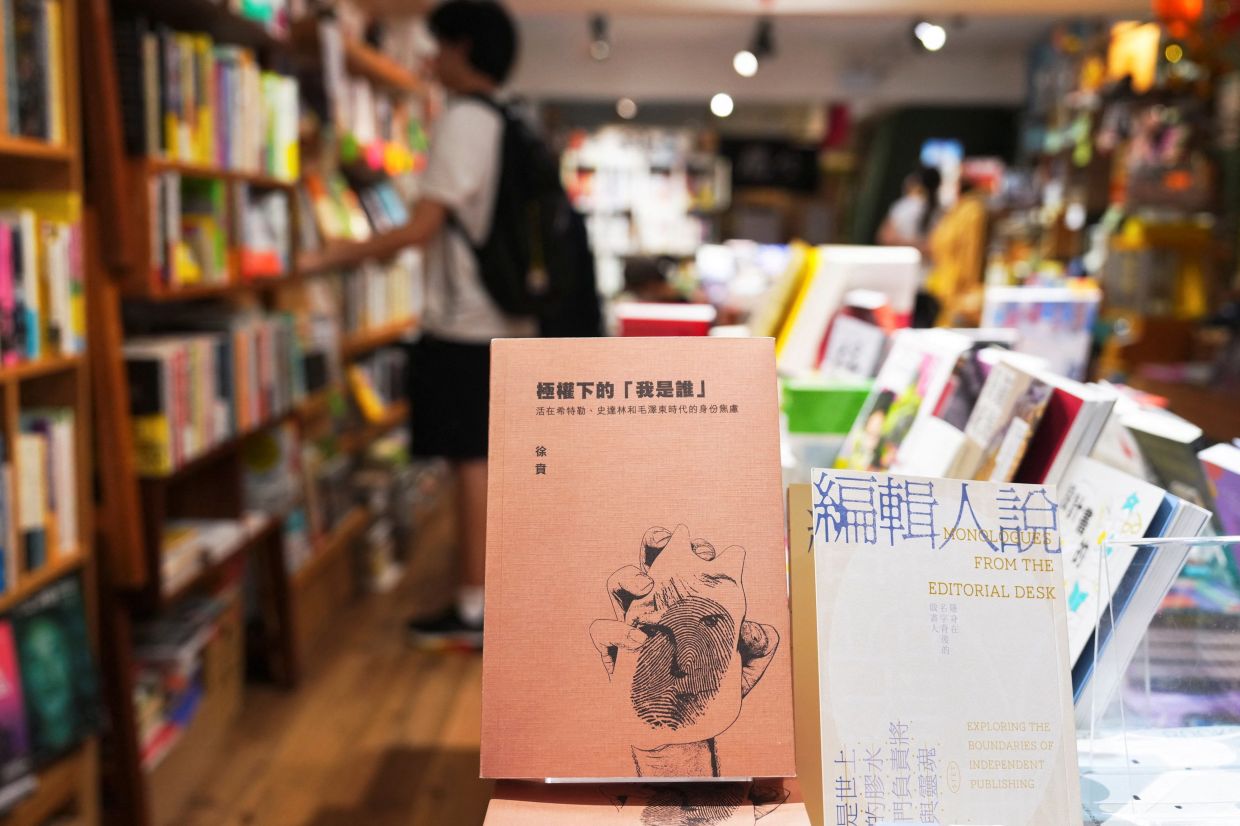
Hong Kong's security apparatus is tightening its grip on the city's publishing sector, with the territory's top security official publicly urging booksellers to take responsibility for the titles they stock. The warning from Secretary for Security Chris Tang comes on the heels of the third police operation in four months targeting independent bookstores, signalling an intensifying crackdown that has alarmed observers of civil liberties across Asia.
On Wednesday, authorities conducted raids on Have A Nice Stay, a bookshop founded by former journalists, and the longstanding Greenfield Book Store. Five individuals connected to these establishments were arrested on suspicion of displaying and selling seditious materials. Police alleged that the publications in question stirred up hatred against Hong Kong's government, courts, and law enforcement bodies. The operation underscores a pattern of escalating enforcement against retailers deemed to be distributing politically sensitive content.
The following day, Tang defended the government's approach during a legislative building press conference, employing a deliberately reassuring analogy while simultaneously reinforcing the ambiguity that has unsettled the business community. He likened the responsibility of booksellers to that of food vendors, arguing that just as grocers must ensure their products do not cause harm, retailers should guarantee their stock does not endanger national security. This framing, while seemingly straightforward, masks the fundamental challenge facing booksellers: the lack of clear criteria defining what constitutes a threat to security under Hong Kong's evolving legal framework.
When pressed on whether authorities would publish a definitive list of prohibited titles, Tang explicitly rejected the notion, insisting that doing so would hamper law enforcement efforts against works that intend to damage the country. This refusal to establish concrete boundaries has emerged as a central point of contention. Independent booksellers now operate in a murky environment where guidelines remain deliberately vague, forcing retailers to engage in guesswork about which publications might trigger legal consequences. Have A Nice Stay acknowledged this impossible position in announcing its closure on August 30, citing financial strain alongside the company's inability to confidently determine which books might be deemed problematic.
The arrests form part of a broader squeeze on Hong Kong's independent publishing ecosystem. In March, authorities arrested the owner and staff of Book Punch on suspicion of selling seditious publications, including a biography of imprisoned former media tycoon Jimmy Lai, who received a 20-year prison sentence in a separate national security case. In June, two other booksellers were detained on similar charges, with allegations that they had also received funding from foreign political organisations. This succession of enforcement actions has created a chilling effect that extends beyond detained individuals to the wider industry.
The cumulative impact is being felt across the region. Taiwan's Mainland Affairs Council has documented instances where Taiwanese publishers have voluntarily withheld titles from Hong Kong book fairs, essentially imposing self-censorship before any formal restriction exists. President Lai Ching-te of Taiwan, the self-governing democratic island that Beijing claims, posted on Facebook expressing concern that Hong Kong's freedoms of expression and publication face mounting pressure. Deputy Minister Liang Wen-chieh characterised the situation plainly, noting that independent bookstores serve as essential guardians of free thought, a role now imperilled by the enforcement approach.
The trajectory of these events reveals a sophistication in Hong Kong's approach to content control that moves beyond traditional book banning. Rather than issuing explicit prohibitions, authorities leverage the inherent ambiguity of national security law to encourage retailers to self-censor proactively. This mechanism proves more effective in practice than overt censorship would be, as it transfers the burden of interpretation and enforcement to private business operators who lack legal expertise and face potential criminal liability for misjudgements. The result is a form of distributed censorship that achieves suppression without appearing to establish it.
For booksellers, the situation presents an inescapable dilemma. Two of the five recently arrested individuals were released on bail Friday morning, but their legal jeopardy persists. Those still operating face mounting pressure to establish internal review procedures, to stock only established mainstream publishers, and to avoid anything that might be construed as critical of governmental or judicial institutions. Have A Nice Stay's statement that it cannot realistically assess the problematic nature of individual titles captures the absurdity of the position in which retailers are placed: compliance becomes impossible to demonstrate while incrimination becomes difficult to avoid.
The implications extend beyond Hong Kong's borders and into the broader regional ecosystem of information and ideas. If publishers in Taiwan and other democratic jurisdictions begin systematically avoiding Hong Kong markets, the city risks becoming intellectually isolated from its regional context. This represents a significant shift from Hong Kong's historical role as Asia's publishing hub and a crossroads for ideas. The security crackdown, while ostensibly protecting national interests, may ultimately diminish Hong Kong's cultural and intellectual vitality.
For Malaysian observers, the developments warrant careful attention. Malaysia has its own experience with security laws and restrictions on publication, and the Hong Kong model offers lessons about both the mechanisms through which such restrictions can be implemented and the collateral damage they inflict on open discourse and business confidence. The voluntary self-censorship spreading across the region demonstrates how ambiguous enforcement frameworks generate outcomes that exceed their stated scope, affecting entities far removed from the original enforcement targets.

