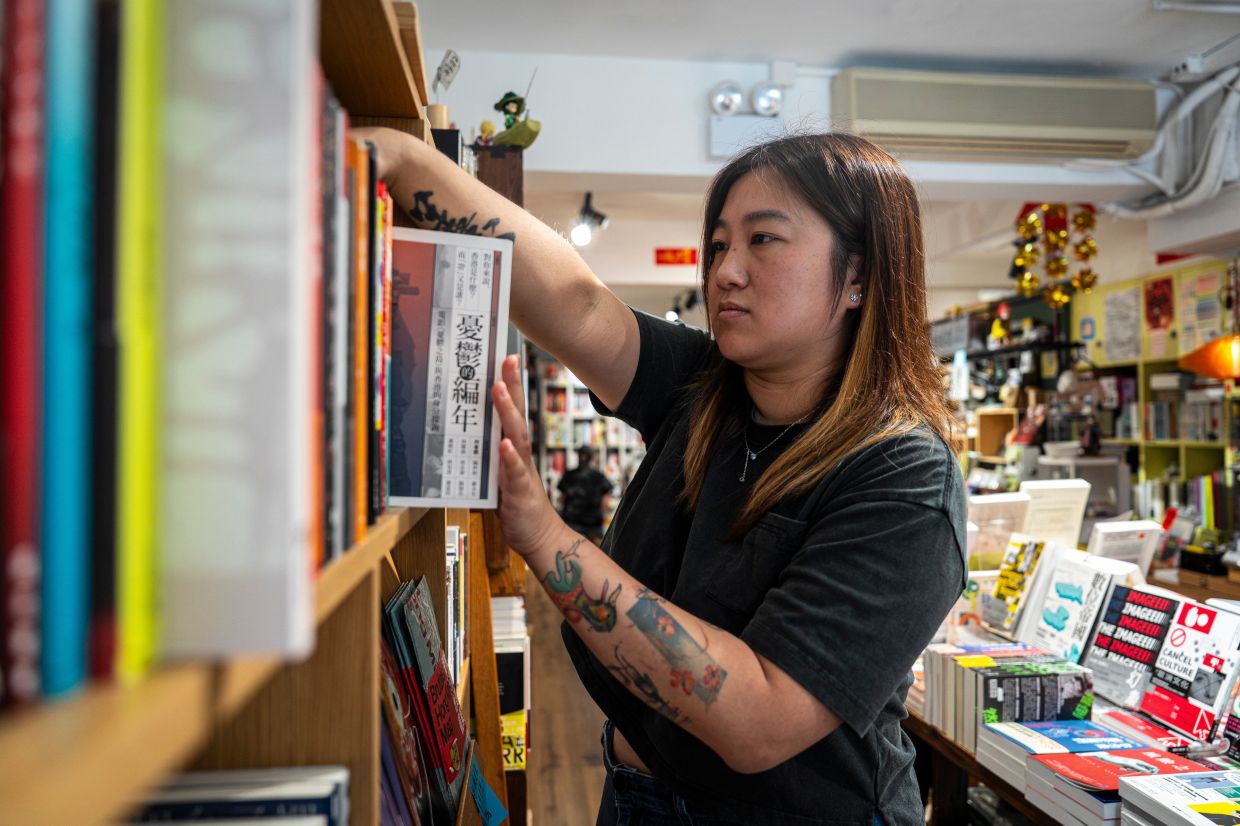
Hong Kong police arrested two individuals on Wednesday on suspicion of selling seditious publications and receiving financial support from overseas political organisations, acting under provisions of the 2024 national security law. While official statements from authorities declined to name those in custody, local media sources quoted unnamed informants identifying one suspect as Leticia Wong, owner of Hunter Bookstore located in the Sham Shui Po district. Wong, a former pro-democracy district councillor, has maintained an active voice in the city's political discourse even as many fellow activists have faced imprisonment during the intensified security crackdown that followed the 2019 pro-democracy demonstrations.
The timing of the arrests carries symbolic weight for Hong Kong's political climate. The detentions occurred just one week before the 29th anniversary of Hong Kong's handover from British to Chinese sovereignty in 1997, a date that has become increasingly contentious as observers evaluate whether Beijing's commitments regarding the city's autonomy and civil liberties remain intact. International critics and local observers have grown more vocal in asserting that the guarantees of Western-style freedoms promised during the handover have become progressively less meaningful.
According to government statements released Thursday, the two individuals in custody face dual charges under separate legislative frameworks. Primary accusations centre on sedition charges under the 2024 national security law, which significantly expanded government authority to prosecute speech-related offences. Secondary charges involve alleged receipt of funds or assets derived from criminal activity, with investigators specifically highlighting suspected financial remittances from international political organisations as problematic.
Police investigations documented that the accused pair had allegedly displayed and sold materials characterised as seditious within their shop premises. The authorities identified these items as publications that incite hatred against Hong Kong's government institutions, the judiciary, and law enforcement agencies. However, the government statement provided no specific details regarding which publications triggered the allegations or which foreign organisations allegedly provided financial support, leaving key evidentiary questions unanswered.
The arrest carries broader implications for Hong Kong's bookselling industry, which has faced mounting pressure since the security laws took effect. The biographical work of imprisoned pro-democracy activist Jimmy Lai has emerged as a particular flashpoint; its presence in bookstore inventories has triggered police scrutiny in multiple cases. Earlier this year, authorities arrested the owner and staff of another bookstore on similar seditious publication charges, partly based on their stocking of Lai's biography. Those individuals were subsequently released on bail, establishing a pattern of aggressive investigation followed by conditional release.
Wong's bookstore has become emblematic of the pressures facing Hong Kong's independent publishing ecosystem. In an interview conducted with international media last year, Wong documented systematic official pressure against her business operations. Government authorities took action against her shop 92 times between July 2022 and June 2025, ranging from unannounced inspections and conspicuous police patrols outside the premises to formal warning letters alleging regulatory violations. The cumulative effect of such sustained attention extends beyond law enforcement; Wong noted that an anonymous letter targeting a planned event at her bookstore successfully prompted the organising group to cancel their booking.
The prior year's attempt to host a pro-democracy book fair at the location had already drawn official criticism. A pro-Beijing newspaper published a report characterising the event as embodying "soft resistance," effectively signalling disapproval from established power structures. The planned inclusion of Lai's biographical material in the store's inventory became a focal point for this criticism, demonstrating how publishing decisions face intensified scrutiny in the current environment.
For regional observers monitoring Hong Kong's trajectory, these developments underscore the accelerating constraints on expression and activism. The National Security Law framework has created an environment where traditional bookstore operations intersect with political risk in unprecedented ways. Booksellers must now navigate not merely commercial considerations but also complex legal assessments regarding which titles and authors might trigger investigation under broadly defined sedition provisions. The lack of specificity in charges—authorities have provided minimal detail about which publications or organisations warrant prosecution—compounds this uncertainty.
The intersection of Hong Kong's security laws with international dimensions further complicates the landscape. The explicit allegation that foreign political organisations have funded bookstore operations introduces geopolitical tension into what might otherwise be understood as purely domestic commercial activity. This framing allows authorities to position independent bookstores as vehicles for external interference, effectively weaponising Hong Kong's international connections as justification for enforcement action.
Meanwhile, Hong Kong's government continues to maintain that both security laws remain essential guarantees for the city's stability and social order. Official statements reiterate that freedom of speech remains firmly protected under the existing framework, positioning enforcement actions as reasonable safeguards rather than speech suppression. This assertion stands in tension with the documented experiences of independent booksellers and activists who describe an environment of accelerating restrictions and self-censorship.
The case highlights a fundamental tension shaping Hong Kong's future as a global financial and cultural centre. Cities that attract international talent and investment historically depend on perceptions of openness and civil liberties. As the security enforcement trajectory continues, implications extend beyond individual cases to questions about Hong Kong's position within the Asia-Pacific region and its capacity to maintain the diverse, independent cultural institutions that have historically distinguished it from mainland Chinese cities. The fate of operators like Wong may ultimately signal to international observers whether Hong Kong retains the pluralistic character that underpinned its historical success.

