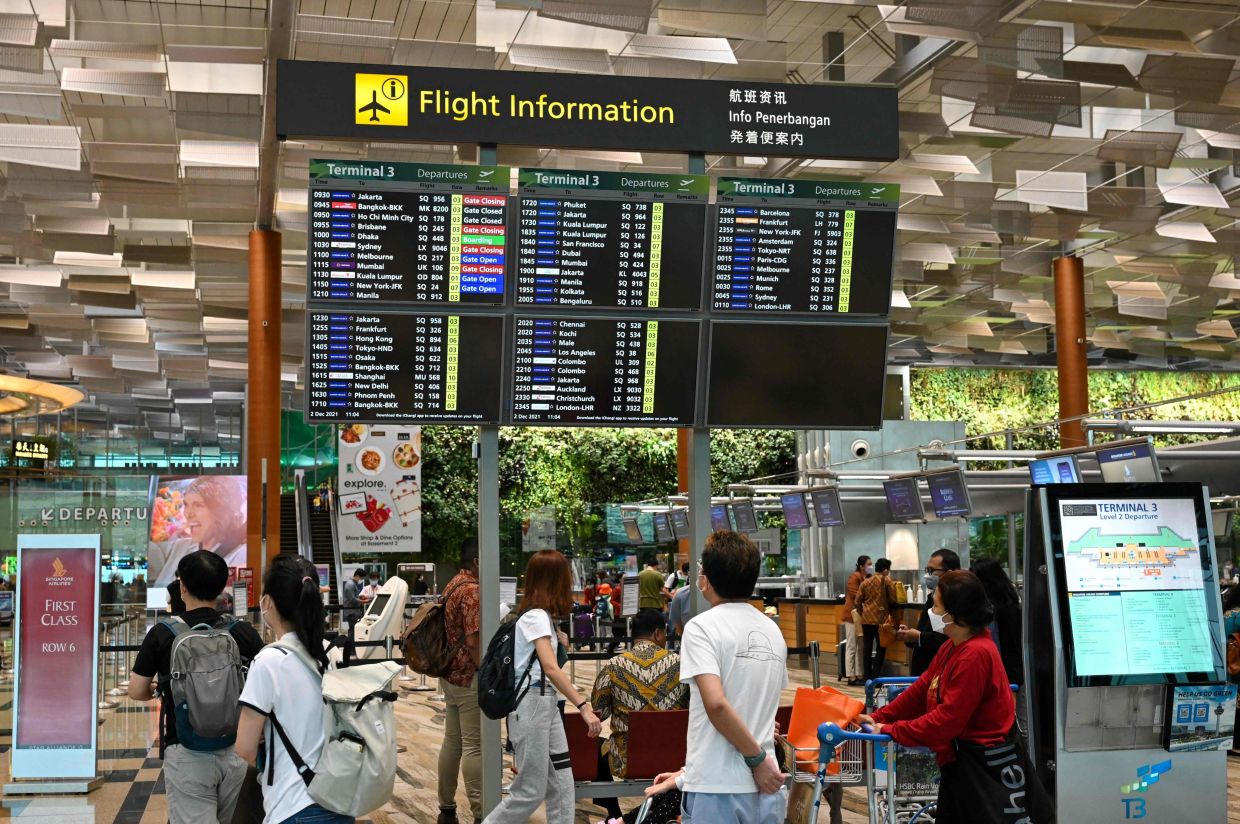
A Singapore court has handed down prison sentences to a Hong Kong mother and her adult son following a disorderly incident at Changi Airport that spiralled into violence against both a member of the public and a law enforcement officer. Chan Sui-kwan, aged 65, received a six-month jail term on Monday after being convicted of voluntarily causing hurt with the intent to deter a public servant from his duties. Her son, Chan Wing-kwan, 42, was sentenced to ten days imprisonment for the charge of voluntarily causing hurt. The convictions stemmed from events that unfolded on the afternoon of June 30, 2024, in Terminal 3 of Singapore's busiest airport.
The sequence of events began when Chan Wing-kwan became upset after misinterpreting remarks from nearby passengers, believing they were directed at him in a mocking manner. In response to his agitation, he kicked his mother. When a 69-year-old bystander noticed the commotion and approached to assist the woman, she rebuffed his attempt at help while her son aggressively invited him to engage in a physical confrontation, displaying aggressive body language and threatening demeanour.
The situation deteriorated further when the two moved to another level within the terminal building. The son kicked his mother a second time, prompting the concerned bystander to attempt calling the authorities. This action triggered a violent response from Chan Wing-kwan, who rushed at the man with apparent intent to harm him. A physical altercation ensued, during which the son delivered multiple punches to the bystander's head and face. Medical examination later revealed the man had sustained a cephalic haematoma—bleeding beneath the skin from ruptured blood vessels—alongside abrasions to his knees and contusions affecting several fingers.
Police arrived at the terminal and conducted initial investigations into the incident. Officers documented the identities of the mother and son by recording details from their travel documents before returning the passports to them. This initial police response, however, did not conclude the matter. Several hours later that same afternoon, airport authorities spotted the pair again in the departure hall area. The mother allegedly refused to surrender her passport to officers and created further disturbance, leading to her arrest.
During the arrest process, the mother mounted strong physical resistance against police efforts to take her into custody. In the ensuing struggle, she bit a police officer on the right forearm, causing a visible injury that measured approximately one centimetre and left bruising on the officer's skin through his clothing. This assault on a law enforcement officer became a significant element of the charges brought against her, distinguishing her case from her son's and resulting in the substantially longer sentence.
The legal proceedings that followed revealed procedural complications. Chan Sui-kwan did not appear in court until November 18, 2024, several months after the June incident, indicating potential difficulties in locating or producing her for court appearances. Her son's charge was formally lodged on April 24 of this year, suggesting extended investigation and preparation of the case file. Both defendants failed to appear for a scheduled court date set for July 22, which prompted the court to issue an arrest warrant. They were ultimately convicted on July 29 and received their sentences during the subsequent sitting.
The Changi Airport incident highlights the challenges that Singapore's law enforcement faces in managing passenger behaviour at one of the region's most significant transport hubs, which processes millions of travellers annually. Airports are inherently high-stress environments where close quarters and travel anxieties can occasionally precipitate interpersonal conflicts. However, the escalation from an initial misunderstanding into violence against multiple persons and resistance to lawful arrest represents a serious breach of public order.
For Malaysian readers and regional observers, the case demonstrates Singapore's strict approach to violent conduct in public spaces and assault against law enforcement officers. The six-month sentence for attacking a police officer reflects Singapore's established legal principle that such offences carry substantial consequences designed to protect public safety and maintain respect for authority. The biting incident, in particular, represents one of the more serious forms of assault on an officer, given the health and dignity implications.
The incident also underscores the international dimensions of airport management. Visitors from Hong Kong and other jurisdictions must navigate not only the stress of travel but also adherence to Singapore's well-established legal codes. The delay in bringing Chan Sui-kwan to court and the missing court appearance by both defendants suggest potential complications in coordinating across jurisdictions, a concern relevant to Southeast Asian legal cooperation frameworks.
The case carries implications for how regional airports manage passenger conflicts and the importance of early intervention by trained personnel. What began as a misunderstanding between passengers evolved into criminal charges against both family members, demonstrating how rapidly situations can deteriorate without de-escalation. For airport operators across Southeast Asia, including Malaysia's Kuala Lumpur International Airport and other major regional hubs, the incident offers a cautionary example of how quickly a minor disagreement can result in serious legal consequences for travellers.

