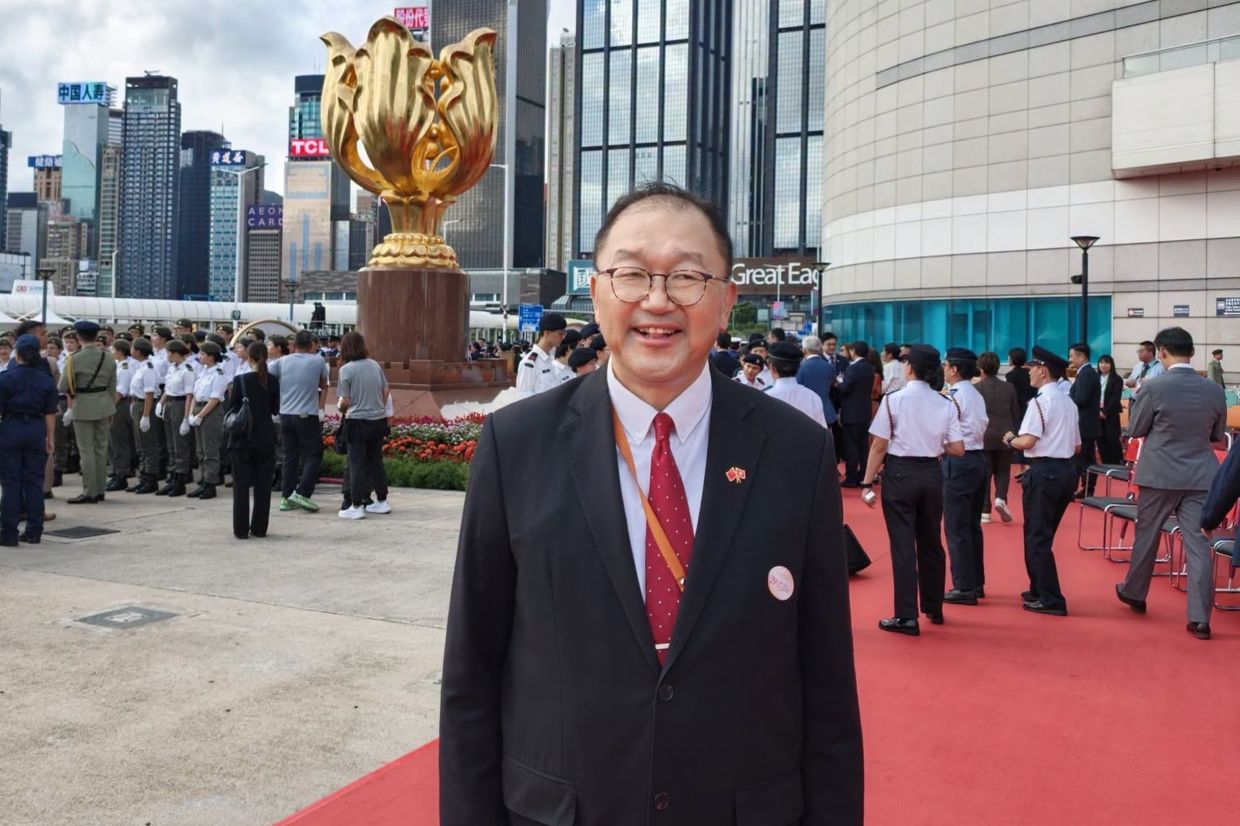
Hong Kong legislator William Wong Kam-fai has stepped down from the Legislative Council following his arrest on suspicion of drink-driving and causing a hit-and-run accident, marking the first resignation over a scandal from the chamber in more than 26 years. The 66-year-old lawmaker submitted his resignation letter on Friday, just days after he was detained on Monday evening when his vehicle collided with two parked cars on a university campus. His decision to depart has reignited discussion about accountability standards for public figures in Hong Kong's political system, particularly as the city navigates evolving governance expectations.
In his resignation statement, Wong acknowledged the gravity of his actions and expressed remorse for the disruption caused. He stated that he had chosen to relinquish all his Legislative Council positions immediately to prevent further complications for the institution's functioning. Wong also requested public patience regarding his silence on the matter, citing the ongoing police investigation as reason to refrain from additional commentary. Despite his measured tone, the resignation underscores mounting pressure on elected officials to maintain high ethical standards, especially given Hong Kong's current political climate.
Wong's swift exit represents a calculated response to manage reputational fallout for both himself and the legislature. Political analysts suggest that prolonged resistance would have invited sustained criticism and potentially damaged the credibility of the institution itself. Lau Siu-kai, a consultant at the Chinese Association of Hong Kong and Macau Studies think tank, characterised the resignation as strategically optimal, noting that it minimises harm to multiple stakeholders. He contended that remaining in post could have provided ammunition for critics questioning whether the principle of patriots governing Hong Kong was being upheld consistently across the political system.
The incident occurred when Wong's vehicle lost control near a staff residence at approximately 10:46pm on Monday, colliding with a parked automobile that subsequently struck a second vehicle. This sequence of events triggered both traffic incident investigations and broader questions about the conduct expected of legislators. Beyond his parliamentary role, Wong maintains membership in the Chinese People's Political Consultative Conference, China's premier political advisory body, positioning the scandal at the intersection of multiple governance levels and raising questions about whether additional resignations from affiliated positions might follow.
Legislative Council President Starry Lee Wai-king acknowledged Wong's departure gracefully, thanking him for his service and contributions to Hong Kong. Her measured response reflects the institution's desire to move beyond the controversy while maintaining dignity. However, beneath this courteous exchange lies a more complex consideration about institutional standards and whether the legislature's other members would face similar consequences for comparable misconduct. The decision to accept Wong's resignation without protracted dispute suggests tacit agreement that his departure serves the broader interests of political stability.
Political observers anticipate that Wong will likely resign from his CPPCC position as well, given the severity of the traffic incident. Analysts expect that central Chinese authorities would accept such a resignation, though expulsion of CPPCC members remains uncommon. This multilayered departure process demonstrates how scandals involving Hong Kong officials can ripple across different governance structures, affecting positions at both territorial and national levels. The precedent Wong sets may influence how other officials facing comparable crises navigate their respective portfolios.
Tam Yiu-chung, Hong Kong's former sole representative to the National People's Congress Standing Committee, endorsed the resignation as appropriate given the elevated conduct standards demanded of legislators. He emphasised that the gravity of Wong's error—particularly a traffic violation of this magnitude—warranted withdrawal from office. Tam noted that Wong represented an Election Committee constituency rather than a functional constituency, a distinction that affects the legislative vacuum created by his departure. Seats representing the Election Committee typically have simpler replacement procedures compared to those reflecting specific economic sectors, though the process remains subject to government discretion.
The question of whether the government will hold a by-election to fill Wong's seat remains unresolved. Previous constitutional affairs minister Erick Tsang Kwok-wai indicated that financial efficiency considerations would weigh on such decisions, suggesting that cost-benefit analysis plays a role alongside democratic principles. Historical precedent offers mixed guidance: Stephen Wong Yuen-shan, another Election Committee legislator, vacated his seat in late 2022 after joining the government as think tank chief, leaving the position vacant for approximately three years without triggering a by-election. This circumstance indicates that the government possesses sufficient flexibility to postpone or forgo electoral processes, particularly when limited tenure remains.
Wong's resignation breaks a 26-year drought in Legislative Council resignations prompted by scandal. The last comparable departure occurred in September 2000 when Gary Cheng Kai-nam vacated his newly won seat after revelations emerged regarding undisclosed business connections, improper handling of confidential government documents, and personal conduct concerns. Cheng subsequently faced prosecution, receiving an 18-month prison sentence in 2001 after conviction on bribery, misconduct in public office, false accounting, and theft charges. The contrast between Cheng's legal consequences and Wong's current circumstances remains unclear, as the police investigation into the traffic incident continues.
The Chinese University of Hong Kong, where the incident occurred, released a statement expressing concern about the episode and emphasising institutional commitment to staff conduct standards. The university immediately suspended Wong from administrative duties pending investigation completion. This response demonstrates how scandals cascade through interconnected institutions, affecting not only political status but also professional standing in academic and research environments. Wong's multiple roles across different sectors amplified the scandal's institutional reach beyond traditional political channels.
The episode carries particular significance for Malaysian and broader Southeast Asian observers monitoring Hong Kong's political trajectory. The resignation illustrates how formal accountability mechanisms function within Hong Kong's governance framework and suggests that scandal-driven resignations remain possible despite the territory's shifting political climate. Whether this incident signals strengthened institutional resilience or represents an exceptional circumstance in an otherwise consolidated system remains subject to interpretation. The coming months will clarify whether Wong's departure establishes renewed precedent for accountability or proves an isolated episode in a governance environment increasingly defined by stability priorities.

