The Hong Kong film industry has lost one of its most transformative figures with the death of Shi Nan-sun, the pioneering producer whose career spanned four decades and fundamentally reshaped how local cinema reached global audiences. Shi, aged 75, passed away on Monday evening at the Hong Kong Sanatorium & Hospital after her immune system succumbed to complications stemming from a bacterial infection that triggered cascading organ dysfunction. The news has prompted an outpouring of tributes from some of Asia's most recognizable entertainment figures, each acknowledging how profoundly her vision and business acumen shaped their careers and Hong Kong's standing as a film production hub.
Shi's health had been fragile for several years, with her condition deteriorating markedly since 2022 when complications affecting her immune system began to surface. Recurrent infections in recent months compounded her vulnerability, ultimately overwhelming her body's already compromised defenses. Film Workshop, the production company she established as a partnership with director Tsui Hark, confirmed that Shi passed peacefully surrounded by family members, bringing to a close a career that transformed not just individual films but the entire infrastructure through which Hong Kong cinema operated internationally.
Jackie Chan, one of the world's most bankable stars, took to Chinese social media to express his sense of loss, characterizing Shi as another legendary figure whose departure marked a significant chapter closing for the film world. His remarks emphasized how Shi's legacy extended beyond specific movies to encompass the resilience and artistic integrity she championed throughout her professional life. Carina Lau Ka-ling, the actress, shared a nostalgic photograph while reflecting on the profound mentorship Shi had provided over the years, noting how her lessons about personal conduct and professional ethics had shaped both Lau's own approach and that of her husband, actor Tony Leung Chiu-wai.
The tributes came swiftly from across Hong Kong's entertainment establishment. Brigitte Lin Ching-hsia, Donnie Yen Chi-tan, and Shu Qi all publicly mourned Shi's passing, testament to her broad influence across multiple generations of performers. Their responses underscored a reality often overlooked in celebrity culture: behind many successful actors stood individuals like Shi, whose administrative brilliance and international vision created the conditions for regional talent to flourish on global platforms. Rosanna Law Shuk-pui, Hong Kong's Secretary for Culture, Sports and Tourism, issued an official statement recognizing Shi as a distinguished architect of the local film industry's long-term viability, emphasizing how she had bequeathed lasting cinematic memories to Hong Kong audiences while elevating the sector's professional standards.
Tsui Hark, Shi's former husband and frequent creative collaborator, emerged from the hospital to reflect on her final days with evident emotion. He characterized her as someone who confronted her illness with extraordinary fortitude, clinging to life with dignity until her deteriorating immune system made further resistance impossible. His account of her peaceful passing, surrounded by those closest to her, provided a counterweight to the clinical medical details, restoring the human dimension to her final chapter. The relationship between Shi and Tsui, which lasted as a marriage from 1996 to 2014, had evolved into a sustained friendship marked by mutual professional support—a dynamic that illustrated Shi's capacity for loyalty and her genuine investment in creative excellence regardless of personal circumstances.
ShiNan-sun's entry into the film industry came relatively late in her career arc. Born and educated in Hong Kong, she pursued technical training in statistics and computing at the Polytechnic of North London, providing her with the analytical foundation that would distinguish her business approach. Beginning in television before transitioning to cinema in 1981, she joined Cinema City as an executive director where her responsibilities encompassed the complex machinery of film production: administration, financing, contract negotiations, and international distribution. These areas, often invisible to audiences but essential to a film's commercial success, became her domain of mastery.
The establishment of Film Workshop in 1984, alongside Tsui, represented a watershed moment for Hong Kong cinema. Rather than merely producing films for local consumption, Shi and her partner created an infrastructure explicitly designed to carry Hong Kong productions into international markets. The subsequent founding of Distribution Workshop deepened this commitment, professionalizing sectors of the business that had previously operated on relationships and informal arrangements. This organizational innovation preceded by years the broader consolidation of Hong Kong's film industry and demonstrated Shi's capacity to anticipate market evolution and position local creators advantageously within it.
Shi's influence extended far beyond deal-making and logistics, however. Brigitte Lin, her close friend for over five decades, once invoked the novelist Louis Cha (Jin Yong) in describing Shi as "the only wife who is completely infatuated with her husband," capturing how thoroughly she had devoted herself to supporting Tsui's artistic vision. This characterization, made by someone who knew both figures intimately, reveals an aspect of Shi's personality often relegated to footnotes: her capacity for genuine creative partnership and emotional commitment to those she believed in artistically. In a tribute posted at 4 a.m. on Tuesday, Lin vowed to honor her friend's memory by emulating her generosity of spirit.
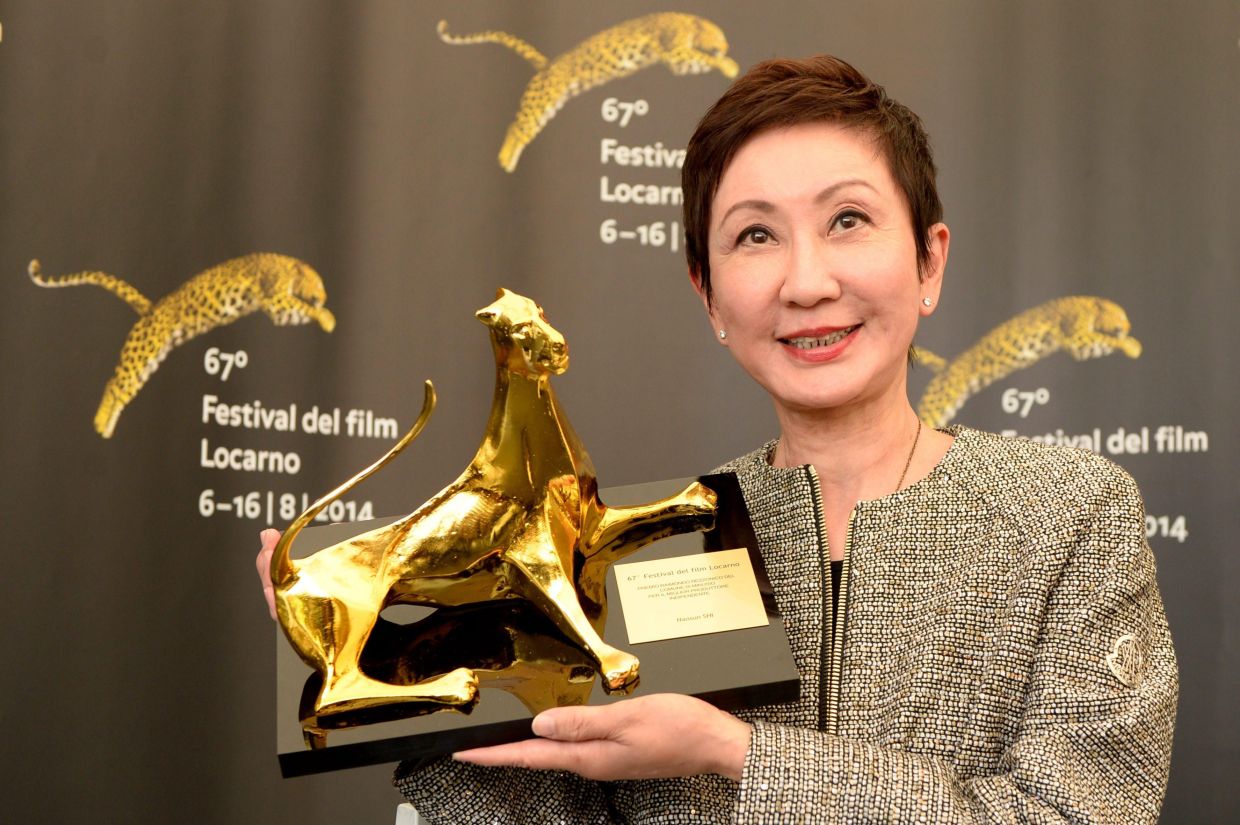
International recognition validated what the Hong Kong film community had long understood about Shi's contributions. The French government appointed her an officer of the Ordre des Arts et des Lettres, acknowledging her role in promoting cultural exchange between Asia and Europe through cinema. The Locarno International Film Festival honored her with its best independent producer award, while invitations to serve as juror or president at major festivals worldwide testified to her stature. These accolades reflected not merely commercial success but the regard in which she was held by the global film establishment as someone who understood cinema as both art form and international language.
The recent public appearance at film producer Linda Kuk Mei-lai's funeral in May, where Shi's reliance on a walking stick raised concerns among observers, suggested she was aware of her declining physical condition. Yet she continued to engage with her professional community, attending industry events despite her fragility. This perseverance characterized her approach to life itself: continuing with purpose even as circumstances grew more constrained. Just months before her death, she and Tsui jointly received a lifetime achievement award at the Hong Kong Film Awards, a recognition that allowed her to witness the film industry's formal acknowledgment of their transformative impact.
For Southeast Asian readers, Shi's passing carries particular significance. As Hong Kong's film industry evolved into a regional and global force, it served as a model for how smaller markets could build sustainable creative industries with international reach. Shi's insights into distribution, financing, and artist development informed practices that rippled across Asia. Her death marks the end of an era in which first-generation film entrepreneurs built institutional structures that enabled regional talent to compete on world stages—a legacy increasingly relevant to emerging film industries throughout Southeast Asia seeking to establish their own international presence. The void she leaves extends beyond Hong Kong's borders into the broader Asian film ecosystem she helped shape.

