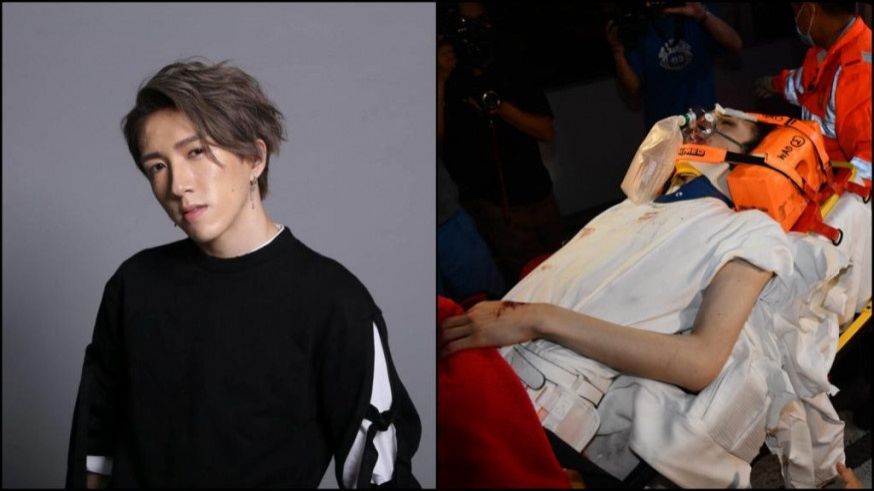
A Hong Kong court has granted substantial damages to dancer Mo Li Kai-yin following a devastating stage accident that has fundamentally altered the trajectory of his life. The District Court's decision on June 15 resulted in an award of HK$6.29 million, equivalent to approximately RM3.32 million, in compensation from his former employer Studiodanz after the 31-year-old suffered what judicial authorities characterised as "catastrophic" injuries. The incident, which occurred during a Mirror concert on July 28, 2022, at Hong Kong Coliseum, has become a sobering reminder of the occupational hazards inherent in live entertainment production.
The accident unfolded during the fourth performance of Mirror's planned 12-show engagement when a four-by-four-meter LED panel detached from the ceiling structure and fell directly onto Mo. The impact resulted in a cervical spine dislocation that severed his nerve function from the neck downwards, rendering him completely paralysed. Emergency medical intervention at Queen Elizabeth Hospital was immediately required, followed by extensive surgical procedures and rehabilitation treatment. The severity of Mo's condition necessitated transfer to specialised private medical institutions both within Hong Kong and internationally, where he continues to pursue advanced therapeutic interventions aimed at regaining functional capacity.
The financial compensation reflects the comprehensive nature of Mo's medical and personal care requirements going forward. The court determination granted maximum awards across multiple compensation categories, encompassing permanent total incapacity, round-the-clock caregiving expenses, ongoing medical treatments, and periodic financial payments designed to sustain his quality of life. The judicial assessment emphasized that Mo, who transitioned from university studies in dance between 2015 and 2019 to become a full-time professional performer and instructor, has been rendered incapable of independent adult functioning. He now requires three full-time caregivers to manage all aspects of personal hygiene, mobility, and daily living activities.
The court's formal judgment articulated the profound nature of Mo's predicament with stark clarity. Judicial officials noted that "the applicant has suffered catastrophic disabilities and permanent total incapacity, and will require lifetime constant care and attention. He is incapable of ever leading or appreciating an independent adult life." This assessment reflects not merely physical paralysis but the complete dismantling of his professional identity and personal autonomy. Prior to the accident, Mo had cultivated an active entertainment career encompassing live concert performances, television appearances, commercial advertisements, music video productions, and dance instruction across four studios including Studiodanz itself.
The personal toll on Mo's family has been equally severe. His father, Reverend Derek Li Shing-lam, abandoned his pastoral responsibilities and relocated from Canada to assume full-time caregiving duties for his son. The emotional and physical burden of this commitment proved unsustainable, and Reverend Li passed away on April 25, leaving Mo's care responsibilities distributed among professional medical staff and family support networks. This sequence of events underscores how industrial accidents reverberate through entire family systems, transforming multiple lives simultaneously.
Notably, Studiodanz declined to participate in the trial proceedings, effectively accepting the court's findings without contesting the evidence presented. Beyond the civil compensation award, the company had previously incurred a HK$132,000 criminal fine for breaches of occupational safety and health regulations. The dual sanctions—financial penalties and substantial civil liability—suggest systemic failures in workplace safety protocols at the venue. The company was additionally ordered to meet all of Mo's legal costs arising from the compensation claim, amplifying the financial consequences of the accident.
Mo's recovery trajectory, while modest in scope, demonstrates remarkable resilience and the potential benefits of advanced medical intervention. He has enrolled in an intensive rehabilitation programme utilising cutting-edge therapeutic technologies, including regenerative medicine treatments and an implantable microstimulator designed to restore neurological function. These experimental approaches have yielded incremental gains: Mo has recovered limited movement in his right arm and regained sensation in his bladder and bowel functions. A video shared on his Instagram account in March documented his ability to operate an electric wheelchair using his right hand, representing a meaningful achievement in his rehabilitation journey.
The case carries significant implications for Southeast Asian entertainment venues grappling with similar safety and liability concerns. Hong Kong's regulatory response—encompassing both criminal prosecution and substantial civil compensation—establishes precedent for holding employers and venue operators accountable for catastrophic failures in worker protection. For Malaysian theatres, concert halls, and entertainment facilities, the Mirror accident case serves as cautionary precedent regarding the necessity of rigorous safety audits, equipment maintenance protocols, and comprehensive worker compensation frameworks. The absence of adequate safety measures can result not merely in reputational damage but in substantial financial liabilities and potential criminal accountability.
The broader entertainment industry across the region must confront uncomfortable questions about risk management and worker protection standards. Live performance environments inherently involve complex technical infrastructure—suspended lighting rigs, elevated platforms, moving scenery, and interconnected equipment—that demands meticulous maintenance and regular safety inspections. The Mirror accident occurred not due to unforeseeable circumstances but rather appeared to reflect preventable failures in equipment securing and venue maintenance. For Malaysian event promoters and venue operators, this case underscores the imperative of investing in comprehensive safety protocols rather than viewing such expenditures as cost-cutting opportunities.
Mo's ongoing rehabilitation efforts continue to advance incrementally, offering hope that further functional recovery may yet occur. The sophistication of contemporary regenerative medicine and neurological implant technology suggests that the trajectory of spinal injury recovery may improve over coming years. However, the permanence of his current disability status serves as definitive reminder that prevention remains infinitely preferable to treatment when occupational hazards are involved. The entertainment industry's growth trajectory across Southeast Asia must be calibrated with equivalent advancement in workplace safety standards, regulatory oversight, and institutional accountability mechanisms that prioritise human welfare alongside production efficiency.