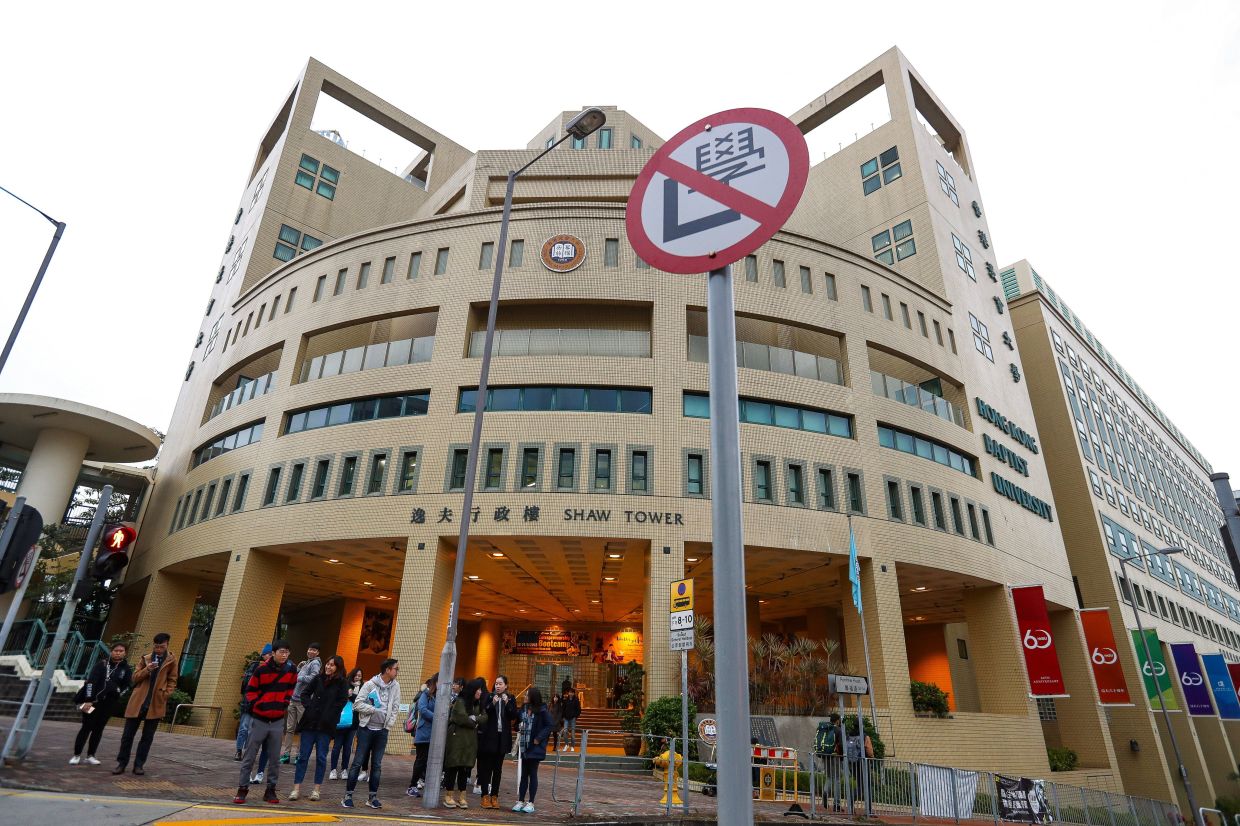
Hong Kong Baptist University is undertaking a comprehensive review of its information technology infrastructure following claims by an advanced ransomware collective that it has obtained unauthorised access to the institution's sensitive data. The allegations emerged from "The Gentlemen," a cybercriminal group known for deploying extortion-based malware tactics across international networks, which first surfaced in mid-2023 and has since become one of the more active players in the global ransomware ecosystem.
According to cybersecurity monitoring services tracking the incident, the potential compromise extends to approximately 1,900 user credentials across multiple categories within the university's digital environment. The affected accounts reportedly comprise around 130 staff members, roughly 1,770 student and general user accounts, and some 260 credentials belonging to third-party contractors and service providers. The breadth of this exposure raises serious concerns about the interconnected nature of modern institutional IT infrastructure and the cascading vulnerabilities that third-party integrations can introduce.
The Gentlemen operates using a business model significantly different from traditional hacking groups. Rather than relying solely on direct extortion, the collective functions as a malware-as-a-service platform, licensing its ransomware tools to other cybercriminals in exchange for revenue-sharing arrangements. This franchise-like approach has enabled rapid expansion and diversification of attacks across continents, allowing the group to monetize its technical capabilities whilst maintaining operational distance from individual incidents. Security researchers tracking the group's activities note that it has demonstrated particular sophistication in evading detection systems and establishing persistent access within compromised networks.
On Tuesday evening, Baptist University issued a formal statement acknowledging the allegations and confirming that it has detected a webpage claiming unauthorised access to its systems. The institution stated it was implementing thorough security reviews while pledging to cooperate with relevant enforcement authorities. This measured response reflects the challenging position educational institutions find themselves in during cybersecurity crises—balancing transparent communication with stakeholders against the need to avoid prematurely disclosing operational details that attackers might exploit.
Notably, Hong Kong's Office of the Privacy Commissioner for Personal Data reported that it had not yet received official breach notification from the university at the time of the initial claims. However, the privacy watchdog proactively initiated contact with Baptist University to gather information about the incident's scope and timeline. This coordinated approach between institution and regulator demonstrates the increasingly reactive nature of breach responses, where authorities must sometimes chase information rather than wait for formal disclosure.
Francis Fong Po-kiu, who holds the honorary presidency of the Hong Kong Information Technology Federation, outlined a comprehensive remediation framework for the university's consideration. Fong emphasized the critical importance of immediately notifying the privacy commissioner's office, conducting forensic investigations to determine whether attackers actually penetrated core operational systems, and verifying whether stolen credentials enabled unauthorized data extraction or system compromise. These recommendations reflect industry best practices that distinguish between credential theft and actual system intrusion—a distinction with significant implications for understanding attack severity.
Beyond immediate forensic work, Fong advocated for implementing institution-wide password resets to invalidate potentially compromised credentials, enforcing multi-factor authentication across all access points to create additional security layers, and coordinating closely with local regulatory bodies and law enforcement agencies. Each of these measures addresses specific vulnerabilities that attackers commonly exploit in the aftermath of credential breaches, where stolen credentials may be leveraged for lateral movement through institutional networks. The recommendation for transparent communication with staff and students serves a dual purpose: maintaining stakeholder confidence whilst reducing susceptibility to follow-up social engineering attempts that often accompany credential breaches.
The Baptist University incident carries particular relevance for regional institutions across Southeast Asia, where educational entities have increasingly become targets for sophisticated cybercriminal operations. Universities maintain valuable data repositories—research data, financial information, personal student records—that attract both criminal extortionists and state-sponsored actors. Additionally, academic networks often prioritize openness and collaboration over security lockdown, creating structural vulnerabilities that organised criminals systematically exploit.
The prominence of The Gentlemen in this incident underscores how ransomware-as-a-service models have fundamentally altered the threat landscape. By democratizing access to advanced hacking tools, these groups have enabled lower-skilled cybercriminals to launch campaigns previously requiring significant technical expertise. For institutional cybersecurity teams across Malaysia, Singapore, and other regional countries, this development suggests that sophisticated attack methodologies will become increasingly common against their networks regardless of their own technical capabilities.
Baptist University's experience also highlights the growing tension between institutional autonomy and regulatory oversight in cybersecurity incidents. The Office of the Privacy Commissioner's proactive engagement reflects a shift toward regulatory bodies playing more assertive roles in breach investigations, potentially compensating for institutional delays or inadequacies in breach notification. This regulatory activism will likely influence how Malaysian and other regional institutions approach similar incidents in future.
As the investigation progresses, the university faces mounting pressure to demonstrate both the technical remediation of affected systems and the restoration of stakeholder trust. The coming weeks will prove critical in determining whether the institution can contain the breach's reputational damage and implement systemic security improvements that prevent similar incidents. For the broader regional higher education sector, Baptist University's response will effectively serve as a case study in institutional crisis management during an era of increasingly aggressive and sophisticated cybercriminal operations.

