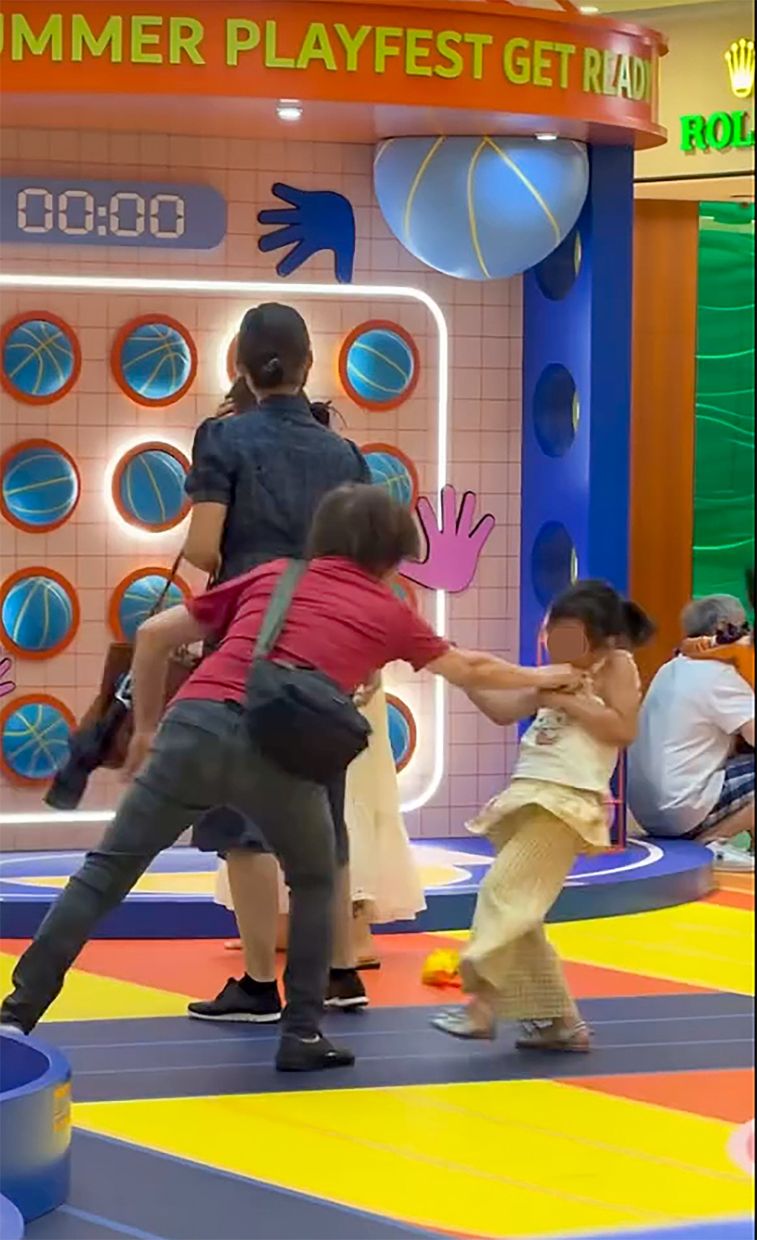
Hong Kong police have made two arrests following an ugly altercation at a shopping centre in Kwun Tong that left multiple people injured and sparked outrage online after video footage circulated widely. The incident unfolded at the APM shopping centre's atrium during afternoon hours on Wednesday, with the confrontation occurring around 4.45pm when the facility's play area was busy with parents supervising their young children. Authorities have charged both a 68-year-old woman and a 34-year-old mother with assault or assault occasioning actual bodily harm, marking a serious escalation from what began as a playground disagreement between minors.
The chain of events leading to the arrests originated from a dispute between two children over access to a play installation. A 68-year-old woman had brought her grandson and adult daughter, aged 34, to the play area that afternoon. When conflict arose between the grandson and a five-year-old girl regarding use of the equipment, the elderly woman decided to intervene directly rather than allowing the children to resolve the matter themselves or seek assistance from facility staff or supervising adults. This decision to involve herself physically in a children's dispute proved fateful, setting in motion a sequence of confrontations that would ultimately require police intervention and hospitalisation of multiple victims.
Video evidence captured at the scene shows the moment the elderly woman forcefully shoved the young girl, then followed with a slap across the child's face. The impact was sufficient to cause the five-year-old to lose her balance and fall to the ground. The footage proves crucial to understanding how rapidly the situation deteriorated, as bystanders began responding to what they had witnessed. The girl's mother, observing the assault on her child, immediately moved to protect her daughter and confront the elderly aggressor, resulting in physical contact between the two adults as she struck back at the woman who had struck her child.
Bystanders and other parents present at the scene attempted to de-escalate the growing conflict, but their interventions did not immediately halt the physical altercation. During the confrontation, one of the men present directly challenged the elderly woman, demanding to know whether she had just struck a child and stating that he had personally witnessed the assault. The boy's mother also confronted the other mother involved in the dispute, at one point stating that she could not simply leave the scene, suggesting possible concerns about accountability or clarification of what had transpired. These interventions, while well-intentioned, added layers of complexity to an already heated situation involving multiple adults and children.
The incident highlights ongoing tensions in Hong Kong's urban spaces regarding parenting approaches and community standards around child discipline and protection. The willingness of the elderly woman to physically strike another person's child reflects generational differences in attitudes toward physical punishment and intervention, a phenomenon that resonates across many Asian societies where older generations often retain different perspectives on child-rearing methods. The quick response from the girl's mother and other bystanders conversely reflects modern expectations that children should be protected from physical contact and that such behaviour warrants immediate correction by intervening adults.
When police arrived at the APM shopping centre, they took statements from those present and made the decision to arrest both the elderly woman and the girl's 34-year-old mother on suspicion of common assault or assault occasioning actual bodily harm. This dual arrest approach suggests that investigators determined both parties engaged in physical contact that could constitute criminal conduct, though the circumstances and proportionality of their respective actions differed substantially. The fact that both faced charges demonstrates the legal complexity that arises when self-defence or protection of a minor intersects with assault statutes, particularly when multiple incidents occur within minutes of each other.
Three individuals required medical attention following the incident. The five-year-old girl, her 34-year-old mother, and the two younger women involved all sustained minor facial injuries sufficient to warrant transport to the nearby United Christian Hospital for treatment and assessment. The hospital's proximity to the shopping centre meant that injured parties could receive timely medical evaluation, though all injuries were classified as minor. The fact that multiple people required hospitalisation, even for minor injuries, underscores the intensity and chaotic nature of the physical confrontation.
The Kwun Tong district investigation team has assumed responsibility for the case, suggesting that local police will conduct a thorough inquiry into the circumstances and determine appropriate charges once investigations conclude. The availability of video footage from bystanders' mobile phones will likely prove decisive in establishing a clear sequence of events and determining culpability. Such visual evidence has become increasingly important in Hong Kong criminal cases, allowing prosecutors and defence teams to reference objective documentation rather than relying solely on conflicting witness accounts.
This incident carries broader implications for public safety in Hong Kong's crowded commercial spaces, where shopping malls serve as gathering points for families throughout the week. The confrontation at a children's play area, typically perceived as safe community space, raises questions about the adequacy of supervision and conflict prevention measures in such facilities. Operators of shopping centres may need to reassess policies regarding how staff monitor play areas and intervene when disputes between children arise, preventing situations where parents feel compelled to become physically involved. The incident also serves as a reminder of how quickly casual disagreements can escalate when emotional investment, parental instinct, and generational differences intersect in public spaces shared by multiple families with varying expectations and values.

