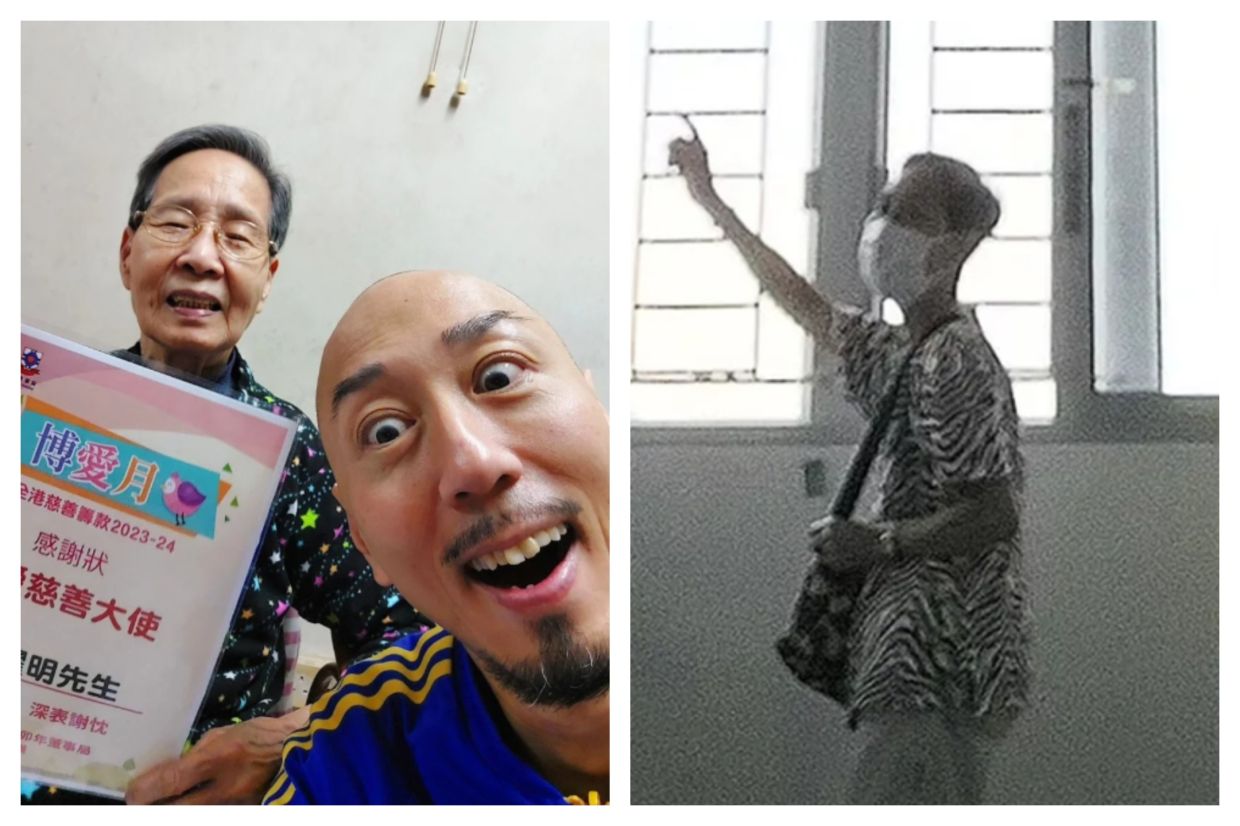
Hong Kong television actor Dai Yiu Ming has achieved a milestone that many consider deeply meaningful in Asian cultures: purchasing his first property as a home for his ageing mother. The 54-year-old TVB performer recently announced the acquisition through Instagram, sharing photographs of the residence and its vistas. Despite the substantial financial outlay involved in Hong Kong's notoriously expensive property market, Dai expressed contentment with the decision, framing it as an investment in shared time with his parent during their remaining years together.
Dai's reflection on the purchase carries philosophical weight, particularly within the context of East Asian values emphasising family obligation and intergenerational duty. In his social media caption, he articulated a perspective centred on the finite nature of family relationships, writing that even reincarnation offers no guarantee of reunion. This sentiment resonates powerfully across Southeast Asia and Hong Kong, where ancestral reverence and filial piety remain culturally foundational despite rapid modernisation. His decision to prioritise his mother's comfort over personal wealth accumulation represents a deliberate choice aligned with traditional values that continue to shape decision-making in the region.
The background to this achievement underscores the sacrifices required to succeed in Hong Kong's competitive entertainment industry whilst maintaining family responsibilities. Dai's mother, now in her eighties, spent the majority of her life in substandard housing conditions, residing in makeshift shelters and aging public residential blocks that characterised post-war Hong Kong's working-class reality. The actor disclosed poignant details about his mother's wartime experiences, including her survival through the occupation by consuming foraged sweet potato leaves—a testament to the hardships endured by that generation. His belated provision of stable, dignified housing thus carries symbolic significance beyond mere property acquisition.
Dai's career trajectory illustrates the precarious nature of entertainment work in Hong Kong and the persistence required to establish sustainable income. He entered the industry through ATV's artiste training programme in 1991, making his television debut two years later. However, dissatisfaction with the broadcaster's treatment and limited opportunities prompted his departure in 1994, after which he temporarily shifted to technical work in computer repair—a pragmatic pivot that many entertainers make when industry prospects dim. His subsequent engagement by TVB that same year marked the beginning of a more stable professional foundation, though building a career as a supporting actor demands consistency and long-term commitment rather than sudden stardom.
Throughout his three-decade tenure at TVB, Dai has cultivated a reputation as a reliable character performer, appearing in numerous dramatic series that, while not generating headlines, provided steady employment and modest income accumulation. This professional stability, though unglamorous, proved sufficient to enable gradual financial discipline and property savings—demonstrating that sustainable wealth-building often derives from steady middle-tier work rather than blockbuster success. His willingness to accept supporting roles without resentment reflects an acceptance of his place within the entertainment hierarchy that many aspiring performers struggle to achieve.
A particularly significant dimension of Dai's life narrative involves his decision to prioritise filial duty over career advancement in mainland China. In 2017, seeking expanded opportunities within the lucrative Chinese entertainment market, Dai relocated to the mainland. Yet his inability to tolerate separation from his mother prompted his relatively swift return to Hong Kong. This choice carries profound implications for understanding contemporary Asian values amid globalisation: despite economic incentives to pursue opportunities abroad, familial bonds and the desire to provide direct care for elderly parents often supersede material advancement. Dai's return exemplifies how transnational mobility, whilst theoretically available, remains constrained by emotional and moral obligations that many consider non-negotiable.
The context of his family situation deepens appreciation for his achievement. Dai's father passed away more than a decade prior to his recent property purchase, leaving the actor as primary caregiver and financial provider for his widowed mother during her vulnerable elderly years. This responsibility has fundamentally shaped his life choices, determining career decisions, geographical location, and financial priorities. The absence of spousal partnership or children to share caregiving duties magnifies the responsibility he has shouldered independently—a burden that demographic shifts across Asia are making increasingly common as aging populations and smaller family units create concentrated caregiving pressure on adult children.
Public reaction to Dai's announcement demonstrates enduring cultural resonance of filial piety within Hong Kong society. Social media responses overwhelmingly celebrated his devotion and sense of family responsibility, with commentators specifically highlighting his "filial piety" and "sense of responsibility." Rather than viewing property acquisition as personal indulgence or investment, observers reframed it as moral virtue—recognition that Dai's primary motivation transcended financial return. Such responses indicate that despite Hong Kong's reputation as a fast-paced, materialistic metropolis, traditional values remain powerful cultural forces influencing how communities evaluate individual achievements and character.
The broader significance of Dai's story extends beyond personal sentiment into socioeconomic commentary regarding housing accessibility in Hong Kong. The actor explicitly acknowledged the property's steep cost, yet his decades of disciplined saving ultimately enabled what many Hong Kong residents consider impossible: entry into homeownership. His pathway involved career sacrifice, geographic constraint, and deferred personal gratification—factors increasingly necessary for ordinary residents to achieve property ownership in one of the world's least affordable housing markets. While Dai's modest income as a supporting actor differs substantially from that of established celebrities, his struggle to accumulate sufficient capital remains instructive about the savings rates and time horizons required for ordinary people to acquire housing in such expensive markets.
For Malaysian and broader Southeast Asian audiences, Dai Yiu Ming's achievement offers multiple interpretive layers. First, it exemplifies how traditional family values persist within modern, densely urbanised societies despite assumptions that modernisation necessarily erodes filial duty. Second, it illustrates the psychological and economic costs of caregiving for elderly parents, particularly when individuals must balance professional advancement with geographic proximity to aging relatives. Third, it demonstrates how entertainment careers, even when successful by industry standards, generate modest income requiring extraordinary financial discipline to accumulate wealth. Finally, it underscores the housing affordability crisis affecting major Asian cities, wherein even sustained professional employment provides insufficient income for easy property access without significant compromise elsewhere in life.
Dai's narrative also touches on generational transitions occurring across Asia, where adult children increasingly assume full responsibility for aging parents' welfare and housing security. Unlike earlier generations when extended family households or state provision offered alternatives, contemporary urban structures often isolate elderly individuals and concentrate care obligations on single adult children. Dai's choice to structure his entire adult life around his mother's security—remaining geographically proximate, forgoing higher-paid opportunities elsewhere, accumulating capital methodically—represents a conscious embrace of this role rather than reluctant obligation. His public celebration of this commitment, rather than presentation as burden, suggests a redefinition of filial duty as personally fulfilling rather than merely dutiful.
Looking forward, Dai's successful property acquisition marks not culmination but commencement of a new chapter in his caregiving journey. At 54, with his mother in her eighties, the actor has secured stable housing for their remaining shared years—a material gift that reflects decades of disciplined sacrifice. The emotional resonance of his achievement within Asian cultural contexts, particularly the enthusiastic public affirmation of his filial piety, demonstrates that character and personal values remain meaningful metrics for evaluation within societies sometimes characterised as excessively materialistic. Dai's story ultimately affirms that steady commitment to family obligations, even when financially constraining, generates respect and meaning that wealth acquisition alone cannot provide.

