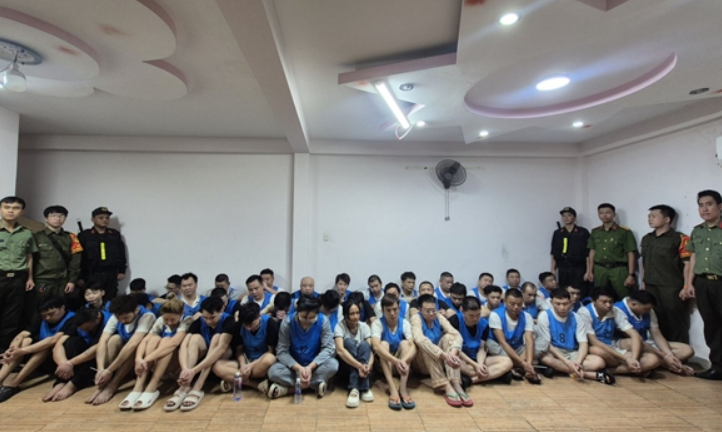
Ho Chi Minh City police have successfully dismantled multiple organized networks involved in smuggling foreign nationals into Vietnam specifically to establish transnational online fraud operations. The enforcement campaign, which stretched across the sprawling metropolis, has resulted in criminal charges against 26 suspects linked to eight separate cases, while authorities recovered hundreds of computers, laptops and mobile phones used in the illicit schemes. The coordinated operation demonstrates the intensifying problem of high-tech crime networks leveraging Vietnam's open business environment and integration policies to conduct international cybercrime from Southeast Asian bases.
The investigation was conducted by 22 specialized task forces working alongside local district police units, who executed systematic inspections targeting accommodation facilities suspected of harboring illegal foreign residents. Over the course of the enforcement drive, authorities examined 1,616 temporary lodgings across Ho Chi Minh City, uncovering serious regulatory violations at 160 establishments. Beyond mere administrative breaches, investigators identified 311 foreign nationals engaged in various illegal activities ranging from immigration violations to unlawful employment and undocumented residence, with many directly connected to planned criminal enterprises.
The first major breakthrough occurred on May 18, 2026, when police conducted an administrative inspection at an accommodation facility in Thuan Giao Ward. Officers discovered 85 Chinese nationals residing at the premises without completing mandatory temporary residence registration procedures required by Vietnamese law. The discovery proved far more significant than a simple immigration violation—authorities seized approximately 200 desktop and laptop computers alongside more than 550 mobile phones and additional electronic infrastructure. Subsequent investigation revealed that these individuals had been deliberately directed from abroad to scout locations, lease premises, establish network infrastructure and assemble equipment in preparation for launching a centralized online fraud operation targeting international victims.
The organizational structure uncovered by investigators points to a sophisticated criminal enterprise with clear operational hierarchies and defined responsibilities. Rather than ad-hoc fraud attempts, the networks operated according to a closed model with specialized roles including property rental management, accommodation arrangement, network systems installation and personnel oversight. This structured approach suggests coordination by experienced cybercriminals operating from abroad who were managing multiple satellite operations across Ho Chi Minh City simultaneously. The targeting of foreign nationals as victims indicates these were not localized schemes but part of broader transnational fraud campaigns potentially coordinated across Southeast Asia.
Police identified additional operational centers over subsequent weeks, revealing the scale of the criminal enterprise. On June 8, authorities located a second group of 83 Chinese nationals gathered at a hotel in Binh Duong Ward where they had assembled and prepared electronic equipment specifically configured for conducting online fraud activities. Nine days later, on June 17, officers conducting residency checks at a residential property in Hiep Bình Ward uncovered a third group of 42 foreign nationals violating accommodation regulations, again with seized electronic devices and data bearing clear indicators of involvement in online fraud operations. The geographic spread and similar operational patterns across these three major discoveries suggest either a single criminal organization maintaining multiple branches or coordinated networks operating under similar frameworks.
The investigation revealed a troubling dimension involving complicity from local accommodation providers motivated by financial gain. Ho Chi Minh City police determined that numerous landlords, guesthouse operators and hotel proprietors had deliberately relaxed identity verification procedures and circumvented mandatory temporary residence registration requirements. Some establishments knowingly facilitated the illegal entry of foreign nationals, effectively becoming enablers of the criminal networks. This corruption of the accommodation sector represents a significant vulnerability that criminal organizations have actively exploited, transforming legitimate businesses into infrastructure for transnational crime. The authorities emphasized that such conduct constitutes criminal facilitation subject to severe legal penalties, signaling their intent to prosecute accommodations providers as accomplices rather than mere unwitting hosts.
The Security Investigation Agency of Ho Chi Minh City Police responded by initiating formal criminal proceedings across eight separate cases targeting the full criminal supply chain. Beyond the foreign nationals directly engaged in fraud operations, prosecutors charged accommodation operators and intermediaries who had organized and brokered the illegal residence arrangements. The primary charges relate to "organising for others to remain illegally in Việt Nam" under Article 348 of Vietnam's Penal Code, establishing a legal framework that extends criminal responsibility beyond the primary fraud operators to encompass the logistical networks enabling their presence. The 26 suspects placed in pre-trial detention represent a cross-section of the criminal ecosystem from international coordinators to domestic facilitators.
For Malaysia and other Southeast Asian nations, this enforcement operation carries significant implications regarding transnational cybercrime vulnerabilities. The sophistication of these smuggling and operational networks demonstrates that organized crime groups are systematically targeting the region's business-friendly policies and developing infrastructure to establish fraud bases. Vietnam's relatively affordable accommodation costs, reliable internet connectivity and lenient enforcement in some sectors create an attractive operational environment for international cybercriminals. Malaysian authorities monitoring similar trends should recognize that individuals involved in online fraud targeting Malaysian citizens or Malaysian-registered businesses may be operating from disguised premises in neighboring countries, complicating investigation and prosecution efforts.
The role of accommodation operators in enabling these networks highlights a broader regulatory challenge across Southeast Asia. Ho Chi Minh City police have explicitly warned accommodation establishments including hotels, guesthouses and rental apartments to implement rigorous identity verification procedures, strictly comply with temporary residence registration requirements and promptly report suspicious activities to law enforcement. This administrative approach addresses the operational vulnerability that criminal networks have successfully exploited—the gap between accommodation supply and effective identity verification. Similar vulnerabilities likely exist throughout Southeast Asia where the shared desire to attract tourism and investment creates pressure to minimize friction in accommodation processes.
Ho Chi Minh City police acknowledged the broader context in which these networks operate, noting the escalating problem of fraud schemes disguised as "holiday ownership" enterprises that have resulted in substantial losses for residents throughout Vietnam. The public warning indicates that these online fraud operations have extended beyond targeting international victims to include local populations, suggesting adaptation and evolution of criminal methodologies. The authorities are calling on individuals who have participated in these schemes to voluntarily surrender and cooperate with investigators, offering potential leniency under Vietnamese law for those providing timely assistance.
The enforcement drive concludes with a firm commitment from Ho Chi Minh City police to intensify screening and management of foreign nationals operating within the city while prioritizing early detection of crime risks involving international actors and high-technology offenses. The authority has explicitly declared its intention to prosecute strictly any organizations or individuals exploiting Vietnam's integration policies, investment incentives or tourism sector to organize or facilitate criminal activities. This declaratory posture represents an important signal to regional criminal networks that Vietnam is tightening enforcement against transnational operations, though the actual effectiveness will depend on sustained resource allocation and inter-agency coordination across Vietnam's security services.