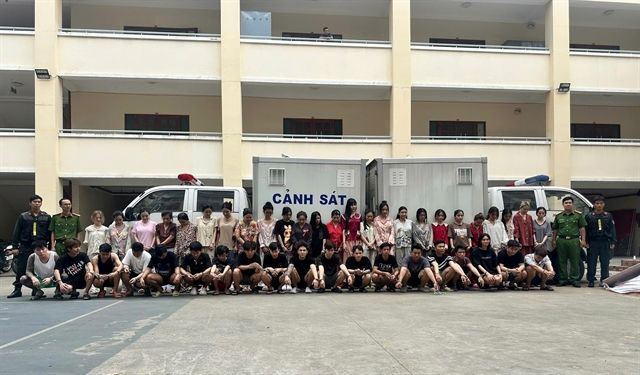
Police in Ho Chi Minh City have announced a major drug-trafficking operation that culminated in the arrest of 49 individuals, comprising primarily Vietnamese nationals alongside four foreign suspects from South Korea, China and Cambodia. The investigation revealed a sophisticated distribution network peddling electronic cigarettes containing etomidate, a controlled pharmaceutical substance that has emerged as an increasingly dangerous street drug across Southeast Asia. Authorities seized approximately 1,670 vape pods during raids, alongside hundreds of grams of ketamine and methamphetamine, signalling the operation's involvement in multiple drug categories.
Etomidate represents a particular concern for public health authorities throughout the region. The substance functions as a short-acting sedative intended solely for surgical anaesthesia administered by trained medical specialists in controlled hospital environments. Vietnamese authorities added etomidate to the national list of controlled substances in January, making its unauthorised sale and consumption a criminal matter. The sophistication of this particular smuggling operation lies in how distributors disguised the drug within vape products, marketing them under innocuous brand names such as "chill pod," "relaxation pod," "sleep-well pod" and "fly pod" designed to appeal to younger consumers.
The investigation began following police receipt of intelligence concerning an individual operating under the street name Ba Giá, later identified as 28-year-old Nguyen Huu Huan from Dong Thap Province. Authorities traced Huan's activities centred on An Duong Vuong Street in Ho Chi Minh City's An Lac Ward, where he engaged in systematic purchasing and resale of drug-laden vapes. On June 25, both Huan and his wife, Ngo Thi Kim Chi, aged 30, were taken into custody on charges of distributing etomidate-laced products to a customer identified as Tran Phuc, a Ho Chi Minh City resident.
Expanded investigations uncovered two distinct supplier networks operating in parallel to service Huan's distribution activities. The first network operated under the direction of 26-year-old Huynh Ngoc Thuy Nhu, with assistance from 20-year-old Hua Tuong Vy, both based in Ho Chi Minh City. The second, more extensive network was led by 40-year-old Le Quoc Duy hailing from An Giang Province, who orchestrated a cross-border smuggling operation transporting illicit vapes from Cambodia into Vietnam via minor border crossings within his home province before onward distribution to Ho Chi Minh City. Police recovered 37 vape pods directly from Duy's premises, together with 200 grams each of ketamine and methamphetamine.
A third supplier group involved international trafficking elements, allegedly run by Han Kiat, a Cambodian national, and three additional foreign collaborators who specifically targeted the expatriate community living throughout Ho Chi Minh City. This transnational dimension underscores the operation's complexity and the challenge it presents to law enforcement attempting to combat regional drug networks. The involvement of foreign nationals from multiple Southeast Asian countries indicates well-established cross-border supply chains that exploit differences in regulatory frameworks and enforcement capacity between nations.
The pharmacological dangers posed by etomidate when consumed through inhalation distinguish it from conventional street drugs. When inhaled via electronic cigarettes, etomidate bypasses the lungs' filtration mechanisms, passing directly into the bloodstream and reaching the brain within seconds. Initial effects manifest as lightheadedness and mild hallucinations; however, continued use or excessive dosing rapidly produces severe neurological consequences including neurotoxicity, pronounced drowsiness, involuntary muscle spasms and complete loss of consciousness. Most alarmingly, combining etomidate with alcohol or other central nervous system depressants creates acute risk of respiratory arrest and death, presenting a particularly acute hazard for young, inexperienced users unfamiliar with the substance's dangers.
Law enforcement officials identified several factors facilitating etomidate's appeal among young consumers. The vape delivery mechanism carries contemporary cultural cachet, with electronic cigarettes perceived as trendy rather than illicit. Marketing materials frequently advertise the substance as "undetectable" or "100 per cent negative" in standard drug screening, exploiting a genuine detection gap. Conventional rapid test kits available commercially detect only traditional narcotics such as heroin, cannabis and methamphetamine; etomidate's distinct chemical structure renders these devices ineffective. Only specialised forensic analysis systems operated by dedicated police and forensic agencies can definitively identify the compound, providing traffickers with substantial operational advantages.
The operation's scope and sophistication reflect broader trends across Southeast Asia concerning the emergence of designer drugs and pharmaceutical substances diverted to recreational purposes. Electronic cigarette technology has become an increasingly favoured vector for drug distribution, offering concealment advantages, perceived safety from association with traditional smoking, and marketing flexibility through product naming. The involvement of both domestic and transnational criminal elements suggests these networks enjoy significant resources and established logistics infrastructure.
For Malaysia and other regional nations, the Ho Chi Minh City operation carries important implications regarding border security and pharmaceutical supply chain integrity. Etomidate's relatively recent classification in Vietnam may indicate its prior availability in adjoining countries including Cambodia, Thailand and potentially Myanmar. Malaysian authorities should consider enhancing surveillance of etomidate distribution, particularly monitoring imports and tracking pharmaceutical facility security, given the substance's legitimate medical applications. The cross-border trafficking patterns identified in this investigation demonstrate how lightly-regulated border regions can facilitate rapid drug redistribution throughout the region.
Police authorities in Ho Chi Minh City have issued public warnings particularly targeting young people, advising against consumption of vape products from unknown sources and cautioning against believing vendor claims regarding substance composition or detectability. The investigation emphasises the critical importance of education campaigns addressing the specific dangers posed by pharmaceutical anaesthetics repurposed as recreational drugs, distinguishing their risks from better-understood street narcotics. Community-based prevention efforts must address both the supply-side operations dismantled in this investigation and demand-side vulnerabilities that make younger populations susceptible to marketing claims and peer influence.

