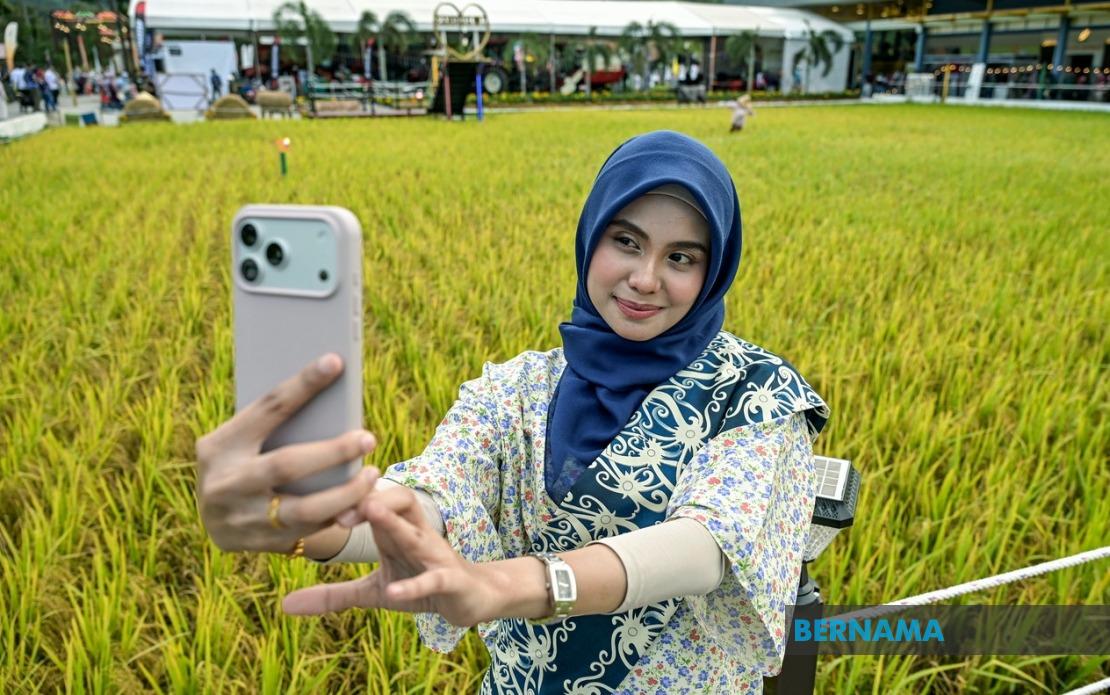
Malaysia's agricultural sector has achieved a significant milestone with the inauguration of Paddy Art at Laman Padi, a feature exhibition within the Malaysia Agriculture, Horticulture and Agrotourism Exhibition (MAHA) 2026 held in Serdang. The installation has earned formal recognition from the Malaysia Book of Records as 'The Largest Paddy Art Formation', marking a notable achievement in the nation's efforts to innovate within the farming industry. The artwork, created through strategic collaboration between government and private sector partners, displays the Jalur Gemilang flag alongside heart and hand motifs and the word 'Jati', crafted using MR284 paddy variety and a sophisticated staged planting technique that generates colour variations based on different crop maturity stages.
Minister of Agriculture and Food Security Datuk Seri Mohamad Sabu emphasised during the opening ceremony that this record-breaking initiative demonstrates how paddy cultivation transcends its traditional role as a food production mechanism. The minister highlighted that modern rice farming can serve dual purposes, simultaneously generating sustenance whilst functioning as a compelling tourist attraction that generates economic value through creative agrotourism ventures. This perspective represents a paradigm shift in how Malaysian policymakers conceptualise agricultural land use, particularly as the nation seeks to diversify income streams for farming communities whilst maintaining food security objectives.
The seven-acre Laman Padi site encompasses seven distinct paddy plots alongside two comprehensive information centres and galleries, each designed to offer visitors curated narratives about Malaysia's rice industry heritage and contemporary developments. Rather than presenting agriculture as a singular monolithic sector, the exhibition architecture deliberately fragments the narrative into discrete thematic experiences, allowing visitors to engage with different aspects of paddy farming sequentially. This curatorial approach reflects international best practices in agritourism design, where educational content interweaves seamlessly with entertainment value to maintain visitor engagement across demographic cohorts.
Agrotourism represents an increasingly significant economic opportunity for Malaysia's agricultural sector, particularly as urbanisation deepens and younger generations develop limited familiarity with farming practices and rural contexts. The Minister underscored that paddy fields possess untapped potential for integrating technological innovation, educational programming, employment generation, and value creation through strategic tourism development. As metropolitan populations distance themselves from agricultural realities, experiential learning opportunities at sites like Laman Padi become instrumentally valuable, bridging the cognitive gap between urban consumers and rural producers whilst simultaneously generating supplementary income for farming families and host communities.
Projections for visitor attendance demonstrate considerable confidence in the exhibition's appeal. Officials from the Paddy Industry Development Division estimated daily visitor numbers of approximately ten thousand across the ten-day exhibition period, though early performance figures indicated approximately four thousand visitors on the opening day. Should these projections materialise, the cumulative annual economic impact through gate revenues, food service operations, merchandise sales, and hospitality spending could substantially contribute to rural development objectives whilst validating agrotourism as a viable economic diversification strategy for paddy-producing regions.
Laman Padi deliberately integrates traditional agricultural knowledge with contemporary technological applications, demonstrating continuity within Malaysia's paddy farming narrative from historical practices through present-day mechanisation and crop science innovations. This pedagogical framework proves particularly valuable for educational cohorts; approximately ten participating schools incorporated paddy-related activities into the exhibition programme, providing students with hands-on experience in actual paddy planting methodologies. Such experiential learning opportunities foster informed consumption patterns and potentially cultivate interest in agricultural careers amongst younger Malaysians, addressing long-standing labour shortages within the sector that have complicated productivity enhancement initiatives.
The exhibition functions simultaneously as a commercial marketplace and public relations platform for organisations throughout the paddy and rice industry value chain. Government-linked entities including BERNAS alongside diverse private sector participants capitalise on concentrated visitor footfall to showcase product innovations, manufacturing capabilities, and market offerings to potential customers and partners. This integrated approach transforms Laman Padi beyond a conventional museum or static display into a dynamic marketplace environment where commercial transactions intersect with educational engagement and cultural celebration, maximising the economic multiplier effects of visitor attendance.
Culinary programming constitutes another strategic component of the Laman Padi experience, with food service operations emphasising regional Malaysian rice-based cuisines and contemporary gastronomic concepts derived from diverse state culinary traditions. This deliberate inclusion of food experiences acknowledges that gastronomic satisfaction drives repeat visitation and positive word-of-mouth marketing whilst simultaneously celebrating rice and paddy-derived products as central to Malaysian cultural identity and everyday consumption patterns. The integration of dining experiences within agritourism venues has demonstrated substantial commercial success internationally, as visitors develop emotional associations between agricultural products and memorable sensory experiences.
The Malaysia Book of Records designation carries particular significance within Malaysian contexts, representing institutional validation of achievement and distinctiveness that resonates with both domestic audiences and international visitors. Such recognition enhances the exhibition's credibility as a destination worth visiting, whilst simultaneously providing marketing assets that tourism authorities and private sector operators can leverage in promotional campaigns targeting both regional and international tourist markets. This official acknowledgment transforms Laman Padi from a routine exhibition component into a documented achievement of national significance, subtly elevating perceptions of Malaysian agricultural innovation capabilities.
Minister Mohamad Sabu articulated an important conceptual reframing: that Malaysia's agricultural sector possesses capabilities beyond traditional commodity production to generate distinctive creative outputs capable of attracting tourism revenue and creating novel economic value chains. This framing positions agriculture as a potential driver of creative economy development rather than exclusively as a traditional primary industry dependent upon commodity prices and export volumes. For policymakers seeking to diversify economic foundations away from conventional manufacturing and resource extraction, agricultural tourism and experiential farming represent strategic opportunities deserving sustained investment and policy support, particularly as Southeast Asian economies navigate post-pandemic recovery and economic restructuring imperatives.

