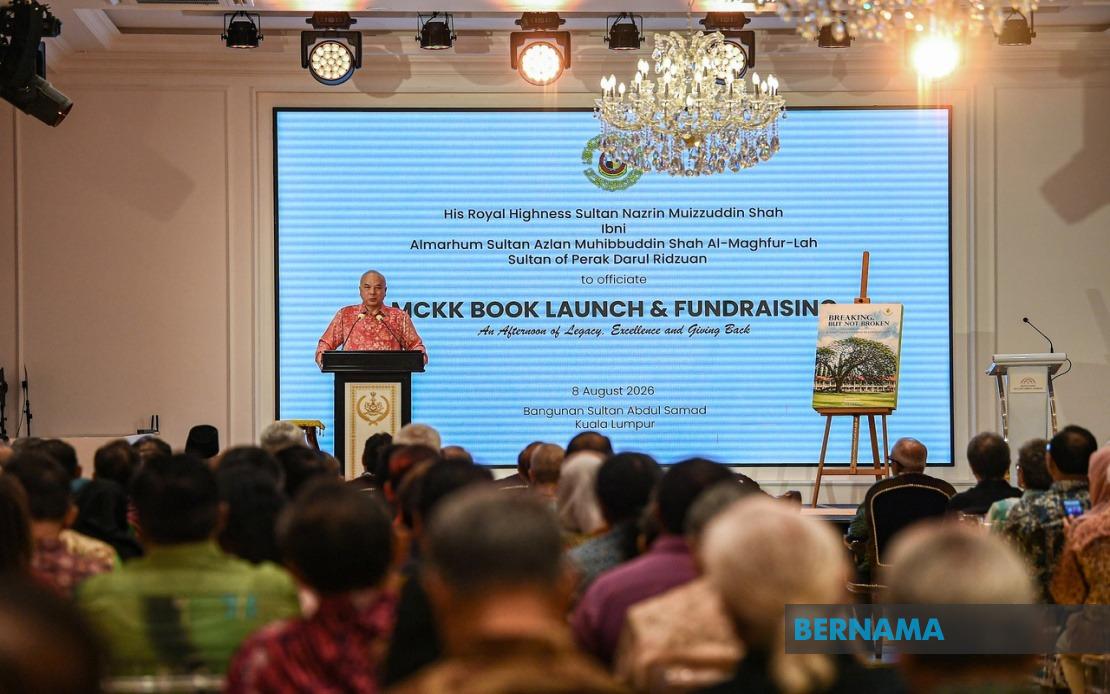
Sultan Nazrin Shah, Ruler of Perak and Royal Patron of the MCKK Board of Governors, has called on Malaysia's premier heritage schools to embrace transformation and secure relevance in an era fundamentally reshaped by artificial intelligence and technological disruption. Speaking during a book launch in Kuala Lumpur on August 8, the Sultan emphasized that institutions such as Malay College Kuala Kangsar need not fade into irrelevance if they adapt thoughtfully to contemporary challenges while drawing strength from their distinguished educational legacies.
The Sultan's intervention carries particular weight given the long-standing concerns about the performance of Malaysia's "power schools"—the selective residential institutions that have traditionally produced the nation's intellectual and professional elite. His Royal Highness acknowledged that these celebrated institutions have experienced a marked decline in their historical ability to nurture graduates of exceptional calibre, signalling a crisis that extends beyond any single school. The traditional markers of excellence—command of language, capacity for critical thinking, and commitment to public service—are increasingly absent from today's cohort, creating a troubling departure from decades of established standards.
Central to the Sultan's message is recognition that education systems globally face unprecedented pressures to prepare young people not merely for economic competitiveness but for citizenship in societies transformed by rapid technological change. The challenge facing Malaysia's heritage schools is therefore twofold: they must equip students with practical skills suited to an AI-augmented labour market while simultaneously cultivating the deeper human qualities—ethical reasoning, emotional intelligence, cultural awareness, and civic values—that technology cannot replicate. This dual imperative represents a fundamental departure from traditional pedagogical models that often prioritized either academic excellence or character formation in isolation.
Sultan Nazrin's emphasis on reimagining the entire education ecosystem reflects international anxiety about whether conventional schooling can adequately prepare students for futures that experts themselves struggle to predict with confidence. The rapid advancement of artificial intelligence has created uncertainty about which skills will remain valuable and which professions will be disrupted, placing unprecedented pressure on educational institutions to think beyond credential-based learning. For Malaysian heritage schools, this context demands courageous institutional leadership willing to examine existing practices critically and redesign curricula, pedagogy, and student support systems from first principles.
The Sultan commended the authors of a recently launched book—Ghazally Ismail, Ahmad Ibrahim, and Hisham Badrul Hashim—for undertaking what he described as a frank and sometimes harsh analysis of the institutional challenges confronting MCKK and its peer institutions. This acknowledgement of unflinching self-examination suggests that the path to renewal must begin with honest institutional reckoning about where and why these schools have fallen short of their historical mission. The Sultan's public recognition of this work may encourage other heritage institutions to engage in similar critical reflection rather than retreating into nostalgia or defensive posturing.
Financial capacity has not been the primary constraint on institutional renewal. The MCKK Foundation, established in 2008, has mobilized substantial resources totalling more than RM36 million in donations and contributed funds. This financial base has enabled significant capital investment, with more than RM19 million directed toward new infrastructure including the International Baccalaureate Complex and Auditorium Tun Abdul Razak. The Foundation has also undertaken extensive refurbishment of existing facilities, addressing deteriorating infrastructure that, while not directly affecting educational quality, can diminish the student experience and institutional morale.
Beyond physical assets, the Foundation has built an endowment exceeding RM16 million, with generous contributions from major corporations including PETRONAS and international donors such as His Majesty Sultan Hassanal Bolkiah of Brunei Darussalam. The investment income generated—surpassing RM7 million to date—has been redirected to support scholarships, financial assistance for deserving students, leadership development programmes, teacher professional development, and preservation of heritage buildings. This financial stability creates institutional space for pedagogical innovation without the constraints faced by schools dependent on year-to-year budget allocations.
The strategic deployment of endowment income toward teacher development and student enrichment programmes signals recognition that institutional renewal depends fundamentally on human capital rather than infrastructure alone. Professional development for educators becomes critical when schools must adapt teaching methods to cultivate skills like systems thinking, creative problem-solving, and ethical decision-making—competencies often underdeveloped in traditionally didactic classroom environments. Similarly, funding for student participation in international conferences and competitions exposes young people to global perspectives and intellectual networks that transcend the classroom.
For Malaysian policymakers and education stakeholders, the Sultan's intervention articulates a challenge that extends far beyond MCKK's walls. If the nation's premier schools are struggling to fulfill their historical mission, questions arise about the adequacy of the broader education system to prepare future generations for economic participation and civic engagement in a rapidly changing world. The diagnosis of declining language proficiency and diminished critical thinking capacity, if accurate, suggests systemic failures that demand responses at multiple levels—curriculum design, teacher preparation, assessment methodology, and institutional culture.
The particular vulnerability of heritage schools merits attention because these institutions occupy a unique position in Malaysia's educational hierarchy and collective imagination. Their historical role in producing leaders across politics, business, academia, and the professions means their decline potentially represents a loss of institutional capacity for social mobility and meritocratic advancement. Students from disadvantaged backgrounds who might have accessed elite education through these schools' scholarship programmes face reduced opportunities if the schools' academic standing deteriorates.
Sultan Nazrin's vision of educational transformation that integrates practical skills development with cultivation of values and ethical reasoning offers a constructive framework for heritage schools' renewal. However, translating this vision into institutional practice requires sustained commitment from school leadership, substantial professional development investment, and willingness to experiment with pedagogical approaches that may initially appear to compromise traditional academic rigour. The financial resources are available through the Foundation and donor networks; the institutional will and clarity of direction remain the critical variables determining whether Malaysia's heritage schools can indeed re-emerge with revitalized purpose.

