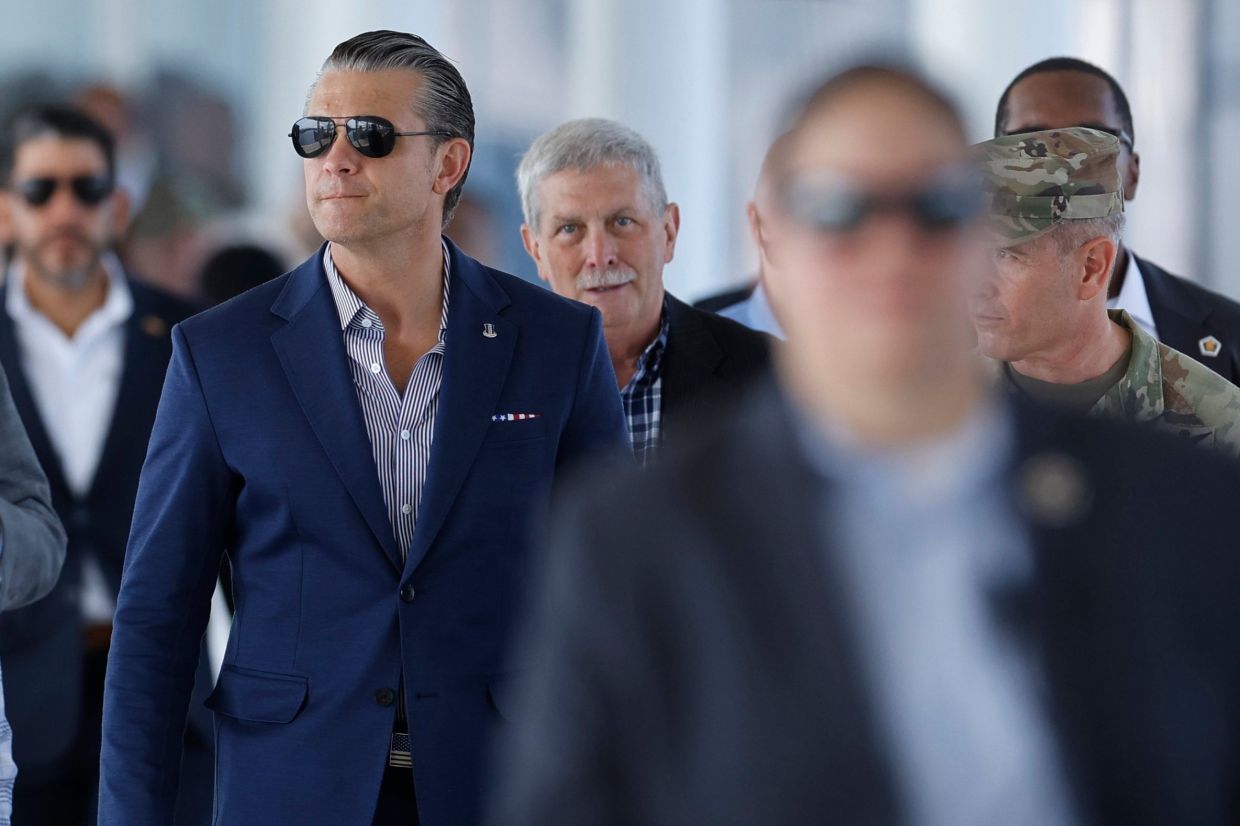
Uncertainty clouds the future of Pete Hegseth's role as US Defence Secretary, with unnamed officials warning that the Pentagon chief stands at risk of losing his position. The reported jeopardy stems from an intractable standoff over Iran policy combined with accumulating negative coverage, arriving at a moment of delicate repositioning between Washington and Beijing's defence establishments. The timing presents particular complications for Southeast Asia and the broader Indo-Pacific region, where military stability between the superpowers carries outsized significance.
Hegseth's potential departure would disrupt a remarkable turnaround in US-China defence relations that has unfolded quietly over recent months. Sources within both governments indicate that military-to-military contact now operates at nearly every institutional level, marking the most constructive phase in more than a decade. This recovery follows the May summit in Beijing between Donald Trump and Chinese President Xi Jinping, where the two leaders signalled commitment to a relationship grounded in mutual benefit rather than confrontation. For countries throughout Asia, including Malaysia, such stability in great-power military channels provides essential reassurance against escalation.
Hegseth himself has become the public face of this military rapprochement. Speaking at a defence conference weeks after the Beijing meeting, he characterised the bilateral relationship as having reached a quality "better than they've been in many years", explicitly extending this assessment to military-to-military dimensions. His framing mattered: a senior Pentagon figure publicly endorsing improved defence ties carries weight in signalling genuine policy commitment rather than rhetorical posturing. The remarks signalled that accommodation, not confrontation, would define the administration's approach to China's armed forces.
Recent high-level engagement underscores genuine momentum. Last month, American officials including Alvaro Smith, deputy assistant defence secretary for China, Taiwan and Mongolia, met with Chinese vice-minister for foreign affairs Ma Zhaoxu in Washington. Smith's statement to the Pentagon emphasised that "under the leadership of Secretary Hegseth, we are actively repairing a once-broken military-to-military channel and making clear, steady progress." The language of restoration—repairing what was broken—reflects acknowledgment that previous years had seen these crucial communications severely strained.
Hegseth's direct engagement with his Chinese counterpart, Defence Minister Dong Jun, has created personal relationships that typically undergird institutional cooperation. Meetings held in Malaysia and during Trump's Beijing visit have established working familiarity and, ideally, channels for addressing crises through direct conversation rather than public confrontation. These relationships require time and continuity to develop the trust necessary for managing delicate security matters across the Taiwan Strait and throughout contested waters.
Chinese analysts and officials view Hegseth's possible removal with genuine concern about institutional continuity. Zhao Minghao, professor at Fudan University's Institute of International Studies, suggests that Trump may feel compelled to sacrifice his defence chief as scapegoat for the Iran impasse, particularly as his administration approaches midterm election considerations. But Zhao emphasises that Hegseth's departure would impose real costs on the developing military relationship, as any successor would need time to establish working relationships with Chinese counterparts and rebuild understanding of what both sides seek from defence engagement.
Not all American assessments paint a catastrophic scenario. Some US sources contend that losing Hegseth need not fundamentally damage military relations, provided his replacement maintains the administration's underlying policy direction. The critical variable involves whether a successor actively pursues improved ties or reverts to confrontational positioning. A China hawk elevated to the position would signal pivot away from current accommodation, whereas maintaining the existing policy orientation might preserve momentum despite leadership turnover.
Chinese officials apparently maintain optimism about continuity, having formed positive impressions of other Pentagon figures positioned to influence policy. Colby, who also met with Ma Zhaoxu, has impressed Beijing by articulating positions—notably that Taiwan does not constitute a vital US existential interest—that suggest pragmatic rather than ideological approach to managing differences. His continued presence at the Pentagon could compensate for Hegseth's departure by maintaining policy consistency and demonstrating American seriousness about strategic stability.
The broader strategic context involves multiple dimensions beyond China's immediate concerns. Talks at various working levels between the two militaries have resumed as both sides implement Trump and Xi's agreement to pursue "strategic stability," language suggesting mutual interest in reducing risks from miscalculation and escalation. For Southeast Asian nations navigating between American and Chinese interests, predictable defence channels and communication between Beijing and Washington provide essential stabilisation. Unpredictable leadership changes in Washington create uncertainty about which American approach will govern policy implementation.
Xi Jinping's forthcoming state visit to Washington, the first since 2015, represents pivotal moment for consolidating these gains. Chinese analysts regard military-to-military relations as likely central to discussions, with both sides presumably intent on further institutionalising the relationship. A leadership crisis at the Pentagon preceding this high-profile engagement could complicate preparations and signal wavering American commitment at the precise moment when demonstrating reliability matters most.
The broader pattern suggests structural factors supporting continued improvement regardless of Hegseth's tenure. Both Trump and Xi have signalled genuine interest in cooperation over confrontation, and military professionals on both sides have demonstrated capacity to work together productively when permitted political space. However, leadership changes introduce friction costs and require rebuilding relationships that took months to establish. For Malaysia and other regional nations dependent on great-power stability, the unfolding uncertainty demands close attention to whether Washington's commitment to measured relations with Beijing survives its internal political turbulence.

