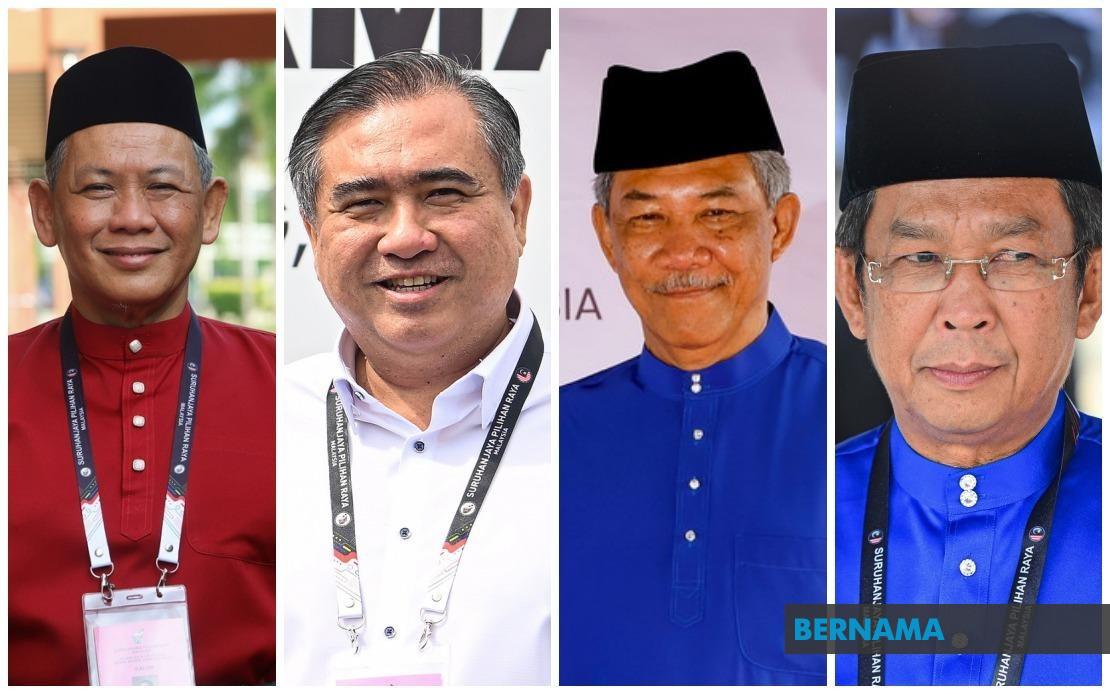
The 16th Negeri Sembilan state election is shaping up to be far from a coronation for the state's political establishment, with influential figures from all major coalitions encountering genuine electoral challenges. Nomination proceedings concluded on July 18, formally launching a 14-day campaign period that has already exposed vulnerability among several top-tier politicians who might have anticipated smoother paths to victory or re-election. The competitive landscape reflects shifting voter sentiment and a fragmented opposition that has splintered traditional party strongholds across the 36 state constituencies.
Datuk Seri Aminuddin Harun, the Pakatan Harapan chairman and caretaker Menteri Besar, finds himself ensnared in a three-way contest for the Linggi seat against incumbent Datuk Mohd Faizal Ramli of Barisan Nasional and Bersatu's Datuk Zamri Md Said. Despite his seniority within PKR as vice-president, Aminuddin cannot take his position for granted, as both challengers present credible alternatives to voters in a seat where previous electoral margins may no longer guarantee success. The distribution of opposition votes between BN and Bersatu creates genuine uncertainty about whether PH's factional dominance will translate into victory.
Transport Minister Anthony Loke, the DAP secretary-general, faces an unexpected threat in Chennah, a constituency the party has controlled since 2013. His challenger, Negeri Sembilan MCA Youth chief Siow Kong Choon, represents BN's attempt to recapture this traditionally DAP stronghold. That a party cadre feels sufficiently confident to mount a challenge in what was assumed to be secure territory suggests underlying shifts in local voter preferences or demographic changes that may favour BN's more conservative positioning. The competitive dynamics in Chennah carry implications beyond Negeri Sembilan, as DAP's performance in state-level contests influences perceptions about the party's broader electoral resilience in Malaysia.
Mohamad Hasan, the BN deputy chairman and Foreign Minister, confronts perhaps the most symbolically significant challenge. At 70 years old, the politician better known as Tok Mat has represented the Rantau constituency continuously since 2004, embodying BN's institutional continuity in the state. His challenger, Dr Azizul Hakim Mahdi representing PH, presents a stark generational contrast that resonates with voters increasingly conscious of leadership renewal. The straight fight between these two candidates removes the complicating factor of a three-way split, focusing voter choice squarely on whether they prefer continuity or change, experience or fresh perspectives.
Jalaluddin Alias, the Negeri Sembilan UMNO chief who has held Pertang since 2013, similarly cannot expect an uncontested passage. A three-cornered contest involving PH's Mohd Umry Abdul Khois and Bersatu's Mohd Faizal Fadli Mohd Idrus complicates BN's ability to consolidate support. Pertang's competitive status reveals how Bersatu's persistent challenge to BN in Peninsular constituencies continues to fracture the traditional two-coalition framework. The party's ability to field credible local candidates suggests sustained organisational reach despite its diminished federal standing after the 2023 general election.
The Nilai seat exemplifies the electoral fragmentation reshaping Negeri Sembilan politics. DAP's national deputy chairman and incumbent J. Arul Kumar faces four challengers: BN's Datuk Lai Chien Kong, Bersatu's Datuk V. Saravana Kumar, Berjasa's Zamani Ibrahim, and independent Omar Mohd Isa. Such a five-way split dramatically reduces any single candidate's ability to secure a commanding majority, potentially favoring incumbent-specific voting patterns or community-based support networks. The presence of candidates from smaller parties and independent ranks indicates grassroots political engagement extending beyond Malaysia's major coalitions, though such candidacies frequently dilute rather than concentrate opposition strength.
Sri Tanjung presents another five-cornered configuration where PH incumbent Dr G. Rajassekaran encounters challenges from BN's A. Achutan, Bersatu's notably youthful Leevineshwaraan Murugan, independent candidates Saravanan Arumugam and Islah Wahyudi Zainudin. At merely 23 years old, Leevineshwaraan Murugan represents the youngest competitor in these state polls, potentially appealing to voters prioritising generational change while simultaneously raising questions about candidate maturity and experience among younger political entrants. The crowded field dilutes any individual challenger's resources and campaign capacity, often favouring incumbents despite dissatisfaction with their performance.
The 103 candidates competing across 36 constituencies reveal clear organisational advantages for larger coalitions. Pakatan Harapan fields 36 candidates, claiming every available seat, while Barisan Nasional presents 25 and Bersatu fields 24. Perikatan Nasional contributes 11 candidates, with smaller parties Berjasa, ASLI, and PSM each fielding single representatives alongside four independent candidates. This distribution underscores how PH's capacity to field complete electoral teams reflects its organisational infrastructure, yet simultaneously indicates that field strength alone cannot guarantee victory, particularly in constituencies where incumbent advantages or local political dynamics override coalition-level popularity.
The Election Commission has scheduled early voting for July 28 and general polling for August 1, providing voters with extended campaign exposure to candidate platforms and coalition messaging. The 14-day campaign window, concluding July 31 at 11:59 pm, represents the compressed timeframe within which candidates must mobilise supporters, articulate policy positions, and respond to emerging electoral dynamics. Campaign intensity in Negeri Sembilan will carry subtle signals about broader PH and BN electoral vitality heading into potential national political recalibrations, making several contests here national bellwethers rather than purely local contests.
The competitive texture across Negeri Sembilan reveals that Malaysian voters increasingly resist automatic re-election of incumbent politicians regardless of seniority or position. The concentration of challenges against senior figures—including national-level ministerial posts—suggests voters distinguish between coalition-level support and individual candidate endorsement, viewing local representation through increasingly granular decision-making criteria. Whether this reflects policy dissatisfaction, generational preferences, or community-specific grievances remains a question the campaign period should illuminate, with answers holding implications for how Malaysian political parties must calibrate candidate selection and campaign messaging in future contests.

