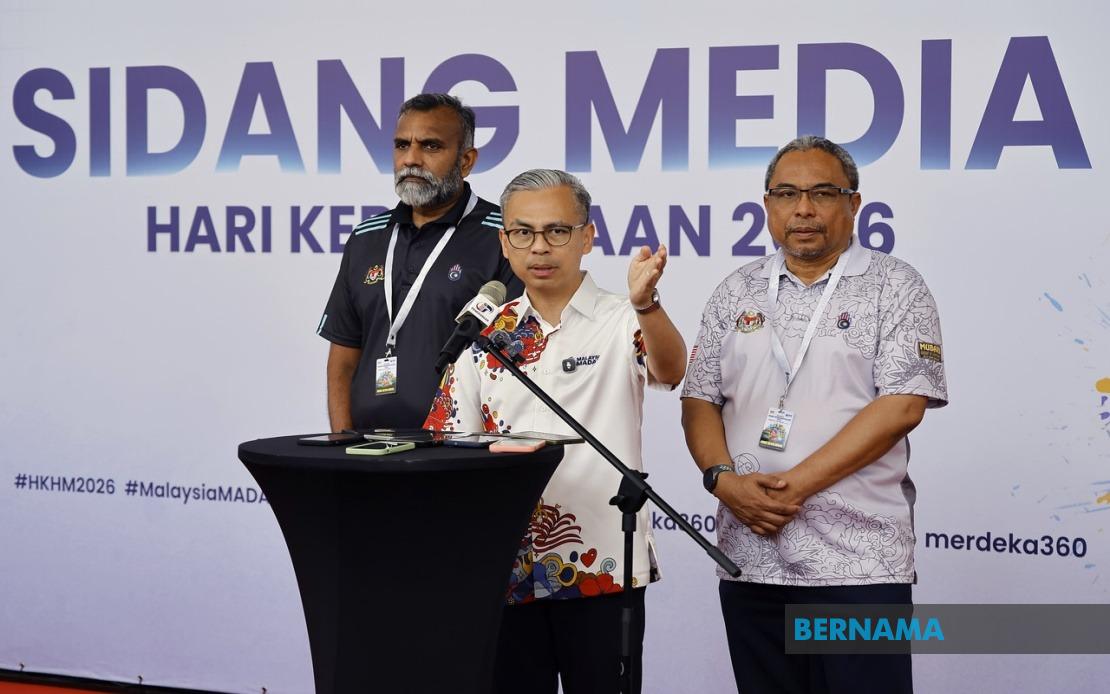
The 2026 National Day celebrations at Dataran Putrajaya will proceed on Monday with enhanced health and safety measures in response to ongoing regional haze conditions, Communications Minister Datuk Seri Fahmi Fadzil announced following the full dress rehearsal. The advisory to wear N95 masks represents a precautionary approach aligned with guidance from the Ministry of Health, particularly targeting vulnerable groups within the expected crowd.
Fahmi, who chairs the National Day and Malaysia Day (HKHM) 2026 celebrations main committee, emphasised that the mask recommendation reflects Health Ministry guidance without imposing mandatory requirements on attendees. The organisational flexibility acknowledges that mask-wearing decisions should remain individual choices, allowing visitors to assess their personal health circumstances and comfort levels. This approach contrasts with stricter enforcement measures that might deter participation during a significant national occasion.
Respectively, organisers have undertaken a substantial logistical commitment by procuring N95 masks for distribution to more than 10,000 participants throughout the event. This proactive supply represents significant preparation beyond advisory measures, demonstrating institutional recognition that haze-related health risks warrant tangible support for attendees. The provision particularly benefits participants who may not have anticipated the need for respiratory protection or lack ready access to appropriate masks.
Fahmi specifically highlighted vulnerable populations requiring additional protective measures, including young children attending with parents and individuals with respiratory conditions such as asthma. These groups face elevated health risks during periods of elevated air pollution, making targeted guidance essential. Parents are encouraged to bring masks specifically for their children, recognising that respiratory protection becomes particularly important for developing lungs in younger attendees exposed to particulate matter.
The Health Ministry has positioned medical teams at strategic locations throughout Dataran Putrajaya to respond promptly to any health emergencies arising during the celebrations. This layered health infrastructure creates multiple touchpoints for immediate assistance, reducing response times for individuals experiencing haze-related symptoms or other medical issues. According to Fahmi, all medical bases have been established and are operating smoothly, with no significant incidents reported during preparation phases.
The full dress rehearsal proceeded according to plan, providing organisers confidence that logistical arrangements meet event requirements. Successful rehearsal execution typically indicates that security protocols, crowd management systems, and emergency response procedures function as designed. This operational validation is essential for managing events attracting substantial crowds during periods when environmental factors complicate ordinary procedures.
Media coverage for the 2026 celebrations has expanded significantly, with 823 accredited journalists assigned to cover proceedings compared to approximately 600 the previous year. This substantial increase reflects enhanced media interest and broader efforts to document national celebrations comprehensively. The growth demonstrates confidence in organisational capacity to accommodate additional press personnel while maintaining event quality and security standards.
The Malaysian Communications and Multimedia Commission (MCMC) has coordinated installation of supplementary communications infrastructure at 102 celebration venues nationwide, working with telecommunications providers to ensure robust coverage. This network expansion directly addresses previous connectivity challenges that hindered media operations, particularly during high-traffic periods when simultaneous uploads from multiple journalists can overwhelm standard infrastructure. Improved telecommunications capacity should facilitate real-time reporting across platforms and enable international audiences to follow proceedings more reliably.
Security preparations have progressed without major incidents requiring exceptional intervention, according to police assessments provided by the Communications Minister. The Royal Malaysia Police (PDRM) maintains standard protocols across the venue, with public order effectively maintained during preliminary arrangements. The absence of significant security concerns suggests that advance planning and coordination among relevant agencies has effectively addressed potential vulnerabilities.
For Malaysian observers and Southeast Asian regional audiences, the 2026 National Day preparations illustrate how major public events must adapt to environmental challenges while maintaining celebratory character. The emphasis on voluntary protective measures rather than restrictive mandates reflects contemporary approaches to public health communication that respect individual autonomy while providing information and resources. The regional haze phenomenon, which periodically affects multiple Southeast Asian nations, presents recurring challenges to outdoor gatherings and public health planning across the region.
The comprehensive medical and communications infrastructure assembled for these celebrations establishes protocols potentially applicable to future major events across Malaysia. Enhanced emergency response systems and expanded media capabilities create frameworks benefiting not only national day festivities but also other significant public gatherings where large crowds concentrate in particular locations. The investment in telecommunications redundancy particularly addresses ongoing vulnerabilities that have previously disrupted coverage of important national occasions.
Organisers face the persistent challenge of balancing national celebration imperatives against environmental and health considerations that cannot be entirely controlled through planning alone. The measured approach adopted—providing protective equipment without mandating usage, positioning medical resources strategically, and expanding communications capacity—reflects pragmatic acknowledgment that haze conditions may affect air quality without justifying cancellation of significant national observances. This equilibrium between celebration and precaution characterises contemporary event management in regions affected by seasonal transboundary air pollution.

