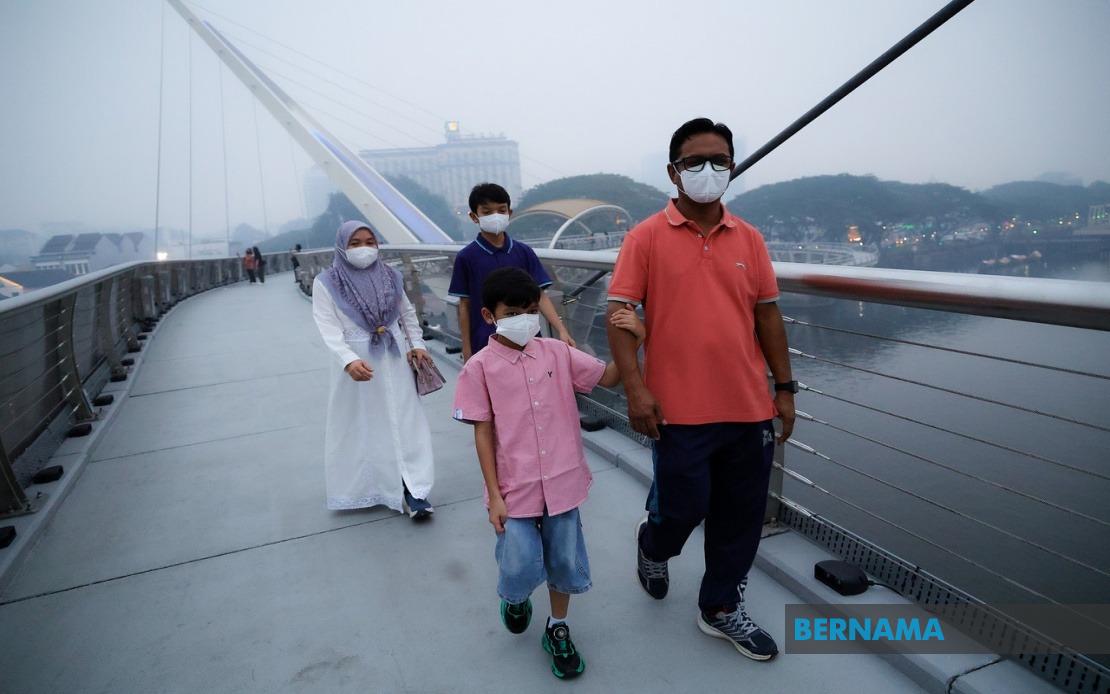
Health professionals across Malaysia are calling on the public to adopt a proactive approach to air quality management, emphasizing the importance of tracking daily Air Pollutant Index readings issued by the Department of Environment before venturing outdoors. The advisory comes as haze conditions continue to impact the region, with experts warning that awareness and preventive action remain inconsistent among the general population despite visible air quality degradation.
Dr Anas Ahmad Jamhari from Universiti Sultan Zainal Abidin's Faculty of Health Sciences explains that outdoor activities should be curtailed when API readings breach the 100 threshold, marking the transition into unhealthy air quality zones. Those who must leave their homes for essential errands should equip themselves with properly fitted N95 masks, which are specifically designed to filter fine particulate matter measuring 2.5 micrometres or smaller. The effectiveness of such masks, however, depends critically on correct usage and a secure seal against the face.
The lecturer notes that mask efficacy diminishes substantially when worn loosely, frequently adjusted, dampened, or damaged. Facial hair poses a particular challenge, as beards prevent an airtight seal that is fundamental to the mask's protective function. For children, the problem is compounded by the difficulty of finding appropriately sized masks that fit small faces securely, often rendering standard protective equipment less reliable for younger populations.
Beyond masks, Dr Anas emphasizes that individuals should avoid strenuous outdoor pursuits during periods of poor air quality. Activities such as running, cycling, and competitive sports accelerate breathing rates, causing the lungs to process larger volumes of contaminated air and allowing harmful particles to penetrate deeper into the respiratory tract. He expresses concern that many Malaysians continue engaging in vigorous outdoor exercise even when API readings clearly indicate unhealthy conditions, a pattern that heightens their vulnerability to both immediate and long-term respiratory damage.
Indoor environments require equal attention during haze episodes. Dr Anas recommends keeping doors and windows sealed to prevent outdoor pollution from entering living spaces. Simultaneously, residents should minimize interior sources of air contamination, particularly cigarette and vape smoke, incense and candle burning, and cooking activities that generate substantial smoke volumes. Vehicle air-conditioning systems should be switched to recirculation mode rather than drawing fresh air from outside, creating a cleaner microenvironment during travel.
From a toxicological perspective, haze represents far more than reduced visibility caused by smoke. The phenomenon consists of a complex mixture of airborne particles and chemical compounds, with fine PM2.5 particles posing the greatest health threat due to their microscopic size. These particles penetrate beyond the upper respiratory tract, reaching the lung tissue where they accumulate and trigger oxidative stress—a biochemical process that generates inflammation, damages cells, and compromises the lungs' capacity to function properly.
Public health specialist Datuk Dr Zainal Ariffin Omar introduces an additional dimension to haze management by highlighting the synergistic effects of elevated temperatures and humidity during poor air quality episodes. He advises Malaysians to maintain adequate hydration, as the combined stress of haze exposure and heat significantly increases dehydration risk and vulnerability to heatstroke. During El Niño phenomena that bring both hot weather and haze conditions, populations face compounded physiological stress that demands comprehensive strategies addressing both threats simultaneously rather than focusing narrowly on API figures alone.
Dr Zainal Ariffin warns against treating haze as merely a seasonal nuisance that warrants minimal behavioral adjustment. When individuals perceive air quality problems as temporary and cyclical, they tend to defer protective actions until conditions deteriorate markedly, reducing overall preparedness. This mindset undermines prevention efforts, as the crucial window for intervention occurs during moderate pollution levels rather than waiting until API readings reach critically high thresholds.
Streamlining public communication about haze risks emerges as a critical priority in Dr Zainal Ariffin's assessment. Information campaigns should employ straightforward, accessible language that enables ordinary citizens to understand and implement protective measures without requiring specialized knowledge. Strengthening continuous awareness through simplified messaging would encourage proactive behavior modification during early-stage haze development, before population-wide health impacts become severe.
Recent Ministry of Health data underscores the urgency of expert recommendations. During Epidemiological Week 34, asthma-related cases at sentinel facilities surged to 1,811 from merely 219 the previous week—a more than eightfold increase within seven days. Conjunctivitis cases similarly escalated from 146 to 720 during the identical period, demonstrating that haze episodes trigger measurable health impacts across multiple physiological systems. These statistics reflect the reality that air quality degradation translates into concrete disease burden affecting healthcare facilities and population wellbeing across the country.

