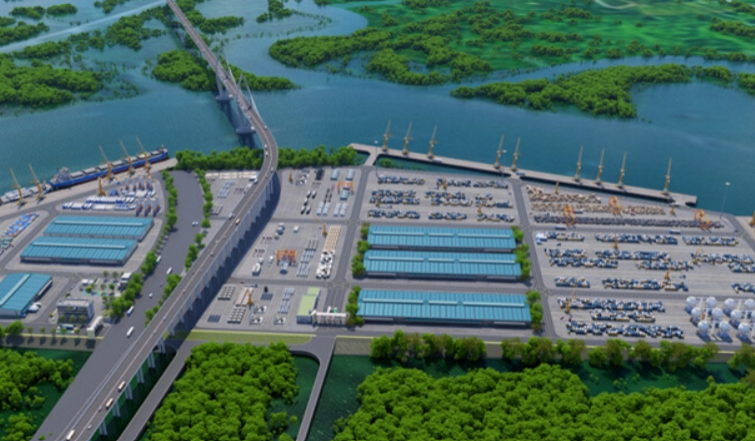
Ho Chi Minh City has officially launched the QTM International Port, a major infrastructure initiative valued at approximately VNĐ6.9 trillion (US$261 million), marking a significant step toward bolstering the nation's maritime logistics capabilities. Situated within the Cai Mep-Thi Vai deep-water port complex in Phu My Ward, this port development reflects Vietnam's strategic emphasis on strengthening supply chain infrastructure at a time when regional trade dynamics continue to reshape commerce patterns across Southeast Asia.
The facility has been engineered to accommodate substantial cargo volumes, with a designed annual handling capacity of 16 million tonnes across more than 80 hectares of dedicated port territory. The project's ambitions extend beyond basic container operations; developers have integrated comprehensive logistics facilities into the master plan, including nearly 200,000 square metres of warehousing and distribution infrastructure. This integrated approach acknowledges the reality that modern ports function as nodes within broader logistics ecosystems rather than isolated terminal facilities.
Construction will unfold across two distinct phases stretching from 2026 through 2034, allowing for measured capital deployment and operational refinement throughout the development timeline. Upon completion, the port will feature eight berths initially capable of servicing vessels up to 60,000 deadweight tonnes, with infrastructure designed for eventual expansion to accommodate ships reaching 100,000 DWT. This scalable approach provides flexibility as global shipping patterns evolve and vessel sizes continue to increase—a consideration particularly relevant given the expansion of mega-carrier services along major Asian trade corridors.
The strategic timing of this expansion reflects transformative changes within HCM City's administrative structure. The recent consolidation of three localities has materially increased the city's geographic footprint and population served, generating corresponding pressures on existing transportation infrastructure. Local authorities project that goods movement requirements will intensify significantly as the merged administrative region achieves integration, necessitating expanded capacity to prevent supply chain bottlenecks.
Data compiled by HCM City authorities substantiates these growth expectations. During the first half of this year, cargo volumes transported via maritime and inland waterway routes expanded by 7.3 percent compared to the corresponding period in the preceding year. While these figures represent measured growth rather than explosive expansion, they signal consistent demand trajectory that justifies substantial capital investment in port modernisation and capacity augmentation.
Vietnam's Deputy Prime Minister Pham Gia Tuc articulated the broader strategic imperatives driving the investment during the groundbreaking ceremony. He highlighted that logistics expenditures currently consume between 14 and 16 percent of Vietnam's gross domestic product—a burden that constrains competitiveness relative to peer economies with more efficient supply networks. Modern port infrastructure represents a critical mechanism for reducing these systemic cost pressures, thereby enhancing the price competitiveness of Vietnamese manufactured goods and agricultural products in international markets.
HCM City authorities have established ambitious operational targets for project completion. Deputy Prime Minister Tuc specifically called upon developers to accelerate construction schedules, targeting operational commencement of the first phase within eleven months. This compressed timeline reflects municipal economic growth objectives; officials anticipate the expanded port capacity will contribute meaningfully toward achieving double-digit economic growth targets within the city for the coming fiscal year.
The location within the Cai Mep-Thi Vai complex positioned the new facility within one of Asia's premier maritime logistics hubs. This deep-water port ecosystem already maintains direct shipping connections spanning the Trans-Pacific corridor and European trade routes, providing immediate access to global supply chains for cargo transiting through the facility. New operators entering this established logistics ecosystem benefit from network effects and existing service concentrations rather than attempting to build market demand from scratch.
HCM City's maritime advantages extend beyond the newly developed QTM facility. The metropolis commands approximately 110 kilometres of usable coastline and hosts one of Vietnam's most comprehensive maritime transport systems. This geographic positioning, combined with infrastructure investments and established shipping service networks, reinforces the city's status as Vietnam's primary gateway for international maritime commerce. Regional competitors seeking to develop competing port facilities face the formidable challenge of competing against an entrenched ecosystem of established shipping lines, logistics service providers, and customs infrastructure.
For Malaysian observers and Southeast Asian stakeholders, this port development carries implications extending beyond Vietnam's borders. Expanded capacity at major Vietnamese maritime hubs affects regional shipping patterns and cargo routing decisions throughout the subregion. Malaysian port operators at facilities such as Port Klang and Penang face evolving competitive dynamics as Vietnamese capacity increases, potentially altering the distribution of transhipment volumes and regional logistics services. Companies with supply chain operations throughout Southeast Asia should monitor Vietnamese infrastructure developments closely, as they reshape the cost-benefit calculations influencing transport mode selection and regional hub utilization.
The investment equally reflects confidence in Vietnam's continued economic integration into global manufacturing and trade networks. Foreign investors and multinational corporations maintain substantial manufacturing operations throughout southern Vietnam, requiring reliable and cost-effective logistics infrastructure to sustain export competitiveness. Port expansion thus functions simultaneously as economic stimulus, competitive positioning, and facilitation for existing investor commitments within the nation's industrial base. The thirteen-year development horizon provides adequate time for market adaptation, infrastructure coordination, and phased capacity absorption as the regional economy continues evolving.

