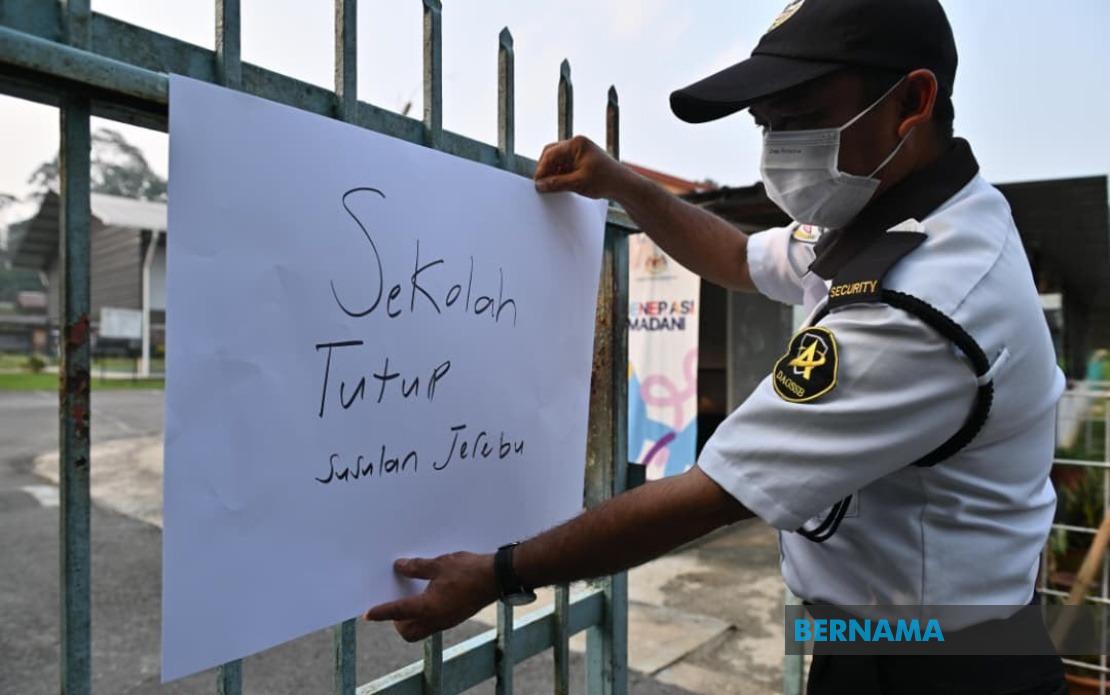
Air quality in Sarawak has deteriorated sharply, prompting authorities to shut down all 108 educational institutions across the Serian district on August 12 as a protective measure following Air Pollutant Index readings that breached the critical 200 mark. The Sarawak State Disaster Management Committee activated closure protocols under the National Haze Action Plan to safeguard the physical and respiratory health of students and teaching staff exposed to hazardous atmospheric conditions. This precautionary step reflects growing concerns about transboundary pollution affecting the Malaysian state, a recurring challenge during fire seasons in neighbouring regions.
While schools have suspended physical operations, the Sarawak State Education Department has mandated that Home-Based Teaching and Learning, locally known as PdPR, will continue uninterrupted throughout the closure period. This hybrid approach ensures that academic progress remains on track despite the environmental emergency, allowing students to complete lessons and maintain curriculum progression through digital platforms. The emphasis on continuity highlights how Southeast Asian education systems have increasingly adapted to climate-related disruptions, building resilience into learning structures to prevent widespread academic losses.
Under the tiered National Haze Action Plan framework administered by the State Education Department director, schools must shut their doors automatically once API readings hit 200, marking the transition into the "very unhealthy" category. Understanding this measurement scale provides context for public health decisions: readings from zero to 50 represent good air quality, 51 to 100 indicate moderate conditions, 101 to 200 signify unhealthy air, 201 to 300 classify as very unhealthy, and anything exceeding 300 constitutes hazardous pollution. This standardised threshold ensures uniform response across all educational institutions, removing discretion and guaranteeing consistent protection for vulnerable populations.
The deterioration of Sarawak's air quality has accelerated sharply since August 1, with pollution levels climbing across multiple monitoring stations. As of 4 pm on August 12, two districts—Tebedu and Serian—had recorded very unhealthy readings of 212 and 202 respectively, crossing the school closure threshold. Simultaneously, eleven additional areas including major urban centres such as Kuching, Samarahan, Sri Aman, Sarikei, Sibu, Bintulu, Samalaju, Miri, Lundu, Lubok Antu and Lawas registered unhealthy pollution levels between 101 and 200. This widespread contamination pattern suggests diffuse emissions sources rather than isolated incidents, underscoring the transnational nature of haze challenges affecting Sarawak.
The health implications of such pollution extend beyond schools. The Sarawak State Disaster Management Committee has specifically identified vulnerable groups requiring enhanced protection, comprising young children whose respiratory systems remain underdeveloped, elderly citizens with diminished lung capacity and cardiovascular resilience, pregnant women whose physiological changes increase oxygen demands, and individuals with pre-existing respiratory conditions such as asthma or chronic bronchitis, plus those with heart disease. These populations experience compounded health risks when exposed to particulate matter and gaseous pollutants suspended in haze, necessitating deliberate lifestyle modifications to minimise exposure.
Public health advisories accompanying the school closures recommend reducing outdoor activities, particularly during periods when API readings enter unhealthy or very unhealthy ranges. Residents are encouraged to remain indoors with air filtration systems activated, limit strenuous physical exertion that increases respiratory intake, and where possible, use N95 or similar protective masks when outdoor exposure becomes unavoidable. These individual behavioural adjustments form the first line of defence when state-level interventions such as school closures cannot be implemented, though their effectiveness depends heavily on public compliance and awareness.
The Sarawak State Disaster Management Committee has issued explicit guidance cautioning against public speculation and unverified claims regarding the haze situation. Officials emphasise that citizens should obtain authoritative information exclusively through official government channels, reflecting broader concerns about misinformation potentially undermining public health responses. Unconfirmed reports and sensationalised accounts can generate panic, provoke inappropriate behavioural responses, and erode trust in official institutions precisely when coordinated community compliance proves essential for managing environmental crises.
This episode illustrates the persistent vulnerability of Malaysian states to transboundary air pollution, a phenomenon deeply embedded in Southeast Asia's geography and climate patterns. The timing and intensity of haze events correlate strongly with fire seasons in neighbouring regions, particularly during dry periods in Indonesia where agricultural burning and uncontrolled forest fires release massive quantities of particulate matter and smoke that drift across international boundaries. Malaysia's peninsular location and its exposure to monsoon patterns create geographical exposure to these pollution sources that state governments alone cannot entirely mitigate.
The closure of schools in Serian represents only one response mechanism within a broader framework of haze preparedness that states have incrementally developed. These protocols acknowledge that certain pollution thresholds render normal school operations incompatible with duty-of-care obligations toward students and staff. However, the continued emphasis on remote learning reveals how educational systems must balance safety imperatives against disruption costs, recognising that extended closures without alternative learning provisions would themselves create tangible harm through educational regression and associated social challenges.

