The fashion industry's latest paradox reveals itself in the most obvious place: luxury department stores where consumers queue for items designed to look like they have already survived decades of neglect. What was once considered a wardrobe disaster—a torn hem, a faded colour, or worse, an accidental stain—has become the defining aesthetic of contemporary haute couture. Premium designers are now commanding substantial prices for garments that deliberately mimic the appearance of age, damage, and wear, fundamentally challenging everything the industry has historically promoted about quality craftsmanship and pristine presentation.
This inversion represents a significant cultural shift in how affluent consumers relate to exclusivity and status. Traditionally, luxury fashion distinguished itself through flawless execution: perfectly aligned seams, unblemished materials, and garments so pristinely finished they appeared untouched by human hands. The meticulous attention to detail served as visible proof that one had invested in superior craftsmanship. Yet contemporary fashion houses have recognized that this aspirational perfection no longer resonates with their target demographic. Instead, they are capitalizing on an appetite for authenticity, lived-in aesthetics, and what might be called the deliberate aesthetics of imperfection.
Chanel's reimagining of its iconic 2.55 bag exemplifies this trend most starkly. The storied accessory, historically synonymous with timeless elegance, now arrives with its silhouette intentionally distorted, appearing as though it has endured physical abuse. Similarly, Prada's recent collections feature garments adorned with yellowish discolouration patterns that suggest decades of storage in humid conditions. These are not manufacturing defects hastily repaired; they are deliberate design choices executed with precision and marketed as premium offerings. Coach took this concept further with its "Loved Leather" bag line, a euphemism for pre-scuffed leather that proved so commercially successful the brand has already launched subsequent iterations in different colourways.
The commercial success of these intentionally damaged pieces suggests something profound about contemporary consumer psychology, particularly among wealthy shoppers. When Coach's distressed leather bags sold out immediately, it signalled that consumers were willing to pay full luxury prices for items that simulate the appearance of affordable, well-used goods. This inversion challenges traditional status markers where exclusivity derived from unattainability of perfection. Now, the exclusive quality comes from the designer's ability to manufacture convincing imperfection, a paradox that requires genuine technical skill despite appearing haphazard.
Ralph Lauren's Spring 2027 collection demonstrates how this trend extends beyond isolated pieces into cohesive styling narratives. By pairing deliberately ripped denim with formal tailoring—combining distressed jeans with proper shirts, neckties, and waistcoats—designers are creating a visual dialect that speaks to a new form of affluence: one that disdains pretension and celebrates contradiction. The pairing of these subversively casual elements with traditional preppy accessories like penny loafers and structured totes creates what might be termed "studied carelessness," an aesthetic posture that requires substantial financial investment to achieve authenticity.
Burberry's stonewashed pink denim ensemble and Sandro's cropped vest-and-shorts combination demonstrate how this weathered aesthetic has become the dominant trend across multiple luxury houses. By layering faded denim with rustic metal embellishments and rich suede accents, these designers are constructing a visual narrative around longevity and character. The implication is that true luxury is not about newness but about garments that appear to have accumulated stories, memories, and patina through extended wear. This philosophical shift reframes sustainability concerns—if worn-in clothing is fashionable, perhaps owning and wearing items for extended periods becomes aspirational rather than merely economical.
Louis Vuitton's earth-toned splattered denim jacket and Acne Studios' mud-slick patina jeans push this aesthetic toward its logical extreme. These pieces are not merely distressed; they are aggressively soiled, featuring deliberate stains and grime that would normally render conventional clothing unwearable. Yet by positioning these items within luxury collections and pairing them with premium accessories, designers recontextualize dirt and damage as badges of authenticity and worldliness. A consumer purchasing such a piece is not merely acquiring clothing; they are purchasing a statement about their relationship to perfection and their willingness to embrace the contradictions inherent in contemporary affluence.
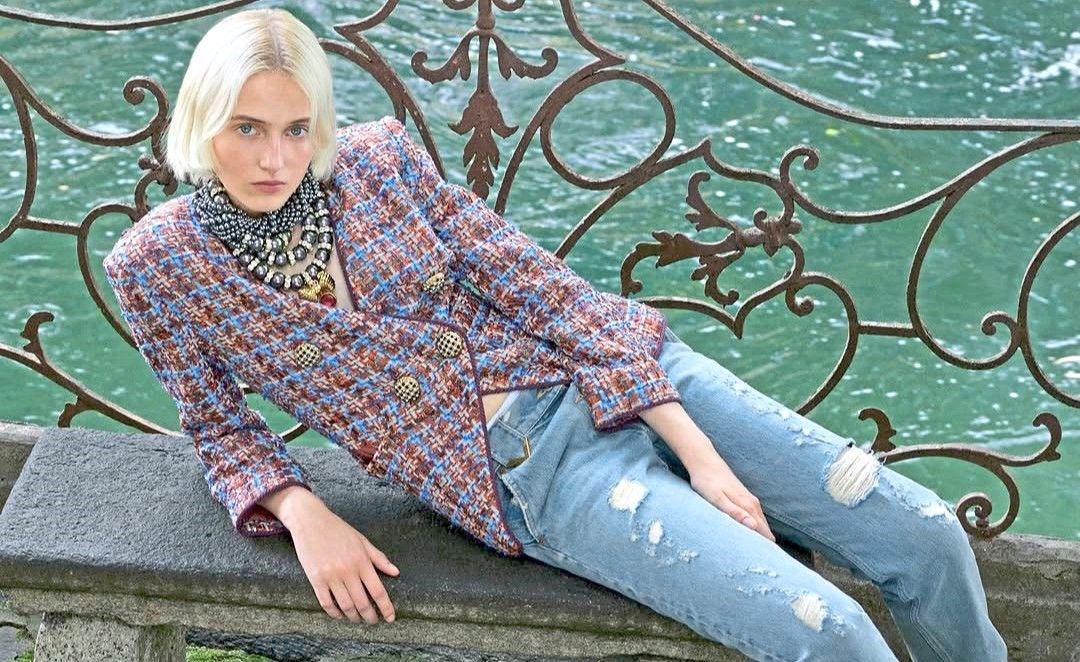
Valentino's Cruise 2027 collection offers perhaps the most striking example of this contradiction: a tweed jacket with gold buttons—markers of conservative elegance and refinement—paired with shredded jeans and studded heels. This combination synthesizes high and low, formal and casual, pristine and destroyed. The collection essentially argues that true sophistication no longer resides in coherent presentation but in the intelligent deployment of contradictions. A consumer assembling this outfit signals not adherence to fashion rules but knowledge of the meta-rules governing contemporary style, where the ability to juxtapose opposing elements with confidence supersedes traditional notions of matching and coordination.
For Malaysian and Southeast Asian fashion consumers, this trend carries particular implications. The region's growing luxury market has traditionally emphasised immaculate presentation and visible quality markers. The embrace of distressed high fashion may signal evolving attitudes toward consumption among younger affluent demographics, particularly in urban centres like Kuala Lumpur, Bangkok, and Singapore. These consumers, often digitally native and globally connected, may be more receptive to irony-laden fashion statements and the deliberate subversion of traditional luxury aesthetics. The trend also suggests that global fashion houses are increasingly designing with younger, more iconoclastic consumers in mind, even as they maintain premium pricing.
The environmental implications of this trend deserve consideration alongside its aesthetic significance. If deliberately aged clothing becomes fashionable, it potentially creates space for consumption patterns that prioritize wearing garments extensively rather than discarding them prematurely. The valorisation of worn-in looks might normalise and celebrate clothing with genuine history—second-hand items and family heirlooms—rather than only newly manufactured distressed pieces. However, the current market reality demonstrates that luxury houses are primarily selling newly manufactured damage at full premium prices, meaning the trend currently increases consumption rather than promoting sustainable practices. The contradiction between the aesthetic of longevity and the reality of rapid fashion cycles remains unresolved.
Ultimately, this movement reflects broader cultural shifts toward authenticity, contradiction, and the rejection of manufactured perfection. That luxury brands have seized upon deliberately damaged goods as premium offerings reveals how contemporary wealth expresses itself through irony and subversion rather than through conventional markers of refinement. The fashion industry, historically a bastion of aspirational perfection, has recognised that contemporary consumers—particularly those with substantial purchasing power—increasingly seek clothing that embodies complexity, lived experience, and deliberate imperfection. Whether this represents genuine philosophical evolution or merely clever marketing repackaging old goods as new remains an open question, but the commercial success of these items suggests the aesthetic has genuinely resonated with the market.

