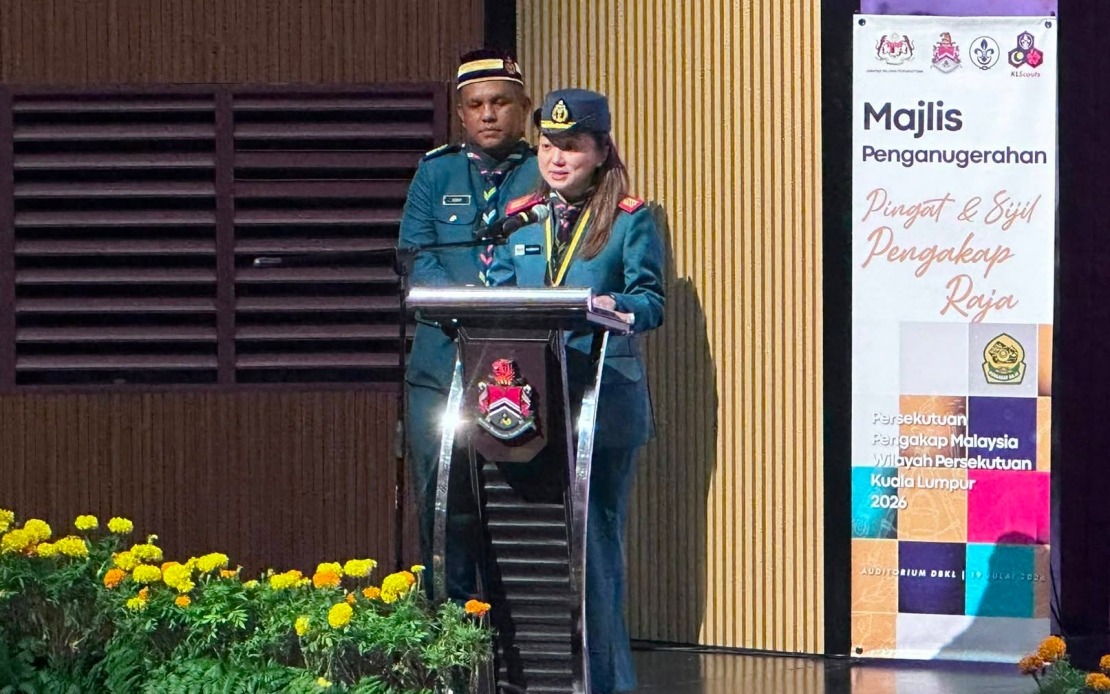
Hannah Yeoh, the Minister in the Prime Minister's Department overseeing the Federal Territories, has assumed the presidency of the Federal Territories State Scouts Council following a formal proclamation ceremony held at City Hall Auditorium in Kuala Lumpur. The event, which took place on July 19, doubled as the 2026 King's Scout Medal and Certificate Presentation Ceremony, bringing together scouting leaders and recipients to recognise excellence within Malaysia's youth development movement.
Yeoh's elevation to this leadership position reflects the government's renewed emphasis on scouting as a cornerstone institution for developing disciplined, principled young leaders. Her appointment comes at a time when youth engagement and character building remain central policy concerns across Southeast Asia, where competitive pressures and digital distraction threaten to diminish traditional mentorship structures. By placing a sitting minister at the helm of the scouts council, the government signals the strategic importance it places on organised youth development outside the formal classroom.
In a demonstration of tangible support for scouting initiatives, Yeoh announced a dual ministerial allocation totalling RM20,000 directed towards expanding scout programmes within the Federal Territories. The funding commitment was articulated in two tranches during her address, emphasising both breadth and inclusivity in youth engagement. The first RM10,000 is earmarked for the Kuala Lumpur Federal Territory branch of the Scouts Association of Malaysia to develop additional activities during school holiday periods, when young people have discretionary time to participate in structured programmes.
The second RM10,000 allocation represents a deliberate policy intervention aimed at reducing barriers to scouting participation. Yeoh explicitly directed this portion toward training programmes designed to include youths who face practical obstacles in joining conventional scouting activities. This approach acknowledges socioeconomic disparities that often prevent disadvantaged youth from accessing quality youth development opportunities, a concern that resonates across Malaysian urban centres where income inequality creates uneven access to extracurricular enrichment.
Parallel to Yeoh's appointment, Rosli Nordin, the Executive Director of Kuala Lumpur City Hall (DBKL), was proclaimed chairman of the Kuala Lumpur Federal Territory State Scouts Council. This dual leadership structure aligns municipal governance with scouting oversight, potentially facilitating resource coordination and venue accessibility for scout activities across the capital's administrative zones. The collaboration between federal ministerial authority and municipal administration reflects an integrated approach to youth programming at the metropolitan level.
The ceremony itself highlighted the breadth of achievement within Malaysia's scouting ecosystem through the presentation of tiered recognition awards. Fifty-eight recipients earned the King's Scout Certificate, the movement's highest individual distinction, a credential that demands exceptional performance across leadership competency, technical skills, personal resilience, community service contributions, and demonstrated commitment to scouting principles. These recipients represent the pinnacle of youth development within Malaysian scouting, embodying the discipline, integrity, and service orientation that define the movement's aspirational standards.
Beyond individual scouts, the ceremony recognised 75 scout leaders through Chief Scout's Commendation Certificates, acknowledging the crucial mentorship and instructional roles that sustain scouting infrastructure. An additional 108 recipients received Federal Territories Scouts Wangsa Certificates, further emphasising the layered recognition system designed to motivate continued engagement across the scouting hierarchy. This structured approach to recognition, spanning individual scouts to seasoned leaders, creates incentive pathways that encourage long-term commitment and progressive responsibility within the movement.
The King's Scout Award itself carries symbolic weight within Malaysian youth development discourse. As the highest achievement attainable within the Malaysian Scouting Movement, it certifies that recipients possess the capabilities demanded of responsible young citizens and emerging leaders. The award functions less as a merit badge and more as a credential demonstrating that its holders have internalised the discipline, ethical grounding, and community orientation essential to nation-building. For Malaysian youths in an increasingly competitive regional landscape, such credentials increasingly matter for university admissions, scholarship applications, and early career positioning.
The gathering of high-level scouting officials underscored institutional commitment to the movement's mission. Major General Datuk Prof Dr Mohd Zin Bidin, the Chief Scout of Malaysia, and Tan Sri Johari Abdul, both National Scout Council member and Speaker of the Dewan Rakyat, attended the proceedings. The presence of parliamentary leadership alongside defence and scouting hierarchies illustrated that scouting transcends recreational activity to occupy a defined space within Malaysia's formal governance structures for youth development and national resilience building.
For Malaysian regions beyond the Federal Territories, this development carries strategic implications. The FT Scouts Council operates as a high-profile model within Malaysia's decentralised scouting structure, where state councils maintain considerable autonomy. By allocating substantial resources and securing ministerial-level leadership, the federal government creates a demonstration effect that other state councils may adopt or benchmark against. Youth leaders in Selangor, Johor, and other states will likely observe the resource commitments and structural arrangements implemented in Kuala Lumpur as potential templates for their own scouting expansion.
The timing of these initiatives also deserves consideration. As Malaysia navigates post-pandemic youth recovery, concerns about mental health, social cohesion, and productive engagement remain acute. Structured scouting activities directly address these concerns through peer fellowship, skill-building, outdoor engagement, and mentorship. The RM20,000 allocation, while modest in absolute budgetary terms, signals governmental acknowledgement that youth development requires proactive investment and that traditional institutions like scouting merit contemporary political support.
Looking forward, Yeoh's presidency positions her to influence scouting policy and resource allocation across the Federal Territories for the duration of her tenure. Her demonstrated commitment to inclusive programming—particularly the emphasis on reaching economically disadvantaged youth—suggests that her leadership may prioritise equity considerations alongside excellence. This dual focus reflects evolving understanding that sustainable national development depends not merely on identifying and cultivating elite talent but on ensuring that youth development opportunities extend across Malaysia's socioeconomic spectrum.

