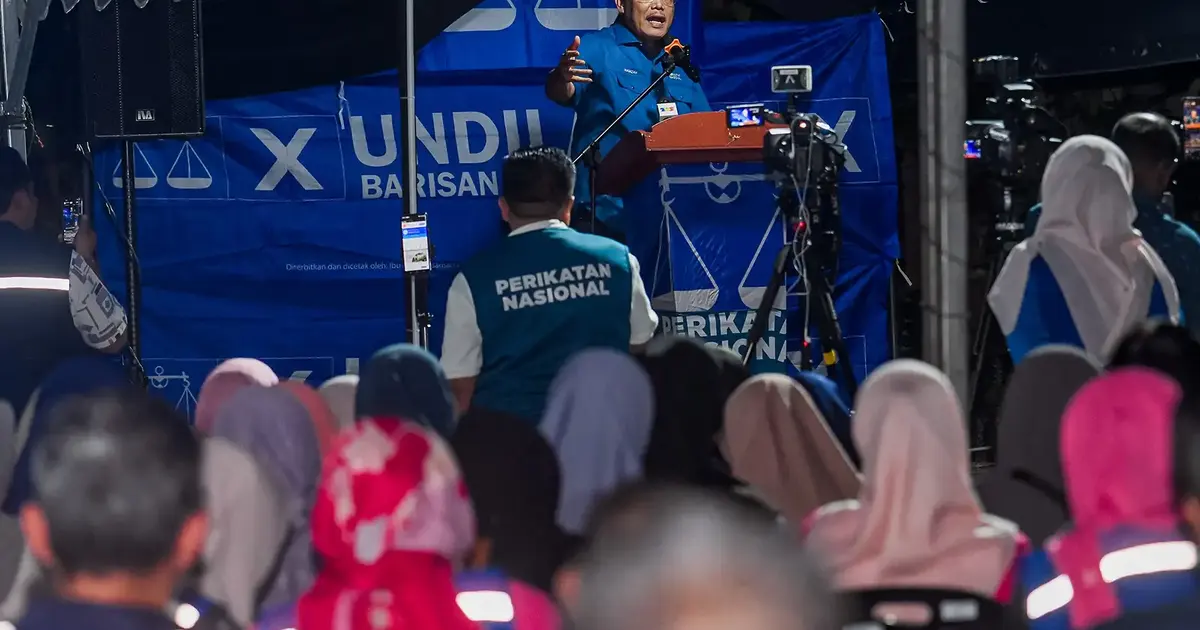
Wawasan party president Hamzah has suggested rebranding the electoral partnership between Perikatan Nasional and Barisan Nasional as 'Perikatan Barisan Nasional', signalling a deepening of collaboration between Malaysia's two major political coalitions ahead of the Negeri Sembilan state election scheduled for August 1. The proposal reflects efforts by coalition leaders to present a unified front to voters despite the distinct ideological origins of the two blocs that have historically competed for dominance in Malaysian politics.
Under the terms of the alliance arrangement, Perikatan Nasional has agreed to cede the leadership of the Negeri Sembilan state government to Barisan Nasional should their combined slate secure victory at the polls. This strategic decision represents a significant compromise by PN, which has emerged as a formidable electoral force in recent years, particularly following the 2022 general election when its representatives made substantial gains across multiple states. By stepping back from the chief minister position, PN demonstrates a pragmatic willingness to prioritise collective electoral success over individual coalition prestige in this critical peninsular state.
The naming proposal carries symbolic weight beyond mere branding convenience. A unified designation such as 'Perikatan Barisan Nasional' would underscore the comprehensive nature of the partnership and potentially counter perceptions of a temporary or fragile electoral arrangement. In Malaysian politics, coalition cohesion—or the appearance thereof—significantly influences voter confidence and party member morale. A unified name suggests permanence and shared governance philosophy, even as the underlying power-sharing arrangements remain subject to negotiation.
Negeri Sembilan occupies a strategically important position in Malaysian electoral mathematics. The state's dozen state assembly seats carry symbolic significance beyond their raw numerical contribution to either coalition's overall parliamentary strength. Control of Negeri Sembilan would represent a substantial victory for whichever bloc prevails, serving as a bellwether for grassroots sentiment in central Peninsular Malaysia. The state has historically been a Barisan Nasional stronghold, but recent demographic shifts and the fragmentation of Malay-Muslim voter preferences have introduced considerable uncertainty into what once seemed a safe constituency.
Hamzah's role as Wawasan president positions him as a bridging figure between the two coalitions. Wawasan itself occupies a distinctive position within Malaysia's political ecosystem—smaller than either PN or BN's major component parties, yet influential enough to potentially tip electoral outcomes through strategic alliance-building. The party's willingness to labour toward coalition unity, and Hamzah's public articulation of these efforts, demonstrates how mid-tier political organisations navigate the complex terrain of Malaysian coalition politics.
The agreement that Barisan Nasional would lead the state government, should the alliance succeed, reflects calculated trade-offs between the coalitions. For Barisan Nasional, leadership of Negeri Sembilan would constitute a significant achievement, particularly given the party's disappointing performance in recent national and state-level contests. For Perikatan Nasional, the arrangement offers the opportunity to expand its influence and parliamentary footprint without bearing the administrative burden of state governance, which carries inherent political risks and resource constraints.
This alliance structure also illuminates broader patterns in Malaysian politics following the 2022 general election. Rather than engage in zero-sum electoral competition, major coalitions have increasingly recognised the mutual benefits of strategic pacts in particular states and contexts. Such arrangements allow parties to consolidate support where they are strongest while avoiding three-way contests that might split anti-incumbent votes. The PN-BN partnership in Negeri Sembilan exemplifies this pragmatic recalibration of electoral strategy.
The August 1 election will test whether Malaysian voters respond positively to the unified coalition messaging that Hamzah and other alliance leaders plan to project. Public reaction to the 'Perikatan Barisan Nasional' branding—should it be formally adopted—will provide valuable insight into whether a rebrand successfully conveys unity or instead appears as opportunistic repackaging. Voters in other states and federal constituencies may scrutinise this experiment closely, considering whether similar arrangements might benefit or disadvantage their own electoral preferences.
For Barisan Nasional specifically, the Negeri Sembilan contest represents an opportunity to demonstrate renewed relevance and electoral viability after years of questioning its organisational capacity and popular appeal. The coalition's agreement to share power with Perikatan Nasional, rather than contest independently, suggests leadership confidence that joint candidacies will perform better than solo Barisan efforts would have managed. This calculus itself represents a substantial shift from the party's historical insistence on contest dominance and sole leadership.
The mechanics of power-sharing between PN and BN in Negeri Sembilan will likely establish precedents for other potential collaborations. If the August 1 election produces results that validate the alliance strategy, other states may witness similar formal arrangements. Conversely, should the combined slate underperform expectations, both coalitions will face difficult questions about the sustainability of their partnership framework. The stakes, therefore, extend well beyond Negeri Sembilan's borders, carrying implications for the broader trajectory of Malaysian coalition politics through the coming electoral cycle.

