The Hungarian Grand Prix this weekend presents Lewis Hamilton with an opportunity to end a successful period ahead of Formula One's August break, while the championship landscape has shifted dramatically following George Russell's latest setback. The Mercedes driver's third non-scoring result of the season came last Sunday in Belgium, where he spun into the gravel, a mishap that has compounded the struggles afflicting his machinery on the high-speed sections of the circuit. His struggles have become the paddock's focal talking point, with the 27-year-old now trailing championship leader Kimi Antonelli by 50 points, a collapse that sits uneasily with his pre-season billing as a title contender and his earned reputation as a dependable performer.
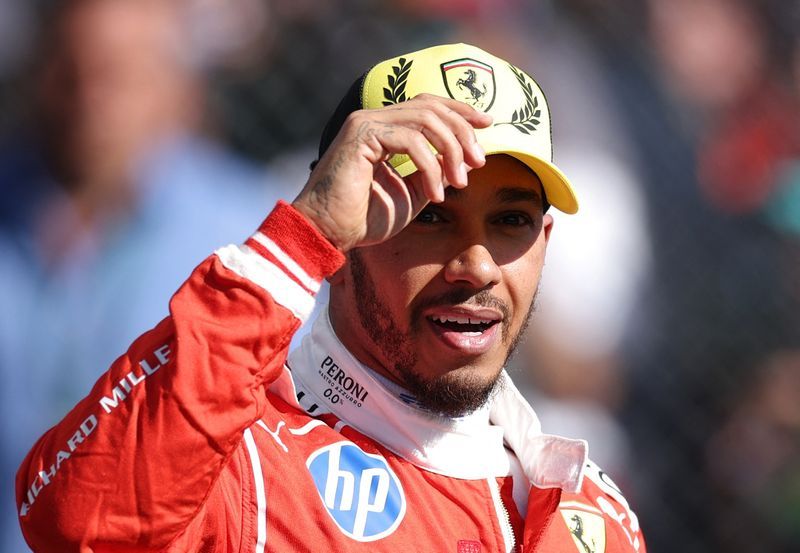
Hamilton's repositioning to Ferrari has coincided with a resurgence in his competitive standing. The seven-time world champion, who won six of his titles with Mercedes before switching to the Maranello squad, now sits second overall in the drivers' championship, 45 points adrift of Antonelli. Budapest represents particularly fertile ground for Hamilton's championship ambitions. The Hungaroring has been a personal hunting ground throughout his career, with eight victories at the circuit—a record unmatched by any other driver at the venue. Should he claim victory this weekend, Hamilton can draw level with his outright record of nine wins at a single circuit, a distinction currently held by Silverstone.
The significance of Hungary in Hamilton's repertoire extends beyond mere statistics. In 2023, the Budapest track witnessed his most recent pole position, a detail that suggests the circuit's characteristics suit his driving style and approach. The Hungaroring demands a different skill set compared to the speed-dominated layout at Spa-Francorchamps, where last weekend's race unfolded. This technical shift could indeed favour Ferrari's package, despite its acknowledged power unit deficit relative to Mercedes and Red Bull. The slower, more technical nature of Budapest reduces the importance of straight-line velocity, an area where Ferrari has historically lagged behind its rivals this season.
Ferrari team principal Fred Vasseur has cautiously downplayed expectations, mindful that optimism at this stage could translate into disappointment come Sunday. His measured rhetoric suggests internal confidence without the risk of overcommitment. The Frenchman emphasised that while the engine deficit should theoretically matter less at Budapest compared to Spa, execution remains paramount. Setup optimisation and tyre management will prove decisive, and these variables cannot be taken for granted. Vasseur's comments reflect the reality that championship battles are won through consistent execution rather than reliance on circuit characteristics alone.
Charles Leclerc has emerged as Ferrari's form driver across the most recent rounds. The Monégasque secured victory at Silverstone and finished second at Spa, providing a stark contrast to Hamilton's third place in Britain and fourth in Belgium. However, Hamilton's Barcelona triumph demonstrates his capacity to deliver when circumstances align. The internal dynamic within Ferrari remains compelling, with two world-class drivers competing for supremacy while attempting to mount a constructors' challenge.
Kimi Antonelli's remarkable ascent has redefined expectations for the young Italian driver. At 19 years old, Antonelli has notched six victories in ten rounds, a conversion rate that speaks to his exceptional talent and Mercedes' engineering superiority. Antonelli has suggested Hungary could develop into a four-team battle, with Max Verstappen's Red Bull and championship-defending McLaren both capable of challenging at a circuit where energy deployment becomes less critical. This assessment reflects the genuine competitiveness of the current grid, where no single team dominates overwhelmingly.
McLaren's strategic approach to Hungary underscores the importance teams attach to the mid-season phase. The Woking squad will introduce significant upgrades including a new floor and aerodynamic modifications, alongside continued testing of an experimental rear wing configuration. These developments suggest McLaren views the Hungarian Grand Prix as a crucial opportunity to refine its package before the August break. The team will also field Italian reserve driver Leonardo Fornaroli, last year's Formula Two champion, during Friday's opening practice session while Oscar Piastri sits out the session, a tactical decision that allows the squad to gather additional data.
Aston Martin's technical progress has accelerated this season, with a long-awaited chassis upgrade arriving in Budapest. However, the British team must wait until the Dutch Grand Prix later in August for the latest Honda power unit specification, a timing that reflects the constraints of the development calendar. This staggered approach to improvements illustrates how teams manage resources and prioritise upgrades across the demanding schedule.
The historical record at Budapest enriches this weekend's narrative. Four of the top seven drivers currently in the championship standings have previous Hungarian victories, with the exception of the Mercedes drivers Russell and Antonelli, and Ferrari's Charles Leclerc. Last year's race, won by Lando Norris with McLaren securing a one-two finish alongside Oscar Piastri, demonstrated how the track's characteristics can favour different machinery and driving approaches. Leclerc claimed pole position that day, highlighting how qualifying performance and race results can diverge at this particular venue.
The broader context for this weekend involves F1's compressed calendar and the strategic importance of the Budapest race. Teams must balance short-term performance gains with preparation for the remainder of the season, and the August break provides a natural inflection point for reassessment and recalibration. For Hamilton specifically, a victory would represent not merely a personal achievement but a significant statement of intent as Ferrari seeks to narrow the championship gap. For Mercedes, Russell's resurgence becomes increasingly critical as the season progresses and points accumulation accelerates. The Hungarian Grand Prix, therefore, transcends its status as a single race weekend and represents a crucial barometer for the championship's trajectory heading into the second half of the season.

