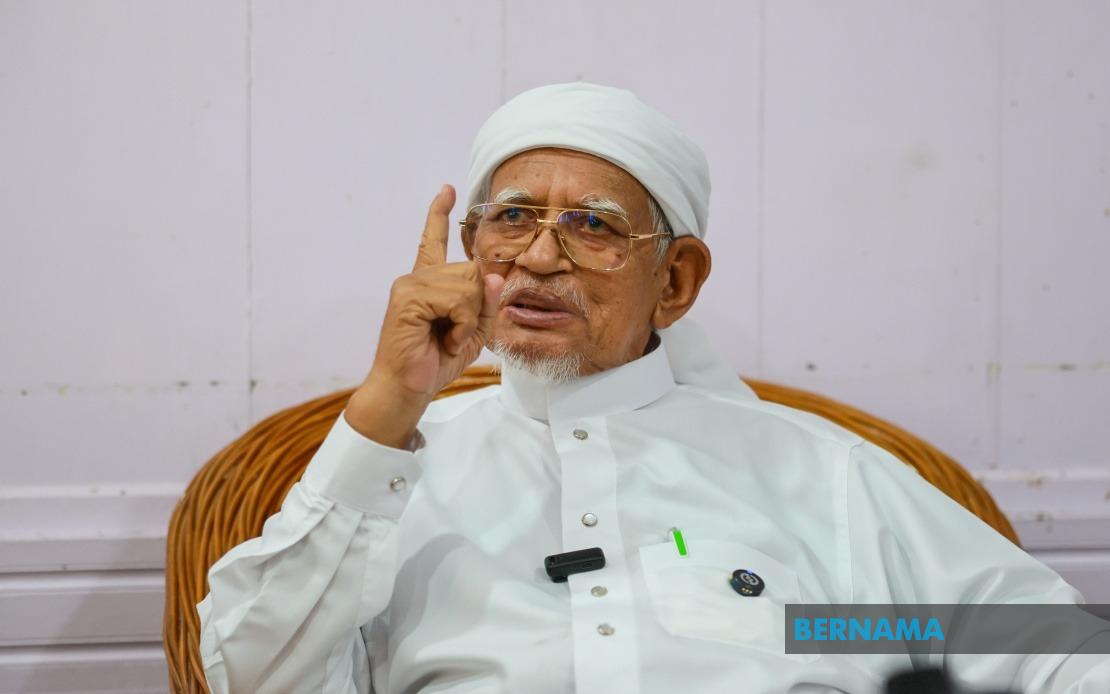
The delicate architecture of Malaysia's Perikatan Nasional coalition faced fresh strain on Wednesday when its dominant component, PAS, effectively declared that Bersatu had already abandoned the bloc. Speaking after a religious lecture at Rusila Mosque in his Marang constituency, PAS president Tan Sri Abdul Hadi Awang took an aggressive interpretive stance toward coalition membership, suggesting that when Bersatu president Tan Sri Muhyiddin Yassin publicly signalled intentions to construct an alternative alliance following the Negeri Sembilan state election, the party thereby forfeited its standing within PN without requiring any formal notification or deliberative process.
Abdul Hadi's reasoning rested on a doctrine of automatic withdrawal rooted in what he framed as an irrevocable expression of intent. According to his interpretation, PN bears no obligation to formally communicate Bersatu's ejection because the party's own statements about building a competing coalition effectively constitute self-removal from the bloc. This position carries significant constitutional implications, as it would mean that mere announcements about alternative political arrangements could trigger membership consequences without procedural safeguards or notification requirements. The PAS chief's stance represents a maximalist reading of coalition discipline and a confrontational assertion of PAS dominance within the PN structure, which has recently been strained by competing ambitions among its leadership.
Bersatu's response came swiftly and unequivocally through secretary-general Datuk Seri Mohamed Azmin Ali, who systematically dismantled the PAS president's legal reasoning. Azmin emphasised that Bersatu maintains full legitimacy as a PN member party, grounding his defence in the coalition's constitutional architecture. He pointed specifically to the absence of any automatic revocation clause within PN's governing documents, a technical but crucial observation that undermines Abdul Hadi's central claim. This discrepancy highlights a fundamental disagreement about whether informal political signals can override formal constitutional provisions, or whether due process must always be observed regardless of public statements or perceived intent.
Under Clause 7A of the Perikatan Nasional Constitution, Azmin explained, membership decisions involving component parties rest exclusively with the presidential council. This council structure represents the coalition's highest deliberative body, empowered to adjudicate on matters of membership, discipline, and the rights and responsibilities of constituent parties. The fact that this body has not convened to address Bersatu's status becomes critical in Azmin's argument—without such formal deliberation and decision-making, no legitimate grounds exist for declaring that Bersatu has lost membership standing. His interpretation emphasises proceduralism and contractual fidelity, presenting Bersatu as a party defending its constitutional rights against extra-legal assertion by another component.
Azmin further underlined that Abdul Hadi possesses no individual authority to determine another party's coalition membership, rejecting what might be characterised as a claim of executive prerogative by the PAS president. This distinction matters because it speaks to governance norms within the bloc—if individual party leaders could unilaterally declare membership consequences, the coalition would operate according to personalities and hierarchies rather than agreed constitutional frameworks. Azmin's insistence that the PAS president lacks such power implicitly challenges what many observers perceive as PAS's de facto dominance within PN, particularly following electoral setbacks to other components. By invoking constitutional constraints, Bersatu attempts to rebalance power dynamics through legalistic rather than political means.
The disagreement reflects deeper tensions simmering within Perikatan Nasional itself. Since its formation, the coalition has struggled with fundamental questions about member autonomy, decision-making authority, and the mechanisms through which disputes should be resolved. Bersatu's coalition-building overtures, which triggered this current controversy, represent a form of political hedging—the party apparently seeks to secure alternative partnerships should its PN membership become untenable or its influence within the bloc diminish further. Muhyiddin's signalled intention to construct a new alliance with unnamed partners suggests that Bersatu leadership views the current PN arrangement as potentially limiting or unsustainable, whether due to policy disagreements, resource allocation disputes, or electoral considerations.
Muhyiddin's position within Malaysian politics has grown increasingly precarious. Once a formidable prime minister and coalition kingmaker, he now leads a party with declining electoral fortunes relative to PAS and Umno within the Malay-Muslim political space. His moves toward coalition reconstruction represent attempts to regain leverage and construct arrangements more favourable to Bersatu's interests. However, this strategy inevitably generates friction with established partners, particularly PAS, which has consolidated significant parliamentary and state-level influence. The public nature of this current dispute suggests that behind-the-scenes negotiations have failed to resolve the underlying tensions, necessitating public political theatre.
Azmin's announcement that Bersatu will lodge a formal complaint with the Registrar of Societies escalates the dispute beyond coalition politics into regulatory and legal territory. This move signals that Bersatu intends to mobilise institutional authority to defend its position, treating the controversy not merely as an internal coalition matter but as a question requiring external arbitration. The Registrar of Societies possesses authority over the registration and governance of political parties, potentially offering Bersatu a mechanism to establish that proper procedures have not been followed and that its membership status remains valid. Such regulatory intervention could force the presidential council to address the matter through established constitutional channels, constraining PAS's ability to act unilaterally.
For Malaysian and Southeast Asian observers, this dispute illuminates broader fragility within opposition and alternative coalition structures. Perikatan Nasional emerged as a challenge to established Barisan Nasional dominance, positioning itself as an ideologically cohesive bloc rooted in Malay-Muslim interests. Yet internal divergences over leadership, resource distribution, and strategic direction have never been adequately resolved through permanent institutional mechanisms. Each party has retained substantial autonomy, creating situations where individual leaders can pursue parallel strategies without clear consequences. This structural weakness becomes apparent when contested membership becomes a headline issue rather than a matter settled through established protocols.
The implications for Malaysian politics extend beyond PN itself. Coalition stability across the political spectrum remains fragile when component parties lack confidence in formal dispute resolution and when stronger members can exert pressure through public assertion rather than constitutional process. For voters and investors monitoring Malaysia's political economy, such disputes underscore continuing volatility in governance arrangements. The government's effectiveness depends partly on coalition cohesion, which depends partly on predictable, procedurally legitimate mechanisms for addressing disagreements. Public disputes that appear to disregard constitutional provisions erode confidence in such mechanisms and signal that power relationships remain unsettled and potentially subject to sudden rupture.

