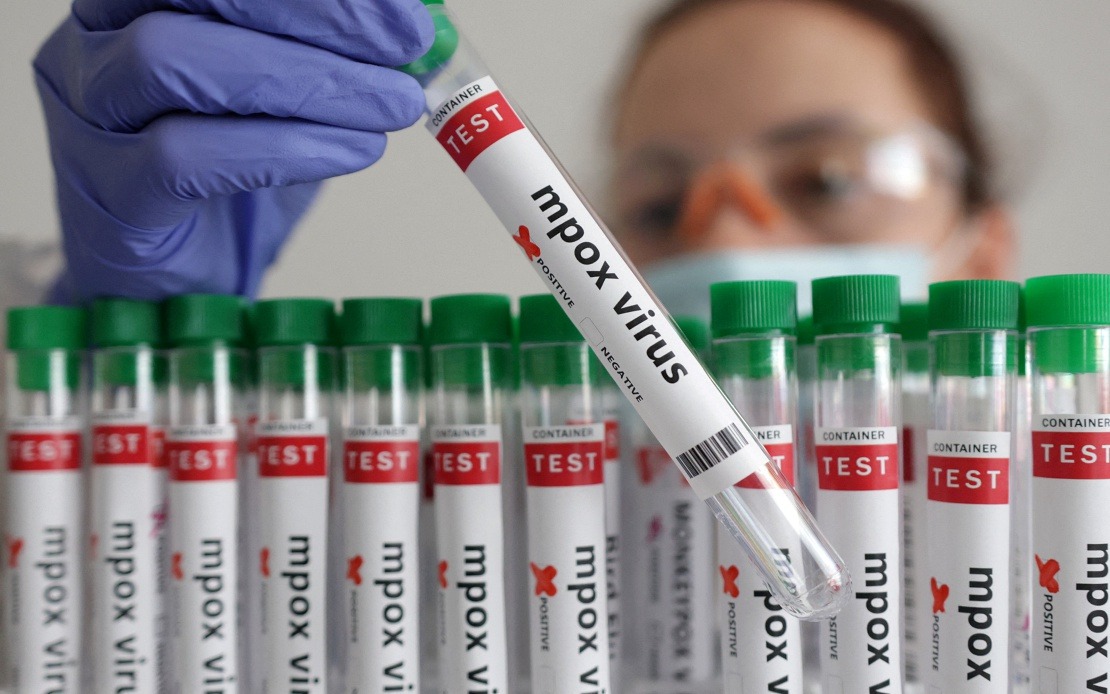
Guinea-Bissau has officially confirmed its first case of mpox, marking a significant public health milestone for the West African nation and triggering coordinated responses from government health authorities. Public Health Minister Quinhin Nantote disclosed the discovery during a press briefing on Saturday evening, revealing that the patient is a 27-year-old woman who initially sought medical attention on June 24. The confirmation follows laboratory testing at both domestic facilities and international partners, underscoring the verification protocols now standard across the continent for viral outbreaks.
The diagnostic journey for this case illustrates the multilayered approach required for mpox detection in resource-constrained settings. Health workers collected biological samples from skin lesions visible on the patient's body and submitted them to Guinea-Bissau's National Institute of Public Health for preliminary analysis. When the initial testing indicated the presence of mpox virus material, the samples were forwarded to the Institut Pasteur in Dakar, Senegal, for independent verification and confirmation. This two-stage verification process, though lengthening the timeline to diagnosis, ensures accuracy and provides epidemiological data that regional health organizations can track and analyse.
The emergence of mpox in Guinea-Bissau carries particular significance for West African health systems already managing competing disease pressures. The region has struggled with ebola outbreaks, cholera incidences, and persistent malaria burdens. The addition of mpox to the epidemiological landscape demands resources that health ministries must now allocate strategically. Neighbouring countries and regional bodies, particularly the Economic Community of West African States, are likely monitoring the situation closely given the porous borders characteristic of the Sahel and coastal zones.
Minister Nantote emphasized that Guinea-Bissau's health apparatus has moved swiftly to operationalize containment strategies aligned with international standards. The national response mechanisms activated follow frameworks established by the World Health Organisation and the International Health Regulations, which provide tested playbooks for outbreak management. Epidemiological investigations have commenced immediately to trace the patient's contacts, a critical step in understanding transmission pathways and identifying secondary infections before they spread further into the community.
Surveillance activities have been substantially heightened across Guinea-Bissau's territory and particularly at its land and maritime borders. This border-focused vigilance reflects lessons learned from previous outbreaks in the region, where cross-border movement facilitated viral dissemination before nations could establish coordinated barriers. The timing is critical given that the incubation period for mpox typically spans two to three weeks, allowing a window during which contact tracing and monitoring can prevent onward transmission.
Minister Nantote's public messaging emphasized preventive behaviours accessible to ordinary citizens without requiring complex medical infrastructure. Frequent handwashing with soap represents the simplest and most universally applicable measure, as mpox transmits through bodily fluids and contact with contaminated surfaces. Equally important is public awareness about symptomatic individuals—those displaying fever alongside skin rashes should receive isolation and medical evaluation. This communication strategy reflects a recognition that community participation and awareness form the foundation of any outbreak response, particularly in settings where formal health infrastructure may be geographically dispersed or limited in capacity.
Mpox itself, as an orthopoxvirus, presents characteristics distinct from smallpox, its better-known relative, though both belong to the same viral family. The disease transmits through multiple pathways including direct contact with skin lesions, body fluids, respiratory droplets during prolonged face-to-face interaction, and contact with contaminated materials such as bedding or clothing. The symptomatology—fever, myalgia, skin lesions progressing through papular and pustular stages, and lymphadenopathy—can superficially resemble other conditions, complicating diagnosis in settings with limited laboratory capacity. This diagnostic challenge underscores why Guinea-Bissau's decision to seek international confirmation at Institut Pasteur represents sound public health practice.
The broader regional context matters significantly for understanding implications. West Africa experienced the largest mpox outbreak outside of endemic Central African zones during 2022, with cases documented across multiple nations. Guinea-Bissau's confirmation suggests either the virus has remained circulating subclinically, or new transmission chains have established themselves. For Malaysia and Southeast Asian observers monitoring African epidemiological trends, the detection highlights how viral diseases respect neither borders nor development levels, justifying regional pandemic preparedness investments and diplomatic health cooperation frameworks like ASEAN's coordinated disease surveillance systems.
Guinea-Bissau's health capacity, already constrained by competing demands and resource limitations, now faces the challenge of maintaining this mpox response while managing endemic infectious diseases. The international support mobilized through WHO channels and bilateral cooperation with Senegal and other neighbours reflects recognition that West African outbreaks pose continental and global concerns. For Malaysian policymakers evaluating international health cooperation priorities, Guinea-Bissau's situation exemplifies why development assistance focused on disease surveillance infrastructure generates returns benefiting all nations through earlier detection and prevention of outbreak internationalization.

