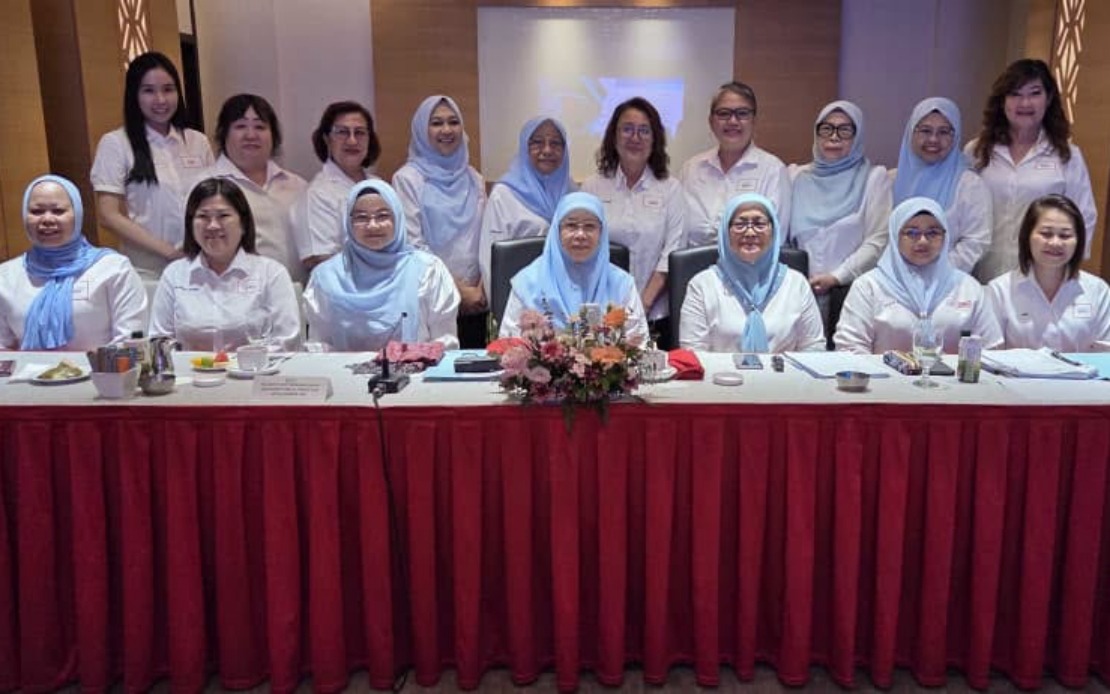
The Gabungan Rakyat Sabah (GRS) Women's wing has unveiled an organisational restructuring designed to fortify the coalition's electoral machinery as it prepares for the next general election. Announced at a meeting in Kota Kinabalu on July 22, the initiative creates five distinct operational units, each tasked with specific responsibilities that collectively aim to deepen grassroots engagement and improve the party's responsiveness to voter concerns across Sabah.
Datuk Seri Azizah Mohd Dun, who heads the GRS Women's wing, spearheaded the decision to establish these units following deliberations among party members. The structural overhaul represents a conscious effort to move beyond ad-hoc organising toward a more formalised system capable of coordinating complex electoral and community work. This shift towards compartmentalised responsibilities suggests the coalition recognises the need for specialisation in modern political organisation, particularly as competition intensifies in Sabah's deeply contested political arena.
The five units operate with distinct mandates. The Policy and Strategy Unit, under Azizah's direct oversight, will handle strategic planning and policy formulation. The Economic Unit, led by Datuk Surinam Sadikun, concentrates on economic messaging and initiatives relevant to voter pocketbooks. Simi Linggom directs the Health Unit, positioning the coalition to engage on healthcare matters that resonate strongly with Malaysian voters. Datin Atin Belynda Buntot heads the Information Unit, responsible for communications strategy and media engagement. Completing the structure, Datin Wong Siow Lee @ Mary Wong leads the Welfare Unit, focused on social safety nets and community support programmes.
This division of labour reflects contemporary political practice in Southeast Asia, where women's wings have evolved beyond ceremonial roles to become substantive organisational forces. The GRS Women's wing's approach mirrors strategies adopted by major parties across Malaysia and the region, where targeted outreach on specific policy areas allows for deeper voter engagement than generalised campaigning permits. By explicitly anchoring their work in health, economics, and welfare—domains where women voters often hold pronounced concerns—the coalition signals an understanding of gender-differentiated political priorities.
Azizah's emphasis on avoiding complacency underscores the competitive pressure facing GRS in Sabah. She cautioned that remaining static or confined to familiar comfortable positions would undermine the coalition's electoral prospects in an evolving political environment. This language of dynamism and constant readiness reflects the volatility characterising Malaysian politics post-2018, where established coalitions faced unexpected electoral reverses and new political configurations emerged rapidly. For a coalition operating in Sabah's distinctive political ecosystem, characterised by shifting alliances and strong local identities, maintaining organisational agility has become essential.
The structural investments announced by the GRS Women's wing also illuminate broader strategic thinking within the coalition. By formalising the women's wing's role and expanding its purview, GRS signals recognition that electoral success increasingly depends on mobilising women voters—a demographic that has demonstrated growing political sophistication and independence across Malaysia. Women constitute roughly half the electorate, yet have historically received less structured political engagement than their numbers warrant. The GRS initiative, if executed effectively, could reshape how the coalition interfaces with this crucial voter segment.
From a regional perspective, the move reflects wider trends across Southeast Asia where political parties recognise that women's grassroots networks often prove more durable and locally embedded than mixed organisations. Female party activists frequently maintain stronger community connections and demonstrate higher continuity in organisational participation. By investing in women's wing infrastructure, GRS may be securing a more resilient electoral foundation than traditional hierarchical party structures provide.
The timing of this announcement carries significance for Malaysian politics more broadly. As the nation approaches its next general election cycle, political coalitions are refining their machinery and testing new organisational approaches. GRS, as a key player in Sabah governance and a significant component of the federal government, faces expectations to demonstrate organisational vitality and strategic thinking. The women's wing restructuring serves partly as a public demonstration of the coalition's seriousness about electoral preparation.
The coordination requirements implied by Azizah's statements—regular meetings, aligned efforts, rapid response capacities—suggest the GRS Women's wing intends to function less as a traditional women's auxiliary and more as an integrated component of broader coalition strategy. This represents a maturation of organisational thinking, though it also carries risks. Women's wings that become too integrated into mainstream party hierarchies sometimes lose the independence that allows them to advocate effectively for gender-specific concerns. The GRS Women's wing will need to balance enhanced coordination with preservation of autonomous space to champion women's interests.
The five-unit structure also enables specialisation in policy advocacy. Rather than a single women's wing spokesperson attempting to address all issues, individual unit leaders can develop deeper expertise and credibility in their respective domains. This approach potentially elevates the quality of GRS's policy engagement on matters from healthcare access to economic participation to social welfare provision—all areas where women's perspectives and experiences carry particular weight.
For Malaysian observers, the GRS Women's wing initiative offers a case study in contemporary political organisation. As parties nationwide assess their electoral capabilities and contemplate structural reforms, the Sabah coalition's approach to specialisation and formalisation may gain attention. Whether this model generates superior electoral outcomes compared to traditional structures remains to be seen, but it demonstrates serious thinking about how women's participation can be channelled toward sustainable organisational strength and voter engagement.

