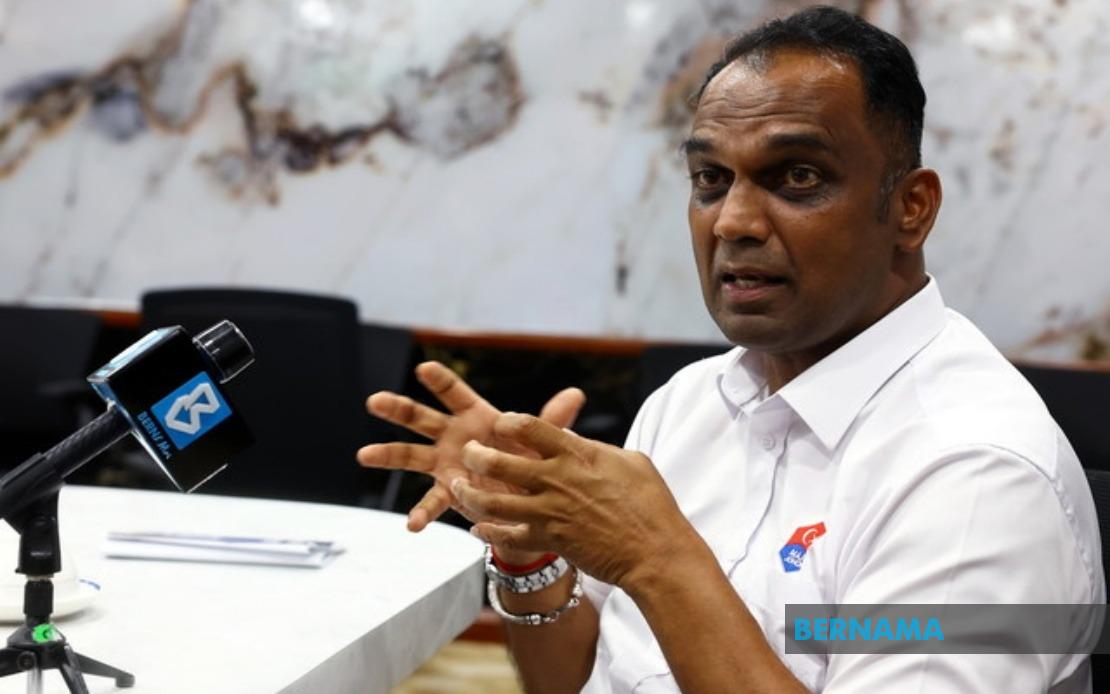
The Johor state election is shaping up as a crucial test of traditional versus modern campaign strategies, with Barisan Nasional's Perling candidate P. Pannir Selvam departing from the digital playbook to emphasise direct voter engagement. Contesting in the 16th Johor State Election scheduled for July 11, the former Johor Bahru City Council member is channelling his campaign efforts into what he calls "pocket talks"—intimate, small-group conversations held across the constituency that he believes forge stronger bonds with residents than impersonal social media outreach.
Selvam's approach reflects a broader recognition among Malaysian political campaigners that face-to-face contact remains potent even in an increasingly connected society. While acknowledging that social media has become a modern campaign staple, he is betting that nothing quite replaces the authenticity of standing in someone's living room or at a community gathering and making a personal pitch. This strategy appears calculated to differentiate his campaign in what promises to be a tightly fought three-cornered contest involving Pakatan Harapan's Alan Tee Boon Tsong and Parti Bersama Malaysia's Boo Wei Han in a constituency with 109,992 registered voters.
The pocket talk methodology serves multiple strategic purposes beyond the surface-level appeal of personal connection. Selvam uses these gatherings to identify granular community issues that might otherwise be overlooked in broader campaign messaging, creating space for residents to articulate concerns directly rather than having solutions imposed from above. This diagnostic function is particularly valuable in urban constituencies like Perling, where diverse demographic groups with differing priorities can easily feel neglected by one-size-fits-all campaign promises. By narrowing the informational distance between candidate and constituent, he positions himself as genuinely invested in understanding what keeps Perling residents up at night rather than simply seeking their votes.
A notable dimension of Selvam's campaign narrative is the substantial involvement of his father, Datuk KS Balakrishnan, an 84-year-old political veteran who served five terms as Permas Assemblyman and held positions on the Johor state executive council. Rather than treating filial duty as a mere backdrop, Selvam has elevated his father's participation as evidence of political continuity and institutional knowledge within his family's approach to public service. This intergenerational messaging resonates particularly in Malaysia, where respect for elders and family-based political networks remain culturally significant. The image of an octogenarian still actively campaigning in varying weather conditions serves as an implicit statement about dedication and sacrifice, qualities Selvam associates with the kind of governance he promises to deliver.
Selvam's framing of his father's guidance emphasises lessons in inclusive public service that transcend communal boundaries, a carefully calibrated message in a diverse state like Johor where managing intercommunal relations remains politically sensitive. By highlighting that his father's approach involved serving people "without discrimination regardless of race" and accepting criticism constructively, Selvam attempts to position BN's Perling campaign within a tradition of pragmatic, non-divisive governance. In the current Malaysian political environment, where questions of communal representation and religious sensitivities frequently dominate discourse, such reassurances about inclusive administration carry particular weight.
Selvam's background in local government administration at the Johor Bahru City Council provides concrete grounding for his campaign promises, which centre on immediate quality-of-life issues rather than sweeping ideological claims. He identifies traffic congestion and inadequate parking facilities around Taman Perling Public Market as priority concerns, framing these not as intractable problems but as solvable municipal challenges amenable to experienced administrative intervention. This approach has a particular appeal in the current Malaysian context, where voters have grown increasingly sceptical of grand promises and more focused on tangible delivery of basic services. By anchoring his candidacy in demonstrable council-level experience, Selvam attempts to build credibility as a competent administrator rather than a charismatic political outsider.
The Perling constituency contest reflects broader patterns in Malaysia's state electoral landscape, where single-seat contests now frequently involve three or more significant candidates rather than the traditional two-way contests of earlier decades. The presence of Parti Bersama Malaysia as a third contender complicates the political calculus, potentially fragmenting opposition support or drawing disaffected BN voters seeking alternatives. For Selvam, this three-way split creates both opportunities and hazards—the fragmented opposition might benefit BN if anti-government voters split their choices, but an energised third-party campaign could also erode BN's vote share if the party cannot consolidate support effectively.
The broader Johor election environment involves 172 candidates competing across 56 state assembly seats, a significant electoral exercise that will test the political recovery of BN in a state it dominated for decades but lost control of during the previous election cycle. Johor's political status carries implications far beyond the state itself, as success here would signal BN's capacity to rebuild its coalition in major states after years of electoral decline. Selvam's campaign represents one of dozens of contested micro-battles that collectively determine whether BN can reclaim lost ground or whether the state's political landscape has fundamentally shifted toward opposition dominance or fragmentation.
Early voting is scheduled for July 7, giving Selvam and his rivals a week to intensify grassroots engagement before the main polling day on July 11. For candidates like Selvam who have invested heavily in personal voter contact rather than media saturation, the final campaign period will test whether pocket talks translate into actual ballot support or remain merely a feel-good narrative that fails to convert electoral proximity into votes cast. The Perling result will ultimately offer empirical evidence about the continued viability of labour-intensive, relationship-based campaign strategies in an era of digital political communication.

