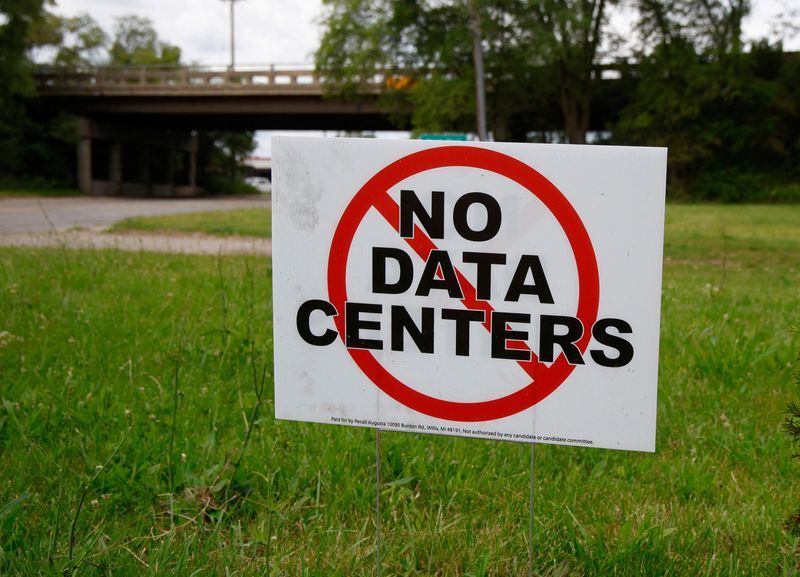
The debate over artificial intelligence infrastructure in the United States has spilled onto the streets with unprecedented scale and coordination. On Saturday, opponents of data centre expansion plan to gather at over 125 locations nationwide, representing the first truly unified national campaign against the breakneck pace of facility construction that has increasingly become a flashpoint in local communities. This mobilisation signals a fundamental shift in how Americans, regardless of their political affiliation, view the cost of supporting AI advancement at the local level.
The nationwide demonstrations are being organised by HumansFirst, a grassroots coalition founded partly by a prominent figure from the Tea Party movement, drawing an intriguing parallel between contemporary technological overreach and the conservative backlash against perceived government excess that defined the early 2010s. The comparison resonates because both movements share a common thread: citizens confronting powerful interests that appear to make decisions affecting their lives without meaningful community input. The group frames its opposition around what it characterises as the "unaccountable" nature of data centre deployment and argues that communities face an "unacceptable infringement on our liberty" when development proceeds with inadequate transparency or local consultation.
What makes this movement particularly noteworthy for observers across Asia and the Pacific is its cross-ideological character. Polling from Reuters and Ipsos conducted in June revealed that only one-third of Americans support the current trajectory of data centre construction, while a striking 14 percent would welcome such facilities in their own neighbourhoods, even for high-profile technology companies including Meta, Alphabet, Amazon, Microsoft and Elon Musk's xAI venture. This consensus rejection of local data centre projects transcends the typically rigid left-right political taxonomy that defines American discourse, suggesting genuine public anxiety about the societal tradeoffs inherent in rapid AI infrastructure expansion.
Local and regional authorities have emerged as the initial bulwark against data centre proliferation, though communities have found themselves significantly disadvantaged in negotiations with developers. In numerous cases, local officials have agreed to confidentiality clauses that prevent public disclosure of project details, effectively neutralising the scrutiny and community input that might otherwise shape or halt proposals. This governance vacuum has prompted state and federal politicians to reassess their positions as voter frustration intensifies. Concerns centre on three interconnected threats: anticipated increases in electricity costs affecting household utility bills, depletion of finite water resources in already water-stressed regions, and cumulative environmental degradation from large-scale industrial operations.
Among the proposed facilities is a particularly contentious project in Imperial County, California, where advocates warn that drawing 260 million gallons of water annually from the Colorado River to cool data centre operations represents an unconscionable choice. For water-scarce regions throughout the American Southwest—and by extension, arid regions globally including parts of Southeast Asia—the prospect of channelling precious freshwater resources toward cooling artificial intelligence infrastructure raises profound questions about resource allocation priorities. Ivan DelSol, a left-leaning activist helping coordinate protests in the California desert, encapsulates this concern by describing such water use as dystopian, a characterisation that may resonate strongly with communities across Asia experiencing climate-induced water scarcity.
Geographic distribution of Saturday's protests reveals both the breadth and intensity of public opposition. Texas, America's primary data centre hotbed and a Republican stronghold, is expected to host sixteen separate demonstrations, suggesting that even in areas actively courting such development through favourable regulatory frameworks, grassroots resistance has taken hold. Georgia, a crucial swing state in national elections, anticipates eleven protests, while California, Florida and Pennsylvania—representing Democratic, Republican and swing-state jurisdictions respectively—each expect seven gatherings. This geographic spread underscores that data centre opposition has become a genuinely nationwide phenomenon rather than a regionally concentrated reaction.
The activist coalition brings together individuals from disparate political backgrounds united by concern about community welfare. Eva Cardona, a 31-year-old first-time activist who describes herself as a political nomad, exemplifies this demographic diversity. Her decision to organise a Texas protest stems from alarm at what she perceives as inadequately regulated artificial intelligence development coupled with alarming expansion velocity. She consciously graduated from passive online activism to direct community organising, reflecting deeper public engagement with infrastructure issues at the local level.
Organisers have articulated a nuanced platform extending beyond simple opposition to data centre construction. Rather than endorsing blanket moratoriums like those New York adopted through Democratic state governance—which some campaigners view as inadequately protective of community interests—activists demand transparent development processes, genuine environmental and resource protection, creation of well-compensated union employment opportunities as community benefit, and enforceable accountability mechanisms preventing developer non-compliance with stated commitments. This sophisticated approach suggests the movement has matured beyond reactive protests toward constructive engagement with policy frameworks.
The Data Centre Coalition, representing industry interests, has not responded directly to Saturday's demonstrations but has previously asserted that data centres remain committed to responsible community engagement. Nonetheless, the industry's claims about being conscientious neighbours ring increasingly hollow as evidence mounts of infrastructure approval processes that circumvent meaningful public participation. The coalition's assertion that data centre water consumption represents an insignificant industrial burden contradicts concerns raised by water authorities in stressed regions, suggesting a fundamental disconnect between industry messaging and community-grounded environmental assessment.
Among coordinating activists, partisan affiliation appears wholly secondary to concerns about local autonomy and environmental stewardship. Co-founder Amy Kremer has publicly criticised Republican politicians for affording "Big Tech a free pass" while simultaneously opposing what she characterises as inadequately protective Democratic moratoriums, indicating that effective policy responses require moving beyond conventional ideological categories. Her prediction that data centre issues will define both November's midterm elections and the 2028 presidential campaign suggests this movement possesses sufficient political momentum to force meaningful electoral consequences, compelling candidates across the political spectrum to substantiate their positions.
For Malaysian and Southeast Asian observers, this American mobilisation carries instructive implications. As technology companies globalise their infrastructure footprint, many Asian nations face identical pressures to accommodate data centre expansion to support artificial intelligence services and regional digital advancement. The American experience demonstrates that communities increasingly demand transparent, accountable processes incorporating local environmental protection and genuine community benefits rather than accepting development on terms dictated by external corporate interests. Policymakers in Malaysia, Singapore, Thailand and across the region would be well-advised to examine how American communities have organised resistance to data centre proliferation and consider whether existing regulatory frameworks adequately protect local interests before similar grassroots backlash emerges against proposed AI infrastructure projects in Asian cities and regions.

