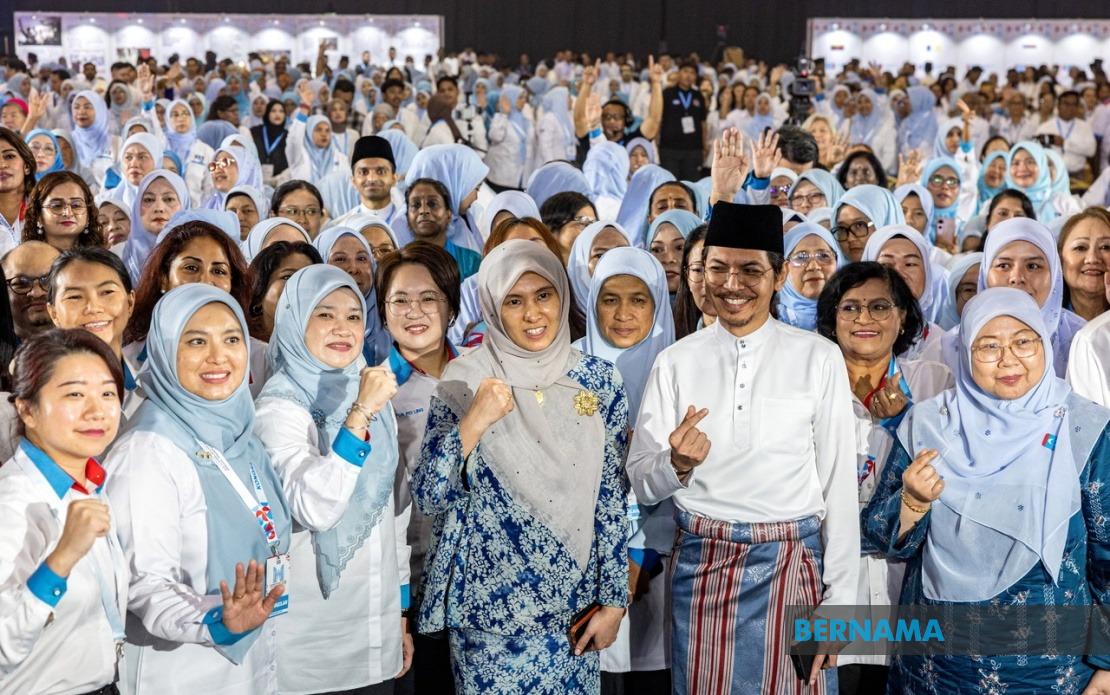
Political leaders cannot afford to operate in isolation from their communities if they wish to maintain meaningful relationships with voters, according to Muhammad Kamil Abdul Munim, chief of Angkatan Muda Keadilan (AMK). Speaking during the closing remarks of the debate on the AMK Chief's Policy Address at the 2026 AMK National Congress in Melaka, he underscored the critical importance of establishing robust networks at the community level as a foundational element of political leadership. These connections, he argued, form the bedrock upon which effective governance and party politics must be built.
Muhammad Kamil articulated a multifaceted perspective on why proximity to grassroots communities matters beyond mere electoral calculations. When leaders maintain active presence within their constituencies and engage regularly with residents, they create opportunities to directly articulate their party's vision and counter narratives that opposition parties may attempt to establish. This direct engagement becomes particularly significant in an era where information travels rapidly and political perceptions can shift swiftly through various channels. By being present and visible within communities, leaders can shape the discourse around their party's platform and achievements in ways that resonate with local concerns.
The AMK chief identified several interconnected elements that leaders must prioritize when building community relationships. He emphasized that organizational presence, narrative clarity, operational machinery, and communication channels all work synergistically with grassroots networks. These components cannot function effectively in isolation; rather, they constitute an integrated system where community engagement serves as both the foundation and the testing ground for all other political activities. Without strong grassroots connections, even the most polished national narrative risks disconnection from voters' lived experiences and actual concerns.
A particularly insightful dimension of Muhammad Kamil's remarks concerns the gap between national-level and local-level political strategies. He warned against the tendency of parties to concentrate their preparation efforts exclusively on crafting messages and strategies for consumption at the national level, often neglecting the distinct issues and requirements that animate communities at the grassroots. This oversight can result in political messaging that fails to address the specific challenges facing different constituencies, rendering such communication ineffective regardless of its sophistication or resources invested. Malaysian political parties, he suggested, must develop the capacity to translate national policy positions into locally relevant solutions.
The emphasis on engaging new party members represents another critical dimension of the grassroots strategy Muhammad Kamil outlined. Local leaders bear responsibility for implementing programmes and activities that deepen new members' understanding of the party's foundational ideals and historical struggles. This educational function extends beyond mere indoctrination; it aims to cultivate a coherent understanding among members of why the party exists, what principles guide its actions, and what specific duties and responsibilities membership entails. Without this foundational understanding, new members may remain disconnected from the party's core mission and susceptible to swaying when faced with adversity or competing offers from rival organizations.
Muhammad Kamil articulated a concern that resonates throughout Malaysian politics: the gradual erosion of ideological commitment among party members over time. He expressed worry that without deliberate efforts to reinforce party ideals and the historical context of the party's struggle, members risk slowly deviating from the party's foundational principles. This drift represents a long-term threat to party cohesion and effectiveness, as it can undermine the unified vision necessary for sustained political mobilization. The danger he highlighted is not dramatic defection but rather the subtle, incremental loss of purpose and commitment that occurs when organizational infrastructure fails to continuously remind members why they chose this particular political platform.
The context of preparation for future elections provided the immediate backdrop for these remarks, but Muhammad Kamil's broader point extends beyond electoral cycles. He suggested that the work of building and maintaining grassroots networks constitutes perpetual organizational work rather than campaign-season activity. This perspective challenges the common pattern in Malaysian politics where grassroots mobilization intensifies dramatically as election dates approach but languishes during inter-election periods. Sustained engagement creates resilience and genuine voter relationships rather than transactional interactions based purely on immediate electoral interests.
For Malaysian political parties navigating an increasingly complex information environment, Muhammad Kamil's emphasis on direct community engagement offers a counterweight to the tendency toward over-reliance on digital communication and mass media strategies. While national narratives and digital platforms certainly matter, the human connections forged through local presence and genuine responsiveness to community concerns remain irreplaceable. This is particularly true in Malaysia's diverse society, where different communities often face distinct challenges and possess distinct information ecosystems that national-level communications may not adequately address.
The implications of Muhammad Kamil's address extend beyond Angkatan Muda Keadilan specifically. His framework suggests that across the Malaysian political landscape, parties struggling with member retention, inconsistent performance across constituencies, or difficulty translating national support into local electoral success should examine the robustness of their grassroots infrastructure. The argument he presents is deceptively simple: strong communities require sustained, meaningful engagement from their elected representatives and the organizations those representatives represent. Without this engagement, political organizations risk becoming disconnected institutions that respond to national-level imperatives rather than local realities.

