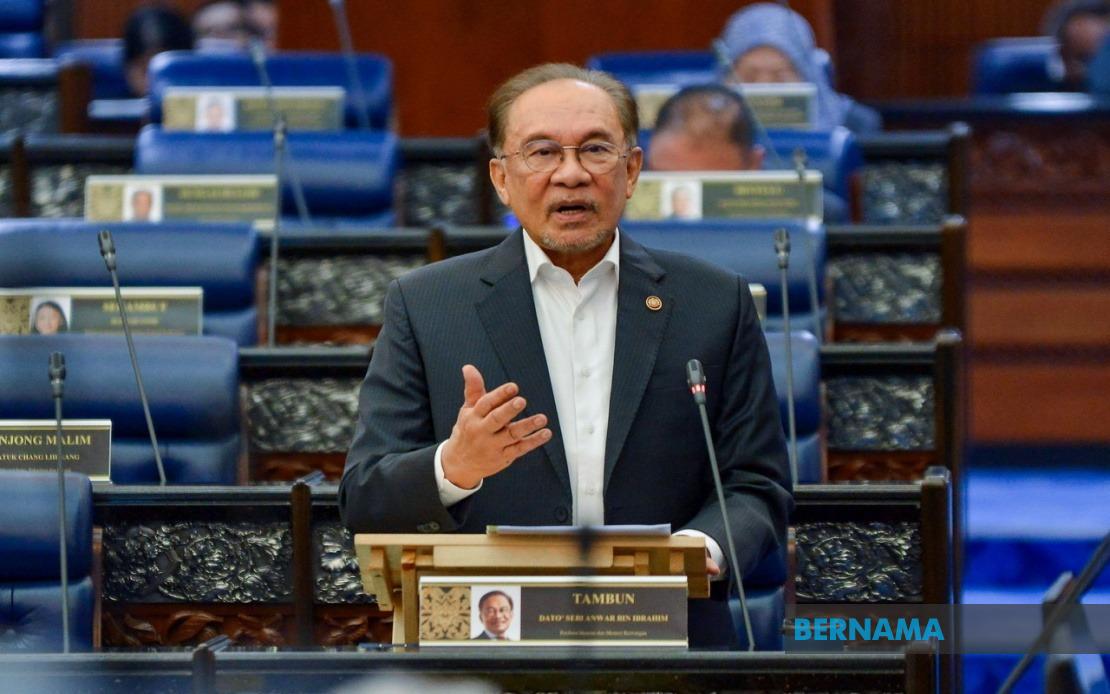
Prime Minister Datuk Seri Anwar Ibrahim has committed to ensuring that Malaysian workers receive priority for job opportunities while the government simultaneously evaluates the legitimate requirements for foreign employment across various industries. Speaking in Parliament on July 14, Anwar acknowledged the complex balancing act required to support both local workforce development and operational needs in sectors that genuinely depend on migrant labour.
The government recognises that certain industries continue to face genuine labour shortages that cannot be immediately resolved through domestic recruitment alone. Rather than adopting a blanket prohibition approach, the administration intends to streamline the process by which foreign workers are deployed, ensuring that existing migrant workers already lawfully present in Malaysia have priority access to job vacancies before new recruitment permits are issued. This staged approach attempts to maximise the utilisation of the existing foreign workforce while minimising unnecessary new arrivals.
Anwar's remarks came in response to parliamentary questions regarding the impact of foreign worker shortages on small and medium enterprises, alongside broader concerns about employment prospects for young Malaysians entering the job market. The prime minister framed the issue as requiring coordination between the Ministry of Human Resources and the Ministry of Home Affairs, indicating that security considerations form an integral part of the decision-making process. This institutional approach suggests that labour policy cannot be divorced from broader national security frameworks.
A particularly significant element of Anwar's statement involved his criticism of foreign worker syndicates, which he described as having operated as a burden on Malaysian society for decades whilst enabling corrupt individuals to accumulate wealth. This acknowledgement touches on a persistent challenge within Malaysia's migration management systems—the exploitation of labour migration channels by criminal networks and unscrupulous operators. By placing this issue prominently in his parliamentary statement, Anwar signalled that the government views labour policy reform as inseparable from tackling organised corruption within the employment sector.
The prime minister also stressed that enforcement actions against non-compliant foreign workers would intensify regardless of the worker's nationality or ethnic background, explicitly mentioning the Rohingya population. This explicit reference reflects the politically sensitive nature of the Rohingya presence in Malaysia and the government's intention to demonstrate equitable enforcement against all groups that breach regulations. Anwar emphasised that workers—both local and foreign—who adhere to legal requirements would receive protection, whilst those who violate laws would face consequences including business closure.
A noteworthy dimension of the government's approach involves tightening approval criteria for foreign professional workers, particularly in high-skilled sectors. Anwar revealed that some companies have misused the framework by importing workers under specialist categories such as artificial intelligence and digital expertise when those individuals subsequently perform tasks unrelated to their purported qualifications. This loophole allows employers to circumvent normal hiring processes by framing foreign recruitment as expertise-driven when the actual purpose differs substantially. By clamping down on such practices, the government aims to reserve truly specialised positions for appropriately qualified foreign professionals whilst encouraging employers to develop local talent in emerging technological fields.
The distinction between necessity-based and exploitative foreign worker recruitment underscores a critical tension in Malaysia's labour market. While the government acknowledges that sectors ranging from construction to hospitality require supplementary foreign labour to function, it simultaneously recognises that some employers use migrant workers to suppress wages and working conditions rather than addressing genuine labour gaps. This dual concern—supporting legitimate business operations whilst protecting both local workers and migrant employees from exploitation—requires sophisticated policy calibration.
For Malaysian employers, particularly in labour-intensive small and medium enterprises, the government's position presents both constraints and opportunities. The requirement to prioritise existing migrant workers before recruiting new ones may alleviate some immediate workforce pressures by improving utilisation of the current foreign labour pool. However, the tightened approval process for new workers and stricter enforcement of visa conditions will likely increase compliance costs and administrative burdens. Businesses will need to invest more substantially in workforce planning and documentation to navigate the reformed regulatory environment.
The implications for Southeast Asia extend beyond Malaysia's borders, as the region's interconnected labour markets mean that policy changes in one country influence migration patterns across the region. Malaysia's substantial foreign workforce—comprising millions of migrants from neighbouring countries including Bangladesh, Indonesia, and Myanmar—represents a critical labour source for regional economies. Any significant shifts in Malaysian employment policy could redirect migration flows or create competitive dynamics as workers seek opportunities in other Southeast Asian nations with less restrictive frameworks.
Young Malaysians seeking employment in an increasingly competitive job market represent another constituency affected by these policy directions. The government's emphasis on protecting local opportunities through prioritisation mechanisms and restricted foreign professional access theoretically creates space for domestic workers in both routine and skilled positions. However, the effectiveness of this approach depends substantially on complementary investments in vocational training, education quality, and wage competitiveness to ensure that local workers can genuinely fill positions that employers might otherwise allocate to migrant workers.
The enforcement dimension of Anwar's statement also warrants careful attention, as strengthened action against non-compliant workers could expose vulnerabilities within Malaysia's labour inspection and workplace monitoring systems. Effective enforcement requires adequate resources, inter-agency coordination, and worker complaint mechanisms that many Malaysian workplaces currently lack. Without corresponding investments in enforcement infrastructure and worker protection agencies, stricter regulations risk criminalising vulnerable migrant workers whilst allowing exploitative employers to continue operating through informal arrangements.
Looking forward, the government's approach signals an attempt to navigate between conflicting economic and social pressures through calibrated policy adjustment rather than radical reform. This gradualist path reflects recognition that Malaysia's economic sectors and labour market have become deeply integrated with migrant worker participation over decades. However, the success of this balanced strategy ultimately depends on whether implementation mechanisms can deliver both meaningful protection for local workers and genuine reduction in exploitative practices within the migrant labour system.

