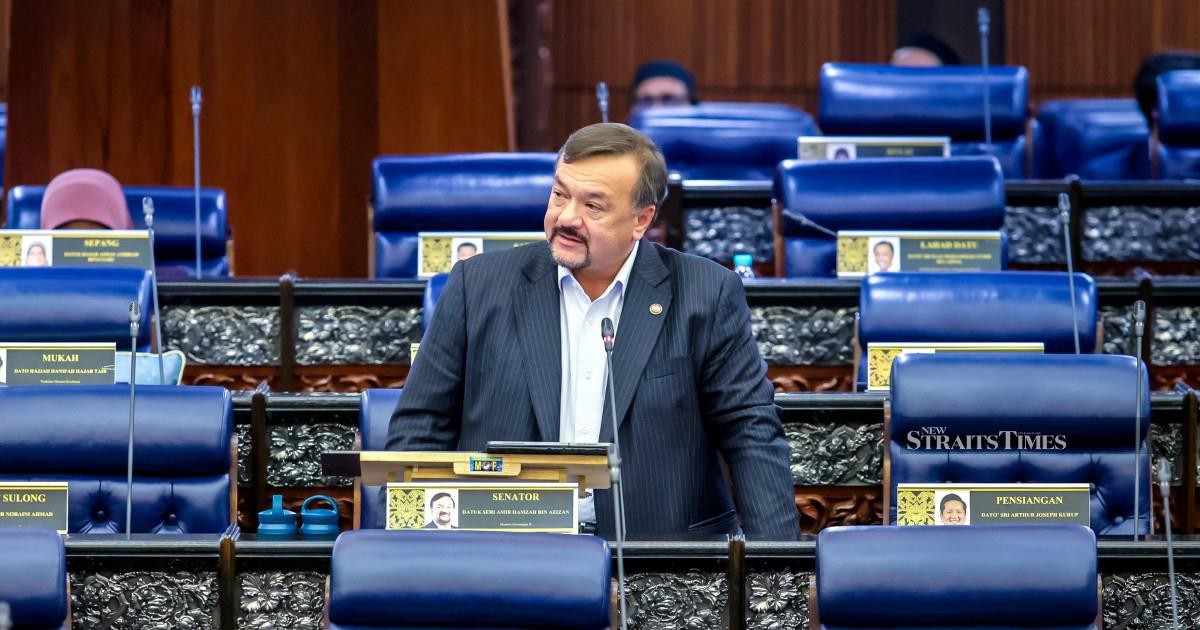
The Malaysian government has committed to maintaining an uncompromising stance as it investigates past wrongdoing at Tabung Haji, signalling that accountability will apply uniformly regardless of an individual's rank or political connections. This declaration comes as authorities continue probing complex issues surrounding the Islamic pilgrimage fund's investment decisions and the stewardship of its finances, a matter that has captured sustained public attention given the institution's significance to millions of Malaysian Muslims.
Tabung Haji, one of the nation's most recognisable financial institutions, manages accumulated savings for Malaysians preparing for the hajj pilgrimage. The fund's sizeable assets and long-established presence in the domestic financial system have meant that any lapses in its management carry implications extending well beyond individual account holders. The ongoing investigations signal a broader institutional reckoning with how the organisation has deployed its resources and made strategic financial decisions over recent years.
The government's explicit positioning on this matter reflects acknowledgement that public confidence in Tabung Haji's governance had eroded. By emphasising that investigations will follow evidence rather than protecting particular individuals, officials aim to demonstrate that the authorities take their responsibility as custodians of public trust seriously. For Malaysians who entrust their hajj savings to the institution, such assurances carry weight in an environment where institutional integrity has become a genuine concern.
Past controversies surrounding Tabung Haji's investment choices have included substantial losses in property holdings and questions about decision-making processes during periods of market volatility. These incidents prompted calls for comprehensive reforms and scrutiny of how senior management assessed risks and approved major financial commitments. The government's commitment to impartial investigations suggests that previous patterns of corporate accountability may no longer shield those deemed responsible for poor judgment or misconduct.
Investigations into financial institutions often prove complex, requiring authorities to untangle multiple layers of decision-making, documentation, and institutional culture. In Tabung Haji's case, tracing responsibility for failed investments or questionable transactions involves examining both individual actions and systemic failings in oversight mechanisms. The willingness of government officials to characterise the process as blind to status indicates awareness that public credibility hinges on perceived evenhandedness.
For the broader Malaysian business community, the government's stance carries implications regarding how accountability mechanisms function at institutions managing substantial public resources. The message that no position offers insulation from investigation may encourage greater circumspection in decision-making at other government-linked entities and financial organisations. Corporate boards and executive teams may interpret this commitment as signalling a shift toward more rigorous accountability standards.
Tabung Haji's circumstances also reflect global patterns seen in Islamic finance institutions, where governance challenges sometimes arise from balancing religious principles with modern financial practices. Malaysian policymakers have long positioned the nation as a hub for Islamic finance, lending particular significance to how domestic Islamic financial institutions manage their affairs. Lapses at Tabung Haji carry reputational implications not merely for the organisation itself but for Malaysia's standing in international Islamic finance circles.
The investigations themselves will likely take considerable time, given the volume of transactions and decisions requiring review. Authorities will need to examine investment rationales, approval processes, and whether appropriate risk assessment mechanisms were in place. Each of these elements involves documentary evidence and potentially multiple interviews with individuals who participated in or supervised relevant decisions.
Public interest in Tabung Haji's management reflects the institution's unique position in Malaysian society. Unlike commercial banks competing purely on financial returns, Tabung Haji carries social and religious significance that means ordinary Malaysians view it through both financial and trust-based lenses. When such institutions encounter difficulties, the reputational damage extends beyond balance sheet impacts to affect public perception of governance and institutional reliability.
The government's commitment to impartial investigation also addresses implicit questions about political patronage in corporate settings. Malaysia has experienced past instances where individuals occupying prominent positions appeared to receive differential treatment in accountability processes. By explicitly rejecting such patterns, officials signal intent to establish precedent that institutional status and political connections should not determine investigative outcomes.
As inquiries proceed, Malaysian regulators and oversight bodies will face the practical challenge of translating this political commitment into rigorous investigative work. Finding objective evidence of wrongdoing, establishing causal links between decisions and losses, and determining individual responsibility requires sustained professional effort. The government's rhetorical commitment will ultimately be judged against whether actual findings reflect genuine accountability or whether investigations ultimately protect certain individuals through technical means.
For Tabung Haji account holders, these developments carry both reassuring and concerning dimensions. The government's accountability pledge provides some confidence that serious investigation is underway, yet the revelation that significant issues required investigation at all raises questions about the institution's future direction and whether corrective measures will prove sufficient to restore public confidence.

