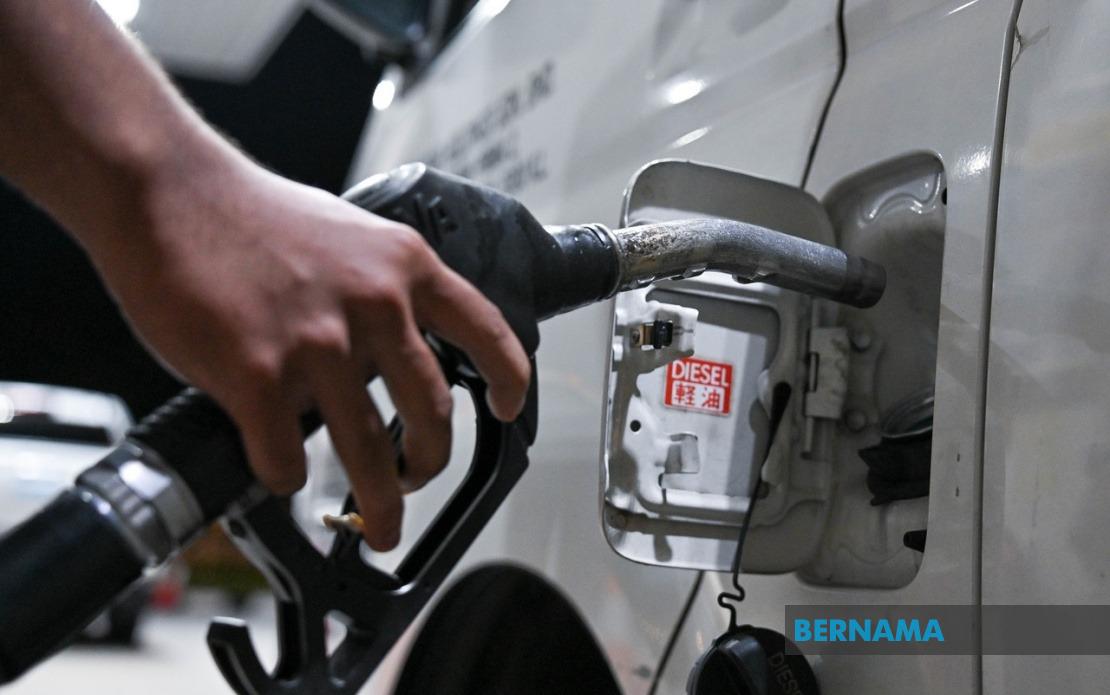
The Malaysian government has committed to a data-driven approach in managing the BUDI Diesel fuel subsidy initiative, with Finance Minister II Datuk Seri Amir Hamzah Azizan indicating that policy adjustments will be grounded in concrete evidence rather than assumptions. Speaking in Kota Kinabalu on July 5, he underscored that while the programme launched on July 1 in Sabah and Sarawak, the administration remains open to modifications as implementation data becomes available and stakeholder concerns surface.
The BUDI Diesel scheme, which provides targeted subsidies to eligible users, has operated without major technical disruptions across petrol stations since its rollout, according to the Finance Minister. He noted that ensuring system stability and enabling seamless access for qualifying users has been the priority in these initial five days of operation. This emphasis on operational integrity reflects lessons learned from previous subsidy programme launches in Malaysia, where system failures and access bottlenecks have sometimes undermined public confidence.
Amir Hamzah drew on precedent from the earlier BUDI95 petrol subsidy scheme to illustrate the government's willingness to adjust quota structures based on usage evidence. The original BUDI95 allocation of 300 litres per month was subsequently reduced to 200 litres following analysis showing that more than 94 to 95 per cent of users consumed less than the initial cap. Significantly, fewer than one per cent of users consistently exceeded 200 litres monthly. This adjustment, he stressed, was not motivated by cost-cutting but rather by the empirical observation that a lower quota better reflected actual consumption patterns while still serving the programme's equity objectives.
The Finance Minister's emphasis on flexibility suggests the government intends to avoid the rigidity that has sometimes hampered past subsidy reforms. Rather than imposing permanent quota structures at launch, the BUDI Diesel framework appears designed to evolve as operational data accumulates. This approach carries implications for Malaysian consumers and businesses relying on fuel subsidies, as it introduces a degree of uncertainty about future quota levels but also signals responsiveness to genuine usage needs across different regions and vehicle categories.
Beyond aggregate quota monitoring, the government is already addressing specific operational challenges identified through early feedback. Issues relating to vehicle ownership verification and eligibility concerns are being assessed by government teams deployed to engage stakeholders directly. This ground-level engagement reflects recognition that national policies often encounter unforeseen complications when applied across diverse local contexts—a particular consideration in Sabah and Sarawak, where vast distances and smaller populations can complicate subsidy distribution.
The mechanism for BUDI Diesel distribution also incorporates flexibility designed to accommodate various user profiles and circumstances. While individual users are identified through MyKad, the government is exploring alternative arrangements such as fleet cards for service providers, particularly those operating in remote or rural areas. This tiered approach acknowledges that a one-size-fits-all distribution method may disadvantage essential service providers—such as medical transport operators or emergency services—whose fuel needs are genuine but whose usage patterns differ from typical individual motorists. Tailoring eligibility pathways to these distinct circumstances represents a departure from more centralised subsidy models.
Improving public understanding of BUDI Diesel eligibility and application procedures has also emerged as a priority area. The government plans to strengthen enquiry counter services at petrol stations through collaboration with oil companies and station operators. Digital tools, including QR codes and online applications, will assist the public in verifying eligibility before purchase, reducing confusion and transaction delays at pump points. This reflects broader lessons about public service delivery, suggesting that subsidy schemes function more effectively when accompanied by accessible information infrastructure.
The timeline for comprehensive policy reassessment remains undefined, as Amir Hamzah indicated that a full review of quota structures would require extended monitoring of rollout performance. However, this staged assessment approach—addressing immediate ground-level issues while deferring broader structural reviews—may prevent hasty policy reversions that lack evidentiary support. For Malaysian businesses and consumers, this signals that while major quota changes are unlikely in the immediate term, medium-term modifications remain plausible as implementation data matures.
The BUDI Diesel programme's emphasis on evidence-based refinement contrasts with some past Malaysian subsidy initiatives, which have occasionally proceeded with limited real-time monitoring capabilities. The government's stated commitment to continuous data collection suggests investment in systems that can track usage patterns, identify equity gaps, and detect potential fraudulent claims. Such infrastructure, if properly implemented, could provide a replicable model for future subsidy programmes across Malaysia and potentially serve as a reference for other Southeast Asian nations designing targeted fuel or energy assistance schemes.
For policymakers across the region, the BUDI Diesel experience offers insights into balancing fiscal sustainability with equity objectives. The Malaysian approach—setting initial parameters conservatively, monitoring actual usage, then adjusting downward when data permits—avoids the politically painful process of cutting quotas retroactively. Instead, it frames adjustments as calibrations based on objective evidence, potentially easing public acceptance of policy changes.
Looking forward, the government's data-driven framework for BUDI Diesel will likely determine whether the programme successfully targets subsidies toward genuinely needy users while restraining fiscal pressure from excessive outlays. The success of this approach, however, depends not only on the government's analytical capacity but also on the transparency with which monitoring results and policy decisions are communicated to the public. Should the government demonstrate that quota adjustments or eligibility refinements respond to published data rather than to budgetary pressures, public trust in the subsidy mechanism could strengthen—a valuable outcome for any targeted assistance programme.

