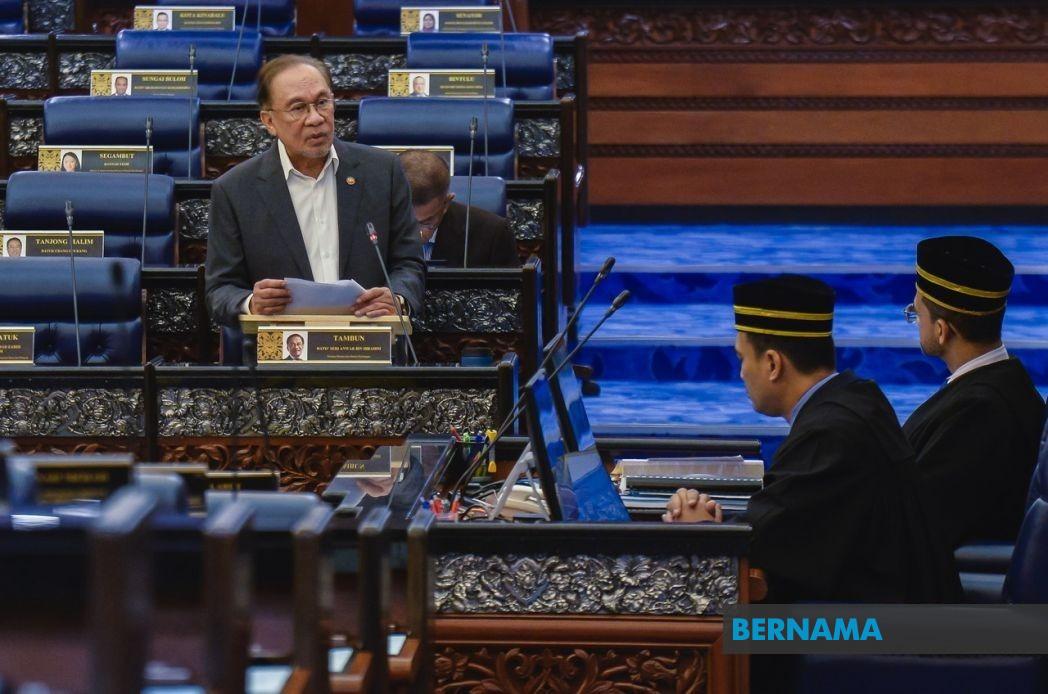
Prime Minister Datuk Seri Anwar Ibrahim has committed to investigating claims that petrol station operators suffered significant financial losses during the government's transition to an enhanced fuel subsidy mechanism, pledging to engage directly with oil companies to understand the extent of the problem. Speaking during Minister's Question Time in Parliament, Anwar acknowledged the serious nature of the allegations while emphasising the need for factual clarity before proposing remedies. The matter has surfaced amid broader scrutiny of how Malaysia's pivot to a more targeted approach to fuel subsidies has affected businesses operating at the retail level, raising questions about the adequacy of support measures for independent operators.
The Prime Minister, who also holds the Finance portfolio, indicated that Second Finance Minister Datuk Seri Amir Hamzah Azizan would be tasked with gathering comprehensive information from the petroleum sector and holding substantive talks with both majors and independent operators. This delegation reflects the technical complexity of restructuring fuel subsidy arrangements, which often creates temporary misalignments between wholesale cost adjustments and retail price fixing. Anwar's approach signals a willingness to address grievances through dialogue rather than unilateral intervention, a strategy consistent with his administration's broader engagement model with the private sector. The government has repeatedly stressed that oil companies and petrol station operators have been instrumental in rolling out Malaysia's targeted RON95 petrol and diesel subsidy scheme without major disruptions, making collaborative problem-solving a natural extension of existing relationships.
The allegations emerged during parliamentary questioning when DAP MP Howard Lee Chuan How (Ipoh Timur) raised the specific claim that petrol station proprietors incurred losses ranging from RM40,000 to RM50,000 per outlet during the subsidy mechanism changeover. These figures, if accurate, represent substantial operational strain for small and medium-sized petrol retailers who typically operate on thin margins. The timing of Lee's question reflects growing concern within the business community about the distributional impacts of subsidy reform, a topic that has historically provoked strong reactions in Malaysia given the political sensitivity of fuel pricing. Understanding the mechanics of these alleged losses is crucial: they likely arose during periods when wholesale prices fluctuated rapidly while retail price points remained fixed, creating a squeeze on operators unable to adjust their cost base quickly enough.
Anwar's public acknowledgement of the issue demonstrates sensitivity to the plight of retailers while maintaining the government's commitment to targeted subsidy architecture. He described oil companies and petrol station operators as having provided "full cooperation" in implementing the scheme, framing any losses as a potential price of transition rather than an indication of systemic failure. This framing serves multiple political purposes: it validates the concerns of affected retailers without suggesting government mismanagement, while simultaneously recognising the collaborative role of major oil corporations. The Prime Minister's invocation of Islamic values (insya-Allah) alongside problem-solving rhetoric adds a normative dimension, positioning the government as acting in accordance with principles of fairness and mutual responsibility.
Malaysia's shift toward targeted fuel subsidies represented a significant policy pivot from universal subsidisation, designed to reduce fiscal burden while directing support toward genuinely needy households and essential sectors. The transition, implemented in phases, required careful coordination between government price-setting authorities and downstream retailers responsible for pump-level transactions. Petrol station operators occupy a vulnerable position in this chain: they lack pricing power relative to government directives and major oil suppliers, yet bear immediate responsibility for consumer relations when prices shift. The alleged losses during transition periods highlight a governance gap—the challenge of smoothing distributional impacts across a fragmented retail network when policy changes occur.
The government's appreciation of industry cooperation, explicitly mentioned by Anwar, may reflect recognition that widespread retailer defection or public friction could have derailed implementation entirely. Petrol stations, as high-traffic retail points, carry significant political weight in public perception of fuel policy. Their proprietors, collectively, represent a constituency with legitimate grievances about bearing adjustment costs. By committing to investigate and discuss potential remedies, Anwar forestalls more aggressive complaints while demonstrating that the administration takes stakeholder concerns seriously. This approach contrasts with purely technocratic policy implementation that ignores distributional consequences.
The involvement of the Second Finance Minister signals that any response will likely involve fiscal mechanisms—whether compensation, grace periods, or adjusted pricing protocols for future transitions. Malaysia's budget, already under pressure from various spending commitments, faces competing claims on limited resources. The government must balance sympathy for petrol station operators against broader fiscal sustainability concerns and the political imperative of maintaining subsidy targeting. The quantum of losses alleged (RM40,000-RM50,000 per station) suggests that comprehensive compensation across the estimated 2,000-plus independent petrol stations could entail substantial outlays, making selective support or loss-sharing arrangements more feasible than universal reimbursement.
For Malaysian consumers and the broader economy, this exchange carries implications for future fuel policy implementation. If losses are confirmed and addressed, the precedent suggests government willingness to cushion transition impacts for retail businesses, potentially adding costs to policy reforms. Conversely, if losses are investigated and found to be manageable or reflective of normal market adjustment, it may validate the government's approach as essentially sound. Either outcome will inform how subsequent subsidy reforms—or other major price-sensitive policy changes—are rolled out. Southeast Asian neighbours monitoring Malaysia's subsidy policies, particularly Indonesia and Thailand which similarly grapple with fuel pricing tensions, may draw lessons from how comprehensively the government engages retail-level stakeholders.
Anwar's parliamentary response underscores a governance approach that privileges dialogue and collaborative problem-solving over confrontation or dismissal of concerns. In the Malaysian context, where fuel pricing decisions have historically generated public controversy and political consequence, this posture reflects lessons learned from previous administrations' struggles with subsidy reform. The government appears intent on building consensus through transparent investigation and negotiated solutions rather than imposing unilateral determinations. Whether this approach succeeds in resolving the petrol station operators' concerns while maintaining subsidy targeting goals will become clearer as the Second Finance Minister's inquiry progresses and subsequent discussions with oil companies unfold.

