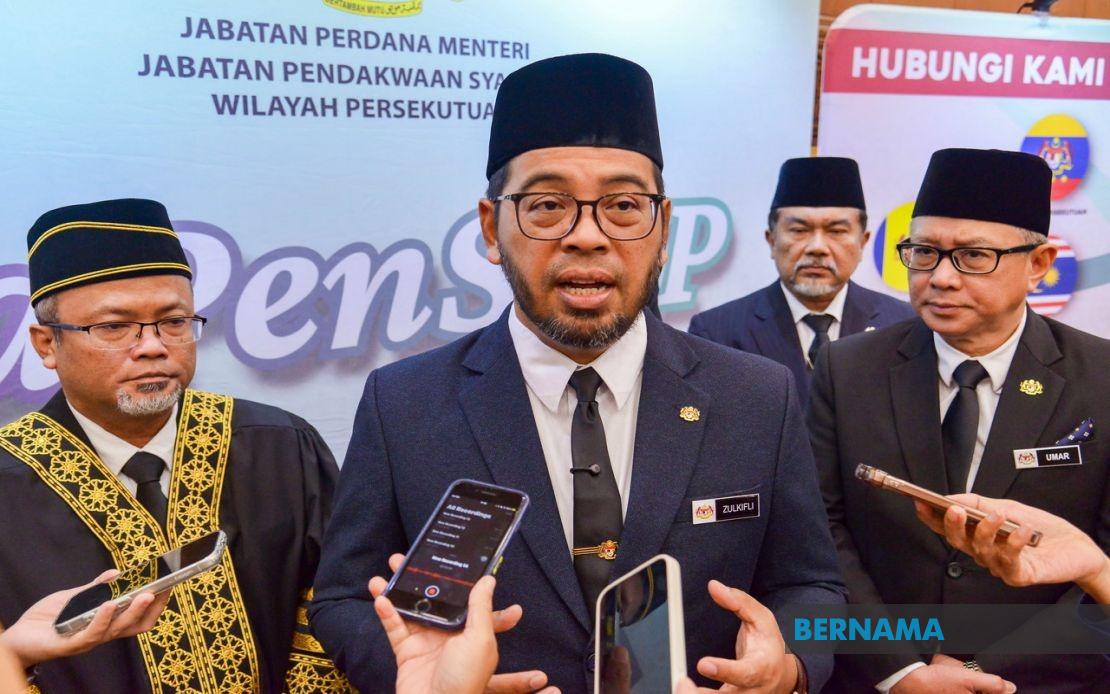
The Prime Minister's Department (Religious Affairs) has initiated a formal inquiry into claims that a Department of Islamic Development Malaysia (JAKIM) reference number was inappropriately deployed to authenticate marriage documentation purportedly issued by the Malaysia Rohingya Ulama Council. Religious Affairs Minister Dr Zulkifli Hasan confirmed the investigation during his remarks at the second Malaysian Syariah Prosecutors Conference in Putrajaya, though he acknowledged that comprehensive details on the matter had not yet reached his office. The announcement comes as social media users have circulated a marriage declaration letter bearing the reference designation "JAKIM.PERH/LN.800-7(5)", sparking controversy over whether this numbering system legitimately validates the document or represents an unauthorized application of official credentials.
The emergence of this disputed document reflects deepening complexities surrounding the legal recognition of Rohingya community marriages within Malaysia's Islamic administrative framework. State religious authorities, notably the Perak Islamic Religious Department, have already rejected the letter's legitimacy as an enforceable instrument. Officials further clarified that marital arrangements involving Rohingya residents cannot be formally registered through conventional channels, citing ongoing policy deliberations at the state level that remain unresolved. This situation underscores the tension between the humanitarian challenges posed by the Rohingya refugee population and Malaysia's structured approach to religious law administration, which traditionally requires clear jurisdictional authority and procedural compliance.
The reference number appearing on the circulating document warrants particular scrutiny given JAKIM's central role in Islamic affairs coordination nationwide. That a government agency's identifier could be invoked—whether legitimately or otherwise—to authorize religious documents highlights potential vulnerabilities in how official credentials are protected and verified across digital platforms. The investigation will likely examine whether the Malaysia Rohingya Ulama Council possessed genuine authorization to utilize such designations or whether this represents a case of fraudulent appropriation of governmental symbols to lend illegitimate credibility to their pronouncements.
Beyond the specific Rohingya marriage documentation issue, Dr Zulkifli expanded his remarks to address a parallel concern troubling Malaysia's religious regulatory apparatus: the proliferation of unaccredited religious lectures distributed through social media channels. The minister indicated that authorities are actively reviewing mechanisms to curtail such unvetted religious instruction, which often reaches substantial audiences without meaningful oversight. However, he cautioned that responsibility for regulating religious teaching credentials fundamentally resides with state governments rather than federal structures, reflecting Malaysia's constitutional division of religious authority between national and state administrations.
The challenge of enforcing accreditation standards for online religious content presents enforcement officers with unprecedented operational difficulties. Traditional regulatory mechanisms developed for physical gatherings and formal institutional settings prove inadequate when confronting the decentralized, rapidly distributed nature of digital religious instruction. Dr Zulkifli acknowledged that the department itself maintains internal protocols requiring accreditation verification for any religious figures appearing in government-sponsored broadcasts or official platforms, yet extending such safeguards to the broader social media ecosystem requires interventions that must navigate complex legal terrain involving freedom of expression, jurisdictional boundaries, and practical enforcement capacity.
Government agencies involved in combating religious irregularities must therefore coordinate extensively to develop coherent strategies. Dr Zulkifli emphasized the necessity for strengthened collaboration between the Prime Minister's Department, the Malaysian Communications and Multimedia Commission, the Royal Malaysian Police, and the Attorney General's Chambers. This multi-agency approach reflects recognition that contemporary threats to proper Syariah administration extend beyond traditional domains and require sophisticated responses bridging religious law, cybercrime investigation, and communications regulation. The coordination challenge intensifies given that federal agencies cannot unilaterally mandate state compliance, necessitating negotiated frameworks respecting constitutional divisions of authority.
The broader context for these emerging regulatory challenges reflects how Malaysia's Islamic institutional architecture, established during earlier eras of communication technology, must adapt to digital-age realities. Dr Zulkifli's policy statements at the Syariah Prosecutors Conference emphasized government commitment to modernizing Islamic legal frameworks specifically to address cyber-related offences. This modernization imperative extends beyond traditional crimes like fraud or forgery to encompass novel vulnerabilities created when digital technologies enable rapid dissemination of unverified religious pronouncements and unauthorized invocation of governmental credentials.
Syariah prosecutors occupying the frontline of enforcement efforts require substantially upgraded technical competencies to function effectively within this transformed landscape. Dr Zulkifli stressed that prosecutors must develop proficiency in digital forensics, data analysis, and technology-enabled investigation methodologies to investigate increasingly sophisticated violations. The traditional skill sets emphasizing religious jurisprudence and procedural law, while remaining foundational, must now be supplemented by capabilities enabling professionals to extract evidence from digital platforms, analyze metadata patterns, and reconstruct online activities that leave no physical traces. This skills gap between current prosecutorial capacity and emerging investigative demands represents a significant constraint on enforcement effectiveness.
For Malaysian stakeholders—particularly among the Rohingya refugee population, the broader Muslim community, and civil society organizations monitoring religious administration—these developments carry substantial implications. The investigation into the disputed marriage documents directly affects how Rohingya residents navigate family law matters within Malaysia's legal system, potentially leaving individuals without recourse to formally recognized marital status and its attendant legal protections. Simultaneously, the government's initiatives to regulate online religious instruction reflect attempts to establish quality control and accountability standards, yet implementation challenges remain substantial given the decentralized nature of social media platforms and the constitutional limitations restricting federal intervention into state religious affairs.
The intersection of these issues—document authentication vulnerabilities, unaccredited religious content proliferation, and jurisdictional constraints—reveals fundamental tensions within Malaysia's approach to Islamic administration during the digital era. Policy responses must balance legitimate governmental interests in maintaining procedural integrity and protecting citizens from fraudulent or unqualified religious guidance against practical recognition that centralized command-and-control approaches prove insufficient for managing distributed digital networks. Moving forward, Malaysian authorities must develop innovative frameworks that strengthen coordination across federal and state levels while building prosecutorial capacity adequate to investigative demands, all while respecting constitutional allocations of religious authority and safeguarding fundamental freedoms within the bounds of legitimate regulation.

