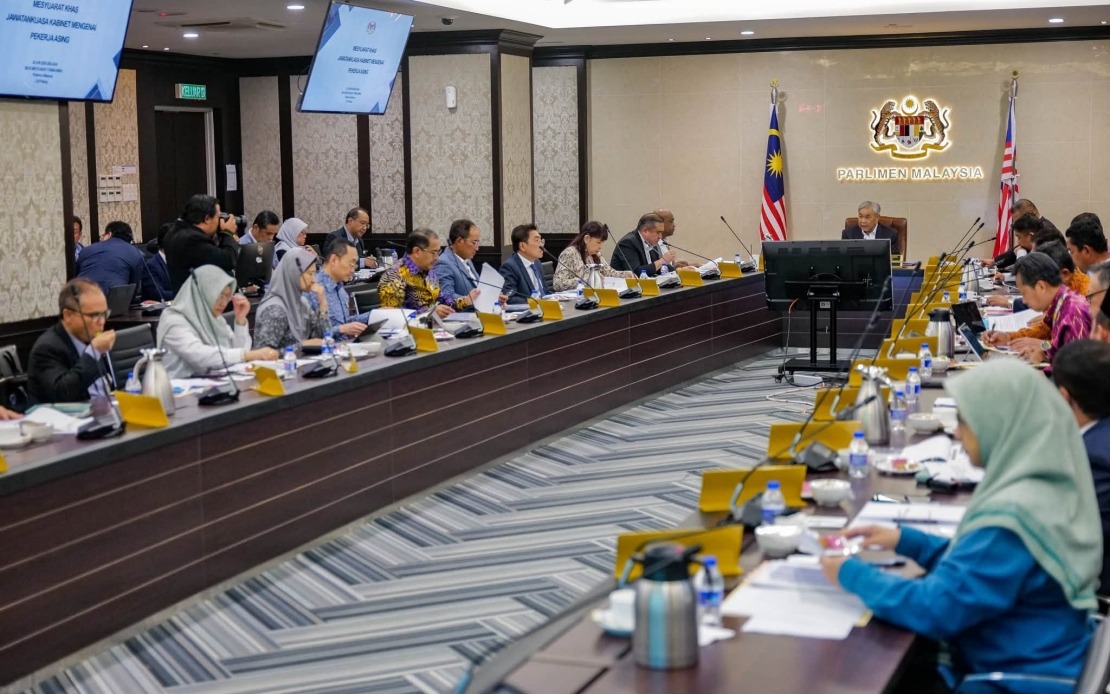
Malaysia's government is moving to overhaul how it manages and coordinates its foreign workforce, according to an announcement by Deputy Prime Minister Datuk Seri Dr Ahmad Zahid Hamidi on June 30. The restructuring initiative emerged from a special Cabinet Committee meeting on Foreign Workers chaired by Ahmad Zahid at Parliament, where officials deliberated on streamlining administrative processes and aligning foreign labour policies more closely with actual industrial requirements across the nation.
The core objective of this revamp is to create a more coherent and responsive foreign worker management apparatus that simultaneously serves multiple policy goals: operational efficiency, institutional integrity, and balance between business needs and national interests. Ahmad Zahid emphasised that the restructured system would prioritise protecting employment opportunities for Malaysian citizens while ensuring that industries gain access to necessary skilled and unskilled labour where domestic supply constraints exist. This dual mandate reflects ongoing tension in Malaysia's labour market, where sectors from manufacturing to construction continue relying heavily on migrant workers despite government commitments to reduce that dependency.
One significant institutional change involves repositioning the One Stop Centre for Foreign Worker Management under direct supervision of the Ministry of Human Resources. This consolidation aims to centralise oversight and reduce bureaucratic fragmentation that has previously complicated employers' interactions with multiple agencies. The move signals recognition that foreign worker administration had become dispersed across various government bodies, potentially creating coordination gaps and inconsistent policy implementation. By anchoring the centre within a single ministry, the government expects to streamline permit processing, compliance monitoring, and documentation requirements for businesses employing foreign nationals.
The Cabinet Committee also addressed the composition and operational parameters of its own membership and terms of reference, suggesting that decision-making structures themselves required recalibration. These internal adjustments indicate the government is taking stock of how effectively existing committees have functioned in coordinating between different ministries and agencies with stakes in foreign worker policy—including Labour, Immigration, Internal Security, and Economic Affairs. Such structural reflection, while procedurally routine, underscores that previous arrangements had limitations worth addressing.
Beyond institutional changes, Ahmad Zahid outlined a more strategic approach to assessing foreign labour requirements. Rather than allowing ad-hoc requests from individual industries or responding reactively to labour shortages, the government intends to conduct systematic reviews of sectoral labour needs. This data-driven methodology could help authorities better distinguish between genuine labour gaps and employer preference for cheaper migrant workers over investing in local recruitment and training. For Malaysia's economic planners, this represents a shift toward evidence-based policy that aligns foreign worker quotas with documented economic necessity rather than business convenience.
Crucially, Ahmad Zahid reaffirmed the government's overarching strategic objective: reducing Malaysia's structural dependence on foreign labour. This long-standing goal remains elusive despite decades of policy commitments, partly because many sectors have built business models around low-wage migrant workers and partly because educational and training pipelines have failed to produce sufficient skilled Malaysian workers in certain fields. The government's announced remedies—boosting local workforce participation, enhancing skills training, and accelerating industrial automation—address these supply-side constraints, though implementation timelines remain unclear and previous similar initiatives have delivered limited tangible results.
The foreign worker issue carries significant implications for Malaysia's economy and social fabric. Manufacturing, agriculture, plantation industries, construction, and domestic services would face immediate disruption without access to migrant labour, yet large concentrations of foreign workers in particular regions create integration challenges and occasional tensions with local communities. Strikes by migrant workers and cases of workplace abuse periodically surface, highlighting the vulnerability of workers and gaps in enforcement of protection standards. Any restructuring that improves transparency and accountability in hiring practices could benefit both employers seeking reliable labour and workers seeking fair treatment.
For neighbouring countries in Southeast Asia that supply workers to Malaysia—including Indonesia, Bangladesh, Myanmar, and the Philippines—changes to Malaysia's foreign worker framework carry direct implications. Tightening requirements or reducing quota allocations could redirect labour flows toward other destinations or domestic markets, affecting remittances that sustain families in origin countries. Conversely, if Malaysia's streamlined system proves more efficient and transparent, it might enhance Malaysia's attractiveness as a destination compared to competitors offering less predictable working conditions or administrative processes. Regional labour mobility remains a cornerstone of ASEAN economic integration, and individual member states' immigration policies shape that broader landscape.
Ahmad Zahid's statement emphasises that the government will continue calibrating foreign worker policy through the lens of national interest and public welfare. This framing acknowledges that foreign labour management extends beyond technical efficiency into matters of sovereignty, economic security, and social cohesion. The government appears concerned about ensuring that reliance on migrant workers does not inadvertently undermine long-term development of a competitive local workforce or create demographic imbalances in particular regions. Balancing pragmatic economic needs against aspirational self-sufficiency in labour supply remains the underlying tension shaping Malaysia's approach.
The government's commitment to integrity in the foreign worker system also signals attention to corruption and exploitation within recruitment and placement processes. Malaysia has faced international scrutiny regarding migrant worker conditions and has been cited in global trafficking reports. A restructured management system with clearer chains of responsibility and enhanced oversight mechanisms could strengthen enforcement against unscrupulous agents and employers who abuse workers. Such improvements would align Malaysia's practices more closely with its international commitments regarding labour rights and human trafficking prevention, enhancing its standing on global standards.
Moving forward, the success of this restructuring will depend on implementation rigour and inter-agency coordination. Announcing policy reform is substantially easier than executing it across a large bureaucracy with entrenched procedures and competing departmental interests. The placement of the One Stop Centre under the Human Resources Ministry represents institutional clarity, yet sustaining cooperation from Immigration, the police, and other agencies will require sustained political support and resource allocation. Malaysian observers and business stakeholders will likely scrutinise how quickly administrative procedures improve and whether the revamped system delivers the promised efficiency gains without creating new bottlenecks.

