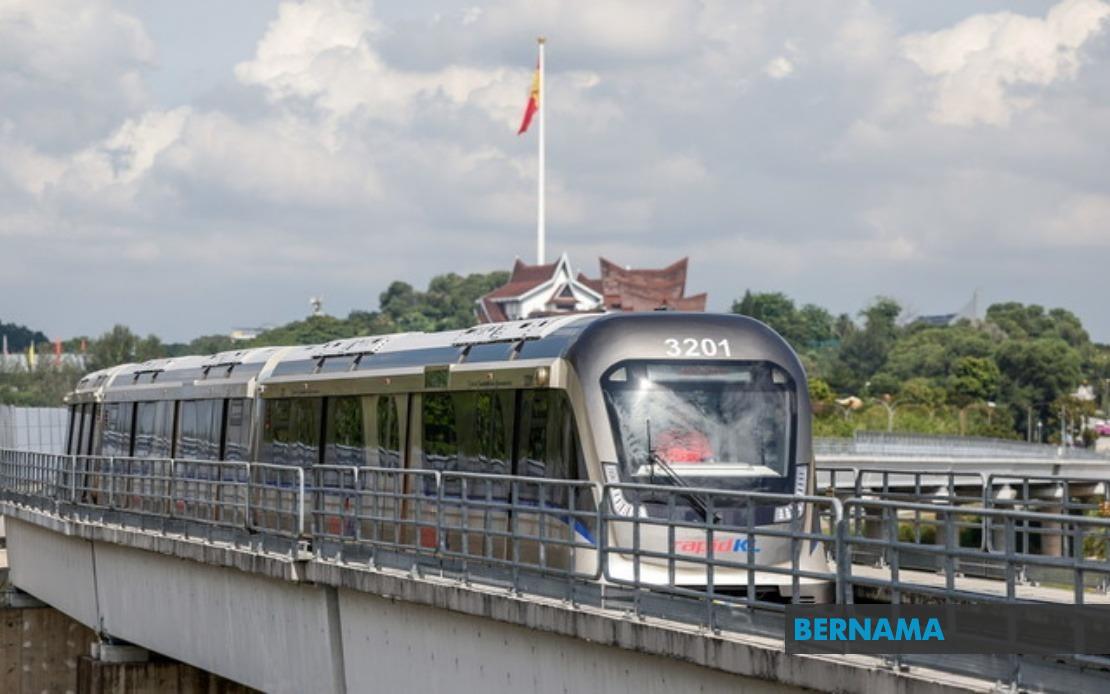
The MADANI Government has committed to seeking an audience with Sultan Sharafuddin Idris Shah, the Sultan of Selangor, to offer further clarification regarding the troubled LRT3 Shah Alam Line following the Ruler's public remarks about the project's mounting expenses and construction setbacks. Transport Minister Anthony Loke confirmed the initiative on July 2, emphasising that the government takes seriously the concerns raised by the palace about how the light rail transit scheme has unfolded under current administration.
Loke's decision to pursue the meeting reflects the significance placed on maintaining dialogue with the Selangor throne on major developmental projects affecting the state. Speaking at a charity event in Kuala Lumpur attended by senior Pakatan Harapan officials including Communications Minister Datuk Fahmi Fadzil, Loke acknowledged that the ruler's reservations about implementation challenges warrant a substantive response from the transport ministry. The minister framed the proposed audience as an opportunity to walk through the project's current status and trajectory with the palace, signalling the government's recognition that royal patronage and satisfaction remain crucial for flagship infrastructure initiatives in Selangor.
The Sultan's intervention the previous day had highlighted a pattern of significant project modifications that have reshaped the LRT3 initiative over recent years. Following the change in federal administration in 2018, the project entered a suspension period lasting more than 18 months, effectively stalling momentum and incurring additional costs. This disruption was compounded by a subsequent 19-month delay imposed by the COVID-19 pandemic through to 2021, during which circumstances forced the project team to implement substantial design compromises.
These constraints manifested in concrete reductions to the scheme's original scope. The planned dimensions of individual stations were scaled back, reflecting budget pressures and the need to contain ballooning expenditure. The number of train carriages allocated to the line was similarly reduced, directly impacting passenger capacity and the system's ability to serve projected commuter demand. Most significantly, five proposed stations along the alignment were eliminated entirely from the project, removing connectivity to communities that had anticipated integration into the rail network.
Sultan Sharafuddin's framing of these developments carried an implicit critique that the LRT3 had become victim to administrative inconsistency rather than technical necessity. The Ruler was careful to stress that the project should never have been conceived as a prestige undertaking designed to elevate the government's standing, but rather as a genuine public service initiative intended to measurably improve the quality of life for Selangor residents. This distinction matters significantly in Malaysian governance culture, where royal guidance on development priorities typically carries weight far beyond symbolic approval.
The LRT3 Shah Alam Line represents one of Southeast Asia's most scrutinised transport infrastructure projects, having absorbed substantial public resources while encountering repeated setbacks. For Malaysian readers following transport policy, the Sultan's intervention signals potential leverage that the palace may now exercise over how subsequent phases proceed. The project's challenges reflect broader issues affecting public transport rollout across the Klang Valley, where population growth has outpaced infrastructure development for more than a decade.
Beyond the LRT3 matter, Loke outlined additional government efforts to facilitate voter participation in the 16th Johor State Election scheduled for July 11. The Transport Ministry coordinated with Keretapi Tanah Melayu Berhad to substantially increase the frequency of Electric Train Service departures between Kuala Lumpur and Johor Bahru, enabling voters from across Malaysia to more conveniently return to their constituencies. This practical initiative recognises that internal migration for employment has fragmented many voters' residence from their electoral registration.
The enhanced rail frequency also extends to intermediate stations including Segamat and Labis, reflecting recognition that voters from smaller towns require viable options to reach polling stations on election day. For voters originating from Malaysia's northern regions, the expanded service provides a competitive alternative to road transport, potentially reducing travel costs and inconvenience. Loke framed these logistical measures as the government's commitment to removing practical barriers that might otherwise discourage participation in democratic processes.
The Johor election itself constitutes a significant political event in the Malaysian calendar, with 172 candidates contesting across 56 state seats. Early voting was scheduled for July 7, with the main polling day set for July 11, providing multiple opportunities for voters to cast ballots. The coordination between the transport ministry and rail operators demonstrates how electoral participation increasingly depends on infrastructure integration and cross-agency collaboration.
For Malaysian observers and regional watchers of Southeast Asian governance, the government's willingness to convene with the Selangor palace regarding the LRT3 project illustrates the enduring importance of institutional consultation in Malaysia's constitutional monarchy system. The sultan's capacity to raise concerns publicly about major development initiatives remains a distinctive feature of Malaysian governance, distinguishing the system from purely parliamentary models. How this particular audience unfolds may establish precedent for future royal engagement with infrastructure projects in other states.
The convergence of these two initiatives—addressing the LRT3 through formal palace consultation and facilitating democratic participation through transport logistics—reflects the government's broader approach to balancing development accountability with electoral legitimacy. Both matters touch on the government's fundamental responsibility to deliver on public commitments, whether measured in transport infrastructure completion or in enabling citizens to exercise their franchise. The Transport Ministry's engagement across both domains suggests an administration attempting to demonstrate responsiveness to institutional stakeholders while simultaneously removing practical obstacles to democratic participation.

